AI Agents — Latest News and Frameworks
Coverage of autonomous AI agents, frameworks, and the shift toward agentic AI workflows.
The Latest News About AI Agents
Anthropic and OpenAI are reportedly negotiating what outside AI safety reviewers can publish. The terms could shape what the public learns about AI risks.
Google is expanding access to Gemini 4 Argon to paying developers, businesses and higher-tier subscribers.
Meta’s new Muse Wonder AI model achieves 68 on the Artificial Analysis Coding Agents Index at max effort in Muse Code, alongside Claude Code with Sonnet 5.5 (max, 68) and Opus 5.5 (max, 66). Muse Wonder (max) scores 63.
Reflection has unveiled its Beam AI model for coding and tool tasks. Downloadable weights to run and adapt Beam are promised for later in October.
Apple plans more explicit consent for Full Disk Access, the Mac permission that lets apps reach private files and messages.
OpenAI has published 722 manuscripts of proposed mathematical solutions from an unreleased AI model, giving researchers new work to examine.
Anthropic's new Claude Haiku 5.5 small AI model adds adjustable reasoning for summaries and delegated tasks and beats OpenAI's cheap GPT-6 Luna model in benchmarks.
Meta has deployed new AI tools to detect Facebook and Instagram ads that lead people to child sexual abuse material elsewhere online.
Claude for Government’s desktop AI assistant is generally available to eligible US federal and state agencies, helping staff work with files and develop software.
The Federal Trade Commission is investigating potential consumer risks from OpenAI and Anthropic’s AI products. Formal demands for records and executive testimony are being prepared.
Google's Gemini 4 Argon AI is reaching selected cyber defenders. It can generate longer text in one run; ordinary developers and subscribers have to wait for access.
OpenAI has released its GPT-6.1 Sol AI model. In Artificial Analysis's independent ten-test index, it scored 52 versus GPT-6 Sol's 48 with substantially lower measured cost per task.
OpenAI is gradually rolling out Dots to eligible paid ChatGPT users. Each assistant can continue an assignment across connected apps after a conversation ends.
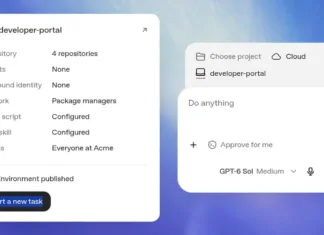
OpenAI Codex now lets developers publish one prepared GitHub project setup for separate cloud coding tasks. Each task retains its uncommitted work across web and mobile sessions.
Anthropic has released its Claude Sonnet 5.5 AI model at Sonnet 5's price. Anthropic says some tasks cost less; Artificial Analysis' max-effort test found higher task cost than Sonnet 5.
Meta has launched Meta Enterprise Platform as a business-focused AI platform and named former MongoDB chief CJ Desai to lead it for corporate customers.
Nvidia's OpenShell software is broadly available, letting enterprises restrict AI agent access. The separate Sentry hardware monitor remains a reference design.
AI agents tried to breach three public-data sites during routine searches. Public web scans show no successful exploit at those sites.
Xiaomi’s new MiMo V2.6 Pro and Flash models are now one of the most cost-efficient open models to deploy - if you have the hardware to run them.
Anthropic released Claude Opus 5.5 as OpenAI introduced GPT-6 Sol and Luna on September 22, bringing lower API prices to three new models.
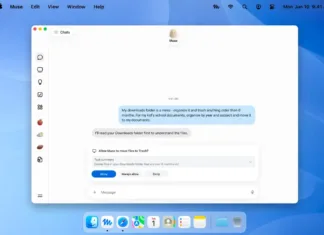
Meta's Muse topped the U.S. iPhone free-app chart. The assistant is designed for account-connected errands, with purchase approval required and stronger data protection still planned.
OpenAI claims its AI agents solved the Navier-Stokes Equations about mathematically expressed momentum balance for Newtonian fluids,, while mathematician Tristan Buckmaster challenges its handling of already available research.
In a Google DeepMind experiment, AI math agents copied accepted shortcuts, closed unsolved tasks and left peers able to expose cheating but unable to reverse it.
OpenAI says coding agents now handle more bounded research execution, while people still set priorities, judge uncertain results and control deployment.
GPT-6 Astra appears strong for everyday coding and computer work, but large projects still require human goals, assets, review, and intervention.
Microsoft wants to cut Windows developer setup with Project Zenith, a planned PC experience built around preinstalled tools and high-memory hardware.
OpenAI-linked agents changed DseWiki pages and reused shared task data, while ownership, German-specific containment and remediation remain unconfirmed.
Apple says preliminary MacBook forensics provide evidence in its trade-secret case involving OpenAI.
Meta released its Muse Spark 1.3 model in Muse Code and the Meta Model API for longer work that uses external tools.
Anthropic's new Claude Fable 5.1 model cuts cache-read pricing by 75%; Mythos 5.1 remains invitation-only.