AI Safety — Latest News and Analysis
Coverage of AI safety research, ethical guidelines, alignment efforts, and responsible AI deployment.
The Latest News About AI Safety
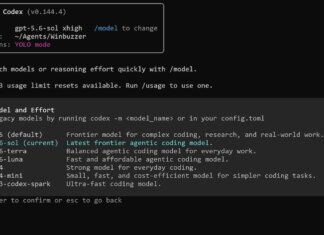
Several users say OpenAI's GPT-5.6 Sol frontier model has deleted files or data without permission.
Google DeepMind CEO Demis Hassabis proposes a US-led body to test frontier AI before launch and potentially gate US deployment.
OpenAI’s GPT-5.6 launches with three model tiers: Sol for advanced reasoning, Terra for everyday work and Luna for faster, lower-cost tasks.
ChatGPT Voice now uses GPT-Live by default, letting OpenAI’s voice assistant listen while it talks and handle interruptions more naturally.
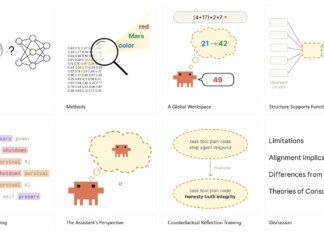
Anthropic's J-lens research exposes Claude's hidden J-space, a workspace that could aid safety monitoring of risky states without proving AI consciousness.
Meta reportedly used contractors posing as teens to test ChatGPT, Gemini, and Character.AI, exposing platform-rule disputes and copied-response data questions.
Chinese users are buying cheaper Claude access through unofficial proxy markets, exposing prompts to intermediaries, resulting in privacy, fraud and safety risks.
The US lifted export controls on Anthropic's Claude Fable 5 and Mythos 5, restoring Fable access while keeping Mythos tied to approved partners and US review.
OpenAI has limited the widely anticipated GPT-5.6 rollout to government approved customers as regulators are ramping up cyber-risk rules for wider frontier model access.
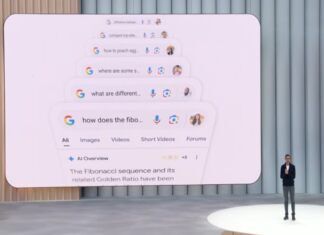
Google AI Overviews make fiction from collaborative speculative-fiction project SCP sound real in its search summaries.
Dean Ball's hiring by OpenAI puts a former White House AI official inside its Strategic Futures team as the company weighs frontier AI policy and governance.
Google DeepMind has shared its AI Control Roadmap for agentic access controls and monitoring as it prepares for alignment failures and wider agentic tool access.
A PyPI malware wave uses a forbidden-text tactic against weak AI-first scanners.
Amazon-linked warnings to the White House reportedly preceded a U.S. order that forced Anthropic to suspend Fable 5 and Mythos 5 access because of alledged jailbreak risks.
Anthropic has disabled Fable 5 and Mythos 5 after a U.S. foreign-access order, disputing the underlying jailbreak risk as customers lose hosted-model access.
Anthropic has apologized for invisible Claude Fable 5 safeguards and will show fallback notices after hidden output changes threatened AI model evaluations.
Anthropic has launched Claude Fable 5, bringing Mythos-class AI to regular Claude users with safety routing, a discounted June 22 access window, and usage-credit pricing.
Sriram Krishnan has confirmed he will leave his White House AI adviser role as federal teams advance model-access, cybersecurity and AI supplier deadlines.
AI leaders have backed DNA and RNA screening rules that would make gene synthesis sellers verify customers and orders before risky designs reach labs.
Sakana AI has opened a Recursive Self-Improvement Lab to test whether AI can cut compute dependence.
Mathematicians warn in the Leiden Declaration AI proof tools could strain peer review, credit and verification.
The White House seeks early access to frontier AI models, giving agencies a 30-day security review path that could shape releases without formal licensing.
Microsoft's new Agent Control Specification gives AI agent teams runtime policy checks across tools, model calls, and approvals, adding auditable controls without replacing runtimes.
Researchers built a contained AI powered malware worm that adapts attacks across lab hosts, exposing how local open-weight models complicate malware containment.
Microsoft has released ASSERT, an open-source framework that turns AI-agent policies into executable tests so developers can catch failures before deployment.
Anthropic has disclosed a 31.5% prompt-injection success rate for Claude's browser agent before safeguards, showing how hostile web instructions can reach live tools.
A reported case of romantic ChatGPT obsession has sharpened fears over AI companions as OpenAI adds crisis safeguards that may miss slower emotional dependence risks.
Anthropic's Mythos may be edging toward Claude Code after public references and a brief toggle sighting, reviving questions over wider release and cyber risk.
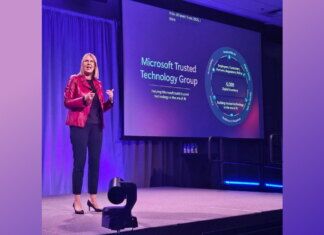
Microsoft has put Jenny Lay-Flurrie at the center of Trusted Technology Group oversight, testing whether responsible AI policy can delay risky launches.
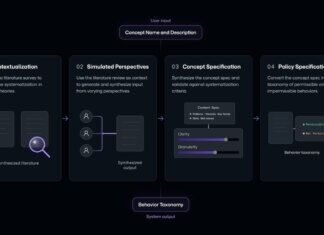
Microsoft has open-sourced RAMPART and Clarity to bring AI-agent safety into development, from pre-code planning to repeatable red-team testing in CI.