- Screening Push: AI leaders from Google, OpenAI, and Anthropic have backed mandatory checks on customers and synthetic DNA or RNA orders.
- Supply Chokepoint: Sequence sellers could become the control point before software-designed biological instructions become physical material.
- Policy Test: A Cotton-Klobuchar bill would force Commerce to define provider checks, sequence reviews, and recordkeeping duties.
- Risk Limits: Experts warn AI can stress screening tools, but laboratory execution remains a major barrier.
Google DeepMind’s Demis Hassabis, OpenAI’s Sam Altman, Anthropic’s Dario Amodei, and Microsoft AI’s Mustafa Suleyman have signed a public letter calling for seller screening on synthetic DNA and RNA orders. If Congress acts on that request, AI biosecurity would become a supply-chain fight over who can order genetic material.
DNA and RNA sellers convert software-generated biological designs into physical material that can be shipped. AI labs, biotechnology firms, life-sciences groups, national-security specialists, and policy organizations backed the proposal.
Signatories write: “This is a rare moment of agreement across stakeholders that are often at odds.” Customer and order screening would sit between digital biological designs and deliverable material. Congress and standards bodies still have to decide how binding the checks become.
Unlike a previous superintelligence ban appeal, the request would require sellers to verify customers, review sequences, track equipment, and keep records before genetic material leaves the supply chain.
Why Screening Became the Chokepoint
Synthetic nucleic acid screening means customer identity and sequence checks before a provider ships DNA or RNA. NIST says synthetic nucleic acid technologies support biotechnology and biomanufacturing, but they carry dual-use risk because the same tools can be misused to engineer harmful biological systems.
The checks matter because sequence sellers are the last commercial handoff before software-designed genetic instructions become physical material.
NIST is developing screening standards, benchmark datasets, and mitigation tools for deciding which customers and sequences require extra review. A 2025 Science paper found that open-source AI-powered protein design software could create variants of proteins of concern that provider screening tools did not reliably detect before fulfillment review.
Researchers also developed screening patches that improved detection of synthetic homologs, reinforcing nucleic acid synthesis as a chokepoint in AI-assisted protein engineering workflows. David Relman, a microbiologist and biosecurity expert at Stanford University, framed the same gap as a need for controls beyond provider review.
“Given that the screening may fail in some cases, we must then have other points of control. That’s where the AI companies are going to have to step up.”
David Relman, microbiologist and biosecurity expert at Stanford University (via Winzheng)
Congress Already Has a Bill
Federal legislation would require gene synthesis providers to screen orders and customers for bad actors or dangerous pathogens. NIST would keep developing benchmark datasets and other biosecurity tools.
Synthetic nucleic acid technologies already carried dual-use risk before the AI letter because they can be misused to engineer harmful biological systems. In 2017, University of Alberta researchers re-created horsepox from mail-order DNA as part of Tonix Pharmaceuticals-backed work, making ordered genetic material a lasting biosecurity concern.
AI adds a newer step because software can help design or modify sequences before those sequences reach a seller.
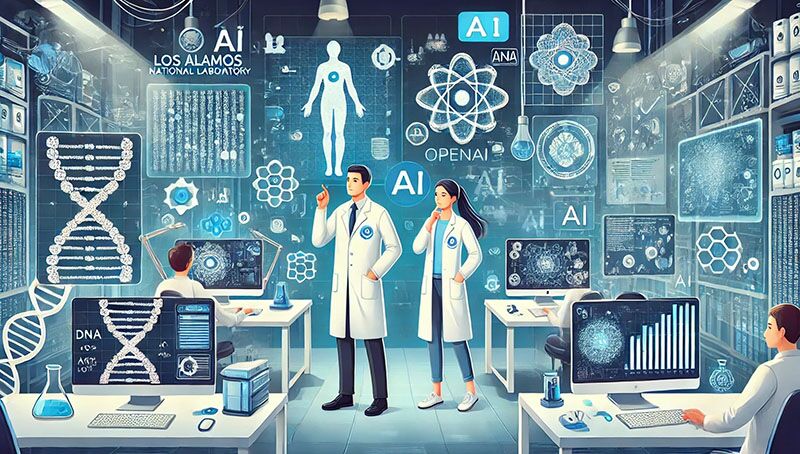
Earlier AI-biosecurity controls stayed closer to the model and the lab. OpenAI’s biosecurity work with Los Alamos in 2024 tested how multimodal models could lower barriers for non-experts in lab settings. Anthropic’s 2025 biological-risk safeguards put tighter controls around Claude 4 after evaluations found possible misuse for biological-weapons assistance.
Geoff Ralston, a former Y Combinator president and Safe AI Fund partner, has argued that models should make imminently dangerous requests hard to execute. Supplier screening would require provider review after software guardrails.
Laboratory Barriers Still Matter
Scientists still disagree over the right control mix. Some emphasize software limits, others point to nucleic acid order screening, guardrails, or attack detection and response. Martin Pacesa, a structural biologist at the University of Zurich, warned that AI-designed toxins could become harder to detect.
“Theoretically, and this is what keeps me up at night, one could now develop toxins on the level of ricin or other very deadly agents that would be virtually undetectable.”
Martin Pacesa, structural biologist at the University of Zurich (via Nature)
Laboratory execution remains a limiting factor. A 2025 National Academies report concluded that substantial barriers still stand in the way of using AI to enhance or design pandemic pathogens from scratch, keeping the immediate fight focused on supplier controls rather than lab execution.
Senate movement on the Cotton-Klobuchar bill is the next concrete test: passage would force Commerce to define which customer checks, sequence reviews, and records gene synthesis providers must keep.