AI Research — Latest News and Analysis
Coverage of AI research advances, academic papers, and breakthroughs from leading labs and universities.
The Latest News About AI Research
Nobel prize winner and AlphaFold pioneer John Jumper is leaving Google DeepMind for Anthropic, adding scientific weight to the talent fight among labs.
Google DeepMind has shared its AI Control Roadmap for agentic access controls and monitoring as it prepares for alignment failures and wider agentic tool access.
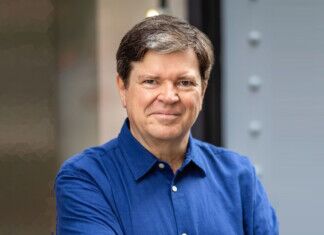
Yann LeCun warns OpenAI and Anthropic face AI bubble risk as token usage, compute costs, and pricing pressure strain AI service economics across the market.
Google has introduced DiffusionGemma to speed local AI output through parallel text diffusion, but lower quality than Gemma 4 keeps trade-offs visible.
Anthropic has apologized for invisible Claude Fable 5 safeguards and will show fallback notices after hidden output changes threatened AI model evaluations.
Microsoft Research's Lens text-to-image model uses dense captions and released code to test lower training compute.
Google is upgrading NotebookLM with Gemini 3.5, Antigravity, source discovery and exports, but first access stays limited to AI Ultra and Workspace plans.
Audio-Interaction is an open-source voice model that listens continuously, decides every 0.4 seconds whether to answer, and lets developers test noisy streams.
Sakana AI has opened a Recursive Self-Improvement Lab to test whether AI can cut compute dependence.
Mathematicians warn in the Leiden Declaration AI proof tools could strain peer review, credit and verification.
OpenAI has expanded its genomics and drug discovery model GPT-Rosalind with life-sciences plugins and controlled access.
Researchers built a contained AI powered malware worm that adapts attacks across lab hosts, exposing how local open-weight models complicate malware containment.
LiveBrowseComp benchmark results suggest AI search agents often verify hunches instead of fresh web evidence, raising new doubts about benchmark scores for browsing skill.
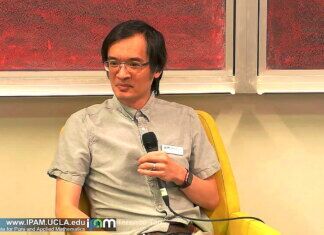
Terence Tao argues AI could split math research into specialized roles if verification keeps pace and human reviewers filter weak ideas before they spread.
Paul Graham argues AI-written founder emails erode trust before a pitch lands, while studies on AI-generated messages point to weaker recipient reactions.
Current labor data does not yet show a broad AI jobs collapse, even as younger workers and coders face earlier strain.
Fake biomedical citations surged 12-fold in three years as a May 2026 audit found that one in 277 papers carried non-existent references early in 2026.
DeepMind’s AlphaProof Nexus solves nine Erdős problems using Lean-checked proofs, signaling a new phase in AI math after OpenAI’s geometry claim.
Anthropic's Mythos may be edging toward Claude Code after public references and a brief toggle sighting, reviving questions over wider release and cyber risk.
A ByteDance and HKUST study has revealed that question-answer training can beat OCR-heavy supervision for long documents, improving MMProLong retrieval.
Microsoft Research has released Webwright as a terminal-native web agent framework that turns browser tasks into rerunnable Playwright code and logs for teams.
NVIDIA's Gated DeltaNet-2 splits erase and write gates in linear attention, aiming for cleaner memory updates and stronger benchmarks without attention costs.
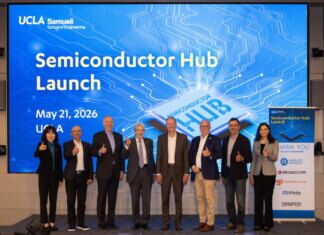
UCLA has launched a $125 million chip hub with Meta, Broadcom and Synopsys to fund AI-chip research, yearlong internships and U.S. talent development.
OpenAI's possible AI math breakthrough on the Erdős unit distance problem hinges on outside review, a 0.014 proof detail, and lessons from its 2025 setback.
A possible Google DeepMind deal with Contextual AI would bring over 20 researchers and a software license, extending its Hume-style acquihire playbook.
Andrej Karpathy has joined Anthropic, with a reported Claude pre-training role that could tie his synthetic data work to one of AI's most compute-heavy stages.
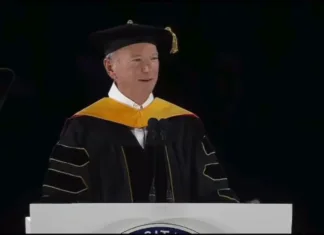
Arizona students have booed Eric Schmidt during a commencement speech as his defense of AI collided with graduate fears over automation, jobs, and careers.
ArXiv will impose a one-year submission ban when a preprint shows incontrovertible evidence that authors did not review LLM-generated text or references.
Anthropic and the Gates Foundation launched a $200 million, four-year AI partnership combining grants, Claude credits, and support for health and education.
Junyang Lin may be seeking hundreds of millions for a new AI lab at a valuation near $2 billion after his exit from Alibaba's Qwen team in March 2026.