- NotebookLM Rollout: Google is adding Gemini 3.5 and Antigravity-backed capabilities to its source-grounded AI research notebook app.
- Research Workflow: The update adds Google Search source finding, code execution in a secure cloud computer, reasoning visibility, and downloadable outputs.
- Access Limits: Google AI Ultra subscribers and eligible Workspace customers get first access, with broader availability planned later.
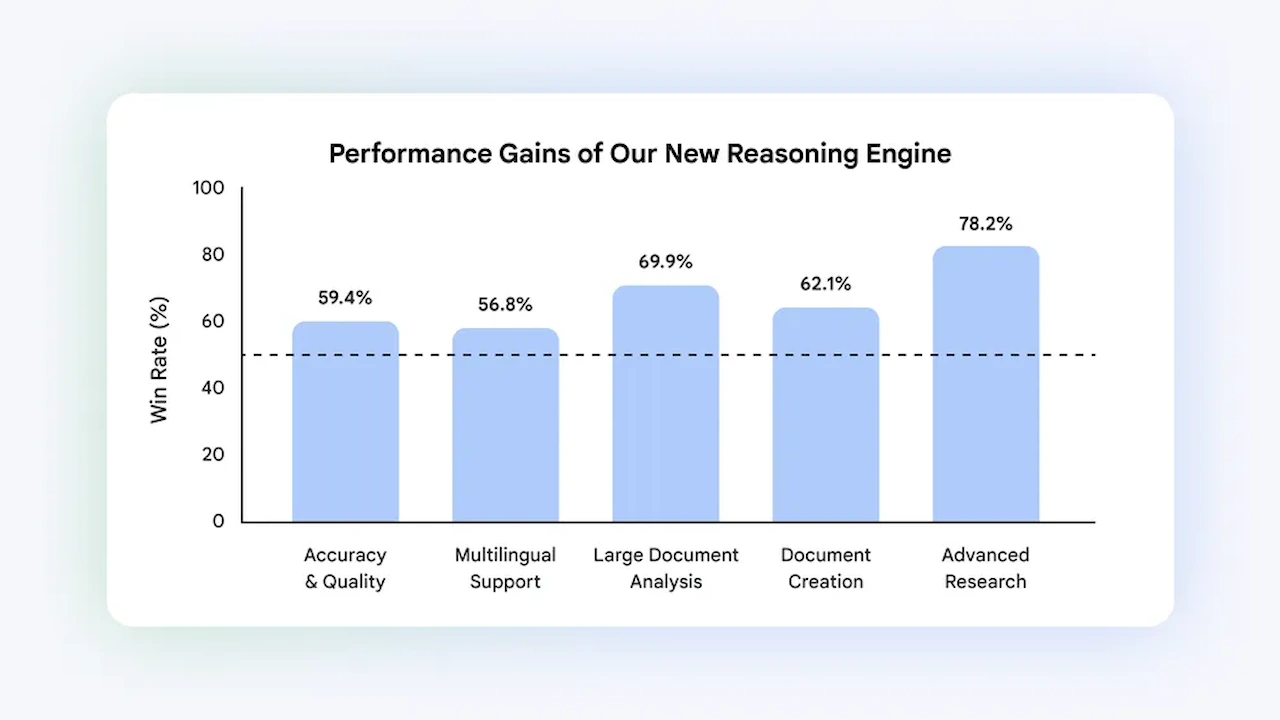
- Benchmark Caveat: Google’s win-rate figures are company-provided product claims, not independent proof of real-world NotebookLM performance.
Google has released a NotebookLM upgrade that moves the source-grounded research notebook to Gemini 3.5 and adds Antigravity-backed tool use for finding sources, running code, and exporting files. Google began the rollout on June 8, keeping NotebookLM at the center of the product update: Gemini 3.5 supplies the newer model line, while Antigravity brings Google’s agentic coding tool layer into research workflows.
Researchers, students, and workplace teams get the clearest benefit if they are in the first access group. Eligible accounts include Google’s premium AI subscription tier and business customers in Google’s Workspace productivity suite through AI Ultra and Workspace access, with broader availability planned later.
How NotebookLM’s Research Workflow Changes
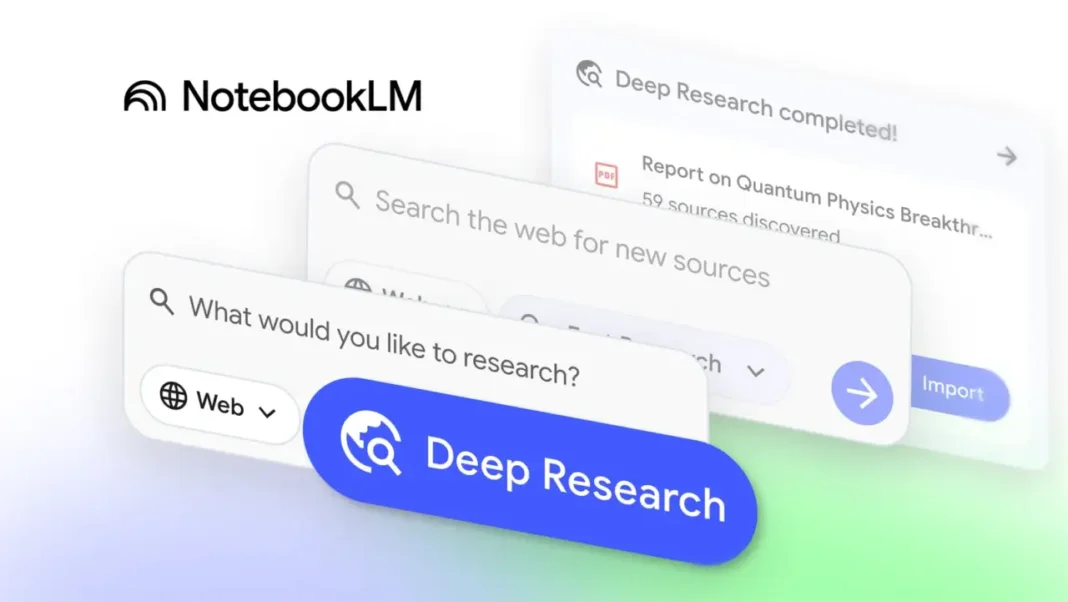
NotebookLM can now start from loose ideas or questions instead of only from prepared research materials. Users can use Google Search to find relevant web sources, then choose which materials enter a notebook. Selected sources still anchor the work, but the product now reduces the setup burden before the first useful answer.
In the new flow, source suggestions can point researchers toward material they might otherwise miss. That includes a chance to get primary sources in other languages or locate related work by the same author.
Antigravity supplies the execution layer. Each notebook gains a secure cloud computer, a remote compute environment that can write and run code for analysis tasks. A single research question can now lead to selected materials, a calculation, and a generated output without forcing users to move between a notebook, a coding tool, and a document editor.
Google’s recent Antigravity 2.0 update gives that NotebookLM layer its agentic coding capabilities. Antigravity lets NotebookLM use tools, inspect material, and turn source-backed analysis into a more concrete artifact.
NotebookLM can also create PDFs, Word documents, Markdown and text files, charts, images, comma-separated data files, structured data files, Excel spreadsheets, and PowerPoint decks. Google adds answer-step visibility with the promise of “even more accurate and reliable information along with better visibility into the thinking process” and uses Deep Research for part of the workflow.
Google’s side-by-side evaluation claims the upgraded system averaged above 65 percent against the prior NotebookLM system across five core evaluation dimensions, including 69.9 percent for large document analysis and 78.2 percent for advanced web research and source finding. Company-run test conditions make those figures useful as a product claim, not as independent proof of how every notebook will perform.
More than 100 curated software skills also sit behind the deeper source-analysis capability. NotebookLM is not only swapping model versions; it is gaining tool-use capacity that can inspect sources, run checks, and prepare structured research artifacts for users who need traceable work products.
Where NotebookLM Fits Against AI Research Tools
NotebookLM started in 2023 as a bounded research notebook for analyzing user-provided documents and webpages. Google has since pushed it toward broader research work: the Discover sources feature made web material selection part of the product direction, and the later Deep Research and file-support expansion added more online analysis and file handling.
Competitors show why Google is trying to combine more of the research workflow in one product. Users comparing NotebookLM alternatives including Claude and Elicit may also weigh Perplexity Spaces and self-hosted tools such as AnythingLLM, while Microsoft’s Copilot Notebooks has moved toward agent-assisted notebook work for business users.
Research-tool users often compare source limits, retrieval trust, exports, privacy, and long-lived knowledge bases. NotebookLM’s new source-finding and export features target those pressure points without turning the product into a general chatbot or a standalone coding environment.
Workplace teams also need usable output and traceable inputs. A NotebookLM session can now begin with a question, bring in source material through Google Search, run analysis in a remote compute environment, and produce a document, spreadsheet, chart, or deck for the next stage of work.
Who Gets the Upgrade First
Google is rolling the new NotebookLM capabilities out globally on the web to users on Google AI Ultra and Workspace AI plans before opening the features to other users.
Initial availability favors premium subscribers and eligible business customers, not the full NotebookLM user base. For teams that already pay for Google’s higher AI access lanes, the update can make NotebookLM a more complete research workspace rather than a place to store and query source files.