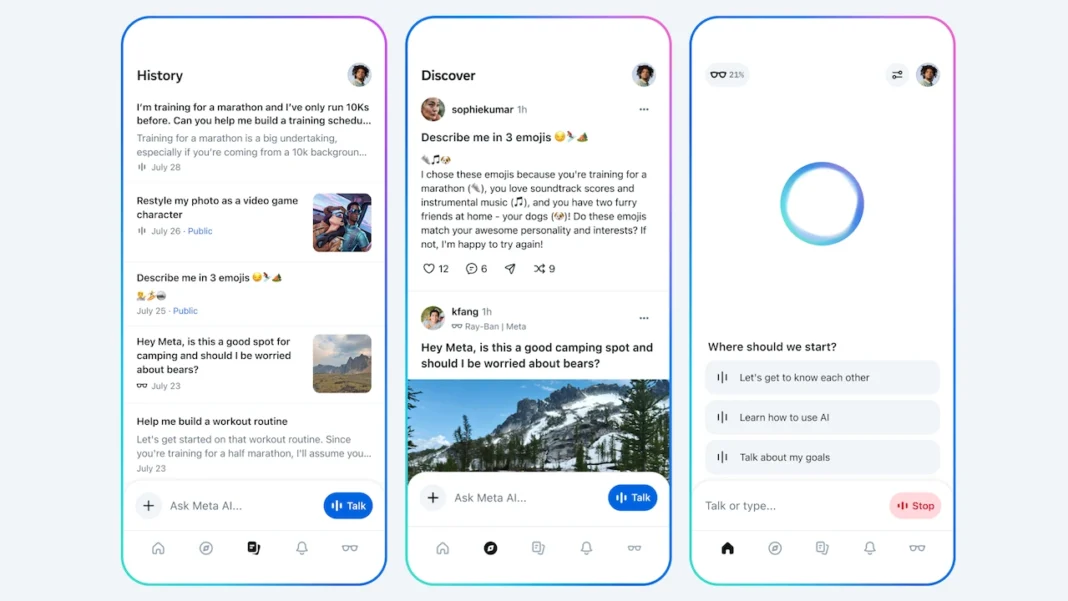
- For You Test: Meta has been experimenting placing AI generated story cards inside the standalone Meta AI app’s personalized feed.
- Generated Pages: Tapping prompt cards opened AI-generated stories with unclear labels, weak sourcing, and public-figure image errors.
- Deprecation Plan: Tracy Clayton, a Meta spokesperson, said the limited test will be deprecated rather than moved forward.
- User Trust: Earlier Discover and Vibes experiments show why labeling synthetic feed cards remains a recurring Meta AI issue.
Meta placed story-like AI output in front of a group of standalone Meta AI app users during an experiment before clear labeling and safeguard details were available. A deprecation path now limits the immediate rollout, but the product questions it raised remain unresolved.
Inside the personalized For You section, prompt cards opened generated pages rather than links to human-written articles. Examples lacked clear source cues and an obvious AI label, so the app presented synthetic material in a browsable feed instead of framing it as a single chatbot answer.
Tracy Clayton, a Meta spokesperson, said the AI enriched For You feed was a limited test for a small group of users and would be deprecated.
How the For You Test Worked
Inside the Meta AI app, the For You area served as a personalized feed for article-style prompt cards. Each tap opened full story text, while AI generated the topics, images, and copy instead of pulling from published articles. Prompt, picture, and story arrived as one product unit, turning an assistant feature into a miniature synthetic news surface.
Highly localized prompts gave the test its clickbait feel. A UK-focused feed included items about tea, queuing, pubs, football, royals, and manners, turning personalization into a set of stereotyped hooks. Without clear labels at the tap point, users had to infer whether the app was offering entertainment, advice, or an information product.
Generated images added a second trust problem. Some Meta AI clickbait article examples involving public figures may have included visual errors, including a royal-family themed image that duplicated Queen Elizabeth II. For You carried that reported example inside the Meta AI app.
Unanswered controls matter at the moment of use. A chatbot response can be challenged with another prompt, but a feed card can look like an editorial recommendation before the user has any reason to ask where the material came from. Labels, source cues, and image policies must appear on the first screen because passive browsing gives users less opportunity to test generated material through follow-up questions.
Why the Feed Raises Trust Questions
Meta introduced the standalone AI app in April 2025 with voice conversations, image generation, personalization, and continuity between the app, web, and Meta’s devices. Its launch also tied the assistant to a social feed and Ray-Ban smart glasses support.
User control was central to the earlier sharing design because posts appeared only when a person chose to share them. By making the app initiate story-like material inside the feed, the For You test moved labeling and source cues closer to the core product experience. In a prior app-sharing flaw, the Discover feed was found publicly exposing private chats when public visibility was not obvious.
When the system pushes a card first, users need the label and purpose before deciding whether to trust or ignore it. Product design has to make synthetic origin visible early enough for ordinary readers to understand what they are seeing.
Lat November, Meta expanded the Vibes AI video feed into into the assistant app. For You creates a sharper labeling problem because synthetic text and images were packaged as recommendations inside the same assistant environment. A standalone Vibes app test in Brazil and Mexico showed Meta was still experimenting with feeds built entirely around generated media.
What Comes Next for Meta AI Feeds
While Meta stopped the immediate rollout, it does not answer whether it will revisit the format with clearer controls. A similar feature would need a For You policy that explains labels, public-figure image limits, and whether each card is generated fiction, generated summary, assistant answer, or recommendation.
Meta’s assistant app still supports AI media feeds, social sharing, and recommendations that arrive before a user asks a question. Users need those distinctions before the card appears, not after they have already tapped into a synthetic article page.
Before any relaunch, Meta would also need to explain how an AI feed fits its public-figure image rules and broader AI labeling commitments. Without that disclosure, the deprecation plan closes one limited test while leaving the trust problem available for the next Meta AI feed experiment.