Data Privacy — Latest News and Analysis
Coverage of data privacy laws, GDPR enforcement, data breaches, and user privacy developments.
The Latest News About Data Privacy
Patreon has started blocking AI training crawlers while preserving search indexing that can direct visitors back to creators.
Security researcher Ayush Paul says a Claude proof of concept leaked memory-derived personal data through web links before Anthropic's mitigation.
Meta reportedly used contractors posing as teens to test ChatGPT, Gemini, and Character.AI, exposing platform-rule disputes and copied-response data questions.
Alibaba is banning employee the use of Anthropic's Claude Code starting July 10 and shifts staff to its own Qoder platform over alleged user-identification security risks.
Meta is testing Pocket, an AI-powered app that turns prompts into playable mini-games, with limited access and unclear data-use choices.
Chinese users are buying cheaper Claude access through unofficial proxy markets, exposing prompts to intermediaries, resulting in privacy, fraud and safety risks.
Google Gemini has opened free opt-in personalized image generation to eligible U.S. users, with account-data controls and rollout limits shaping access.
Microsoft now supports the European Commission in Europe's top court over the EU-US Data Privacy Framework, used for EU-to-US data transfers.
Meta has paused an internal AI-training program after employee-tracking data was reportedly exposed, making access controls key before collection restarts.
OpenAI has pitched ChatGPT ads at Cannes as a possible IPO revenue bet, but marketer uptake hinges on measurement, user trust, and market-scale proof.
Apple has previewed Screen Time updates that add Safari site approvals, contact controls, media checks, and app age signals for families.
European Parliament has switched managed computers from Google Search to Qwant, testing EU digital-sovereignty goals while preserving user choice.
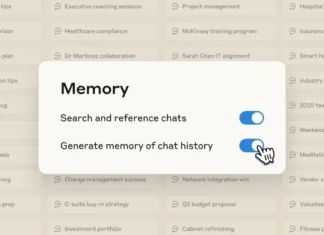
OpenAI has expanded ChatGPT memory, giving Plus and Pro users in the US editable summaries as Free and Go accounts wait for a global rollout in the coming weeks.
Google's possible storage policy shift caps new Gmail accounts at just 5 GB in select regions, unless users link a verified phone number to unlock 15 GB.
Meta has launched Incognito Chat for Meta AI on WhatsApp, pairing end-to-end encryption with disappearing chat history by default and no server-side logs.
Instructure says copied Canvas data was returned after its ShinyHunters deal, but schools still lack outside proof the stolen records were fully deleted.
Google appears to have softened Chrome's clearest on-device AI privacy promise as Prompt API scrutiny grows around Gemini Nano downloads and website access.
Meta is steering Instagram users who want encrypted DMs to WhatsApp, raising fresh questions about what happens to older protected chats after the rollback.
DHS faces a lawsuit over a Google data demand for a Canadian critic's account records, testing whether customs law can reach online speech-linked user data.
Anthropic has introduced government ID and selfie verification for Claude users, drawing backlash over privacy concerns and access barriers for Chinese users.
An audit has found Google, Microsoft, and Meta have ignored privacy opt-out signals on most California websites, setting ad cookies despite legal mandates.
A stalking victim has sued OpenAI, alleging ChatGPT fueled her abuser's delusions over seven months while the company ignored three safety warnings.
Google has published a blog post reaffirming that Gemini does not train AI models on personal Gmail data, amid persistent privacy concerns over AI features.
Google has quietly released AI Edge Eloquent, a free iOS dictation app powered by Gemma that processes speech entirely on-device, undercutting paid rivals.
Meta has obtained a gag order banning Careless People author Sarah Wynn-Williams from criticizing the company, even at home, with fines up to $50,000.
A professor has released Nearby Glasses, a free Android app that detects Meta Ray-Ban and other smart glasses via Bluetooth to counter covert recording.
The Welsh Government has used Microsoft Copilot to process interview data in a review that led to Industry Wales's closure, sparking an AI transparency dispute.
Senate Democrats have introduced bills to ban autonomous AI weapons and mass domestic surveillance, seeking to write Anthropic's safety red lines into law.
GitHub has announced that Copilot will use interaction data from Free, Pro, and Pro+ users to train AI models by default starting April 24.
A New Mexico jury has ordered Meta to pay $375 million for deceiving teens about Facebook and Instagram safety in a landmark child protection verdict.