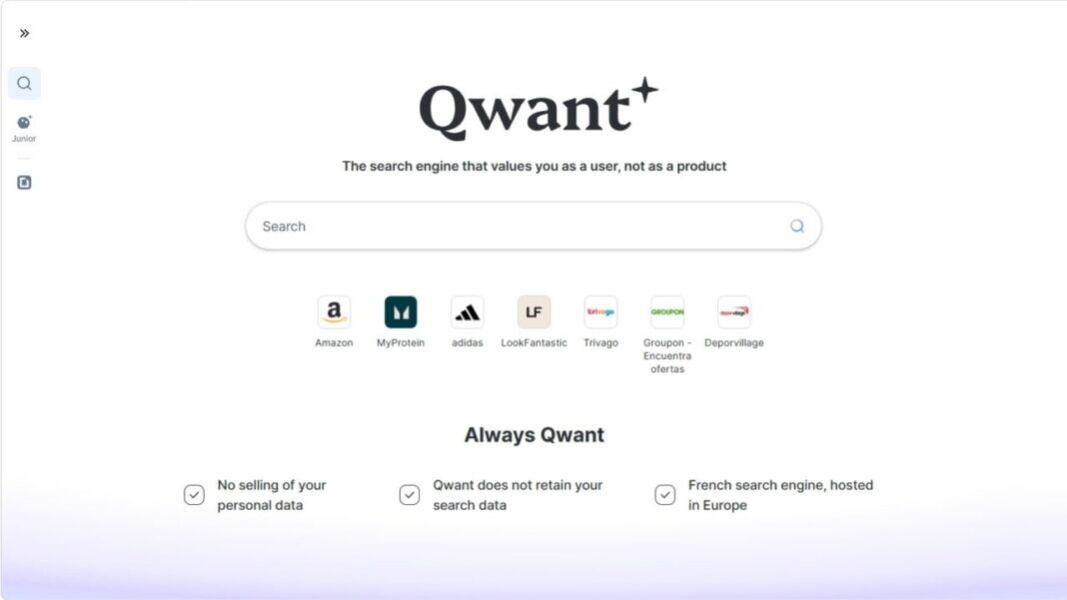
- Default Switch: European Parliament has replaced Google Search with Qwant on managed computers.
- User Choice: Officials and lawmakers can still choose another search engine or alter browser settings.
- Privacy Mechanism: Qwant says it avoids search-history storage and targeted advertising by default, with caveats for account features.
- Policy Stakes: The switch fits a wider EU push to reduce dependence on foreign technology providers.
European Parliament has replaced Google Search with Qwant as the default search tool on its in-house computers on June 4, turning a browser setting into a practical test of Europe’s technology-sovereignty push.
Scope matters. The change affects Parliament-managed computers, not every device used by lawmakers, and it does not block Google Search. Officials and lawmakers can still choose another provider or change browser settings, while the available record includes no public Parliament notice or official Google response.
The Parliament linked the switch to digital sovereignty and protection of users’ personal data. That means reducing reliance on foreign technology providers while keeping more control over routine institutional searches.
What the Switch Changes on Parliament Computers
Qwant becomes the automatic provider for address-bar searches in Firefox and Edge on Parliament systems. A default search engine setting decides where a browser sends a search typed into the address bar unless a user changes that setting manually.
Officials and lawmakers can still use another search engine or alter their settings after the switch. Managed browsers get a new preference, while individual users retain a way to reset the default, keeping the move short of removing Google Search from Parliament workstations.
Google loses the first-search position inside one EU institution’s computer environment, while Qwant gains a daily visibility point among staff and lawmakers. Parliament framed the switch as a digital sovereignty push tied to personal-data protection.
Why Qwant Fits the Privacy Argument
Qwant’s public positioning rests on no storage of search history and no resale of personal data. Its privacy policy also says the service does not use targeted advertising or store users’ search history by default, so ads are not selected from personal or behavioral search profiles in the same way as many ad-funded web services.
Account-based access to unlimited new features can still involve necessary data processing, including transmission of an IP address to partners for service operation. Qwant’s current search product also includes artificial-intelligence answers and a page-summary feature for account users.
IT administrators can change a managed default, preserve user choice, and test a European privacy-focused provider before heavier procurement decisions. For search products, privacy-first search rivals compete less on index scale than on what data they keep, which features users can disable, and whether institutions can explain the default to staff.
Browser defaults determine which service receives routine address-bar queries unless a user intervenes, while privacy controls determine how much profiling and feature data processing the provider says it will avoid by default.
Qwant also offers extensions for Chrome, Edge, Firefox, and Safari to set the service as a default search engine. Institutional IT can set a default for work devices, while individual users normally rely on browser settings or extensions.
The Wider Sovereignty Push
The move is part of a European Commission technology-sovereignty package aimed at reducing dependence on foreign technology providers and boosting European alternatives.
A cross-party group of 38 European lawmakers urged Parliament President Roberta Metsola in November 2025 to phase out Microsoft software and other foreign-made technology. Public bodies are testing substitutes for US productivity, cloud, communications, and search tools, including European sovereign software alternatives.
Affected institutions have to decide whether sensitive work can move to suppliers governed by European ownership, hosting, or legal controls without breaking daily workflows.
Office.eu launched in March as one example of that strategy, with email, documents, file storage, and collaboration tools pitched as a European-owned office suite. Besides that, France has pursued a sovereign Visio platform as an alternative to Microsoft Teams and Zoom for government communications.
Cloud infrastructure turns that policy preference into a data-control problem, even when the immediate step is only a search setting. Earlier cloud-sovereignty disputes underscored the same concern when Microsoft acknowledged limits around US government access to EU cloud data.
Search defaults sit at a smaller operational layer, but they still decide which provider handles routine queries and what jurisdictional promises surround that data flow. Commission technology-sovereignty planning will test whether Parliament’s browser setting remains an isolated IT preference or becomes part of a wider procurement standard.