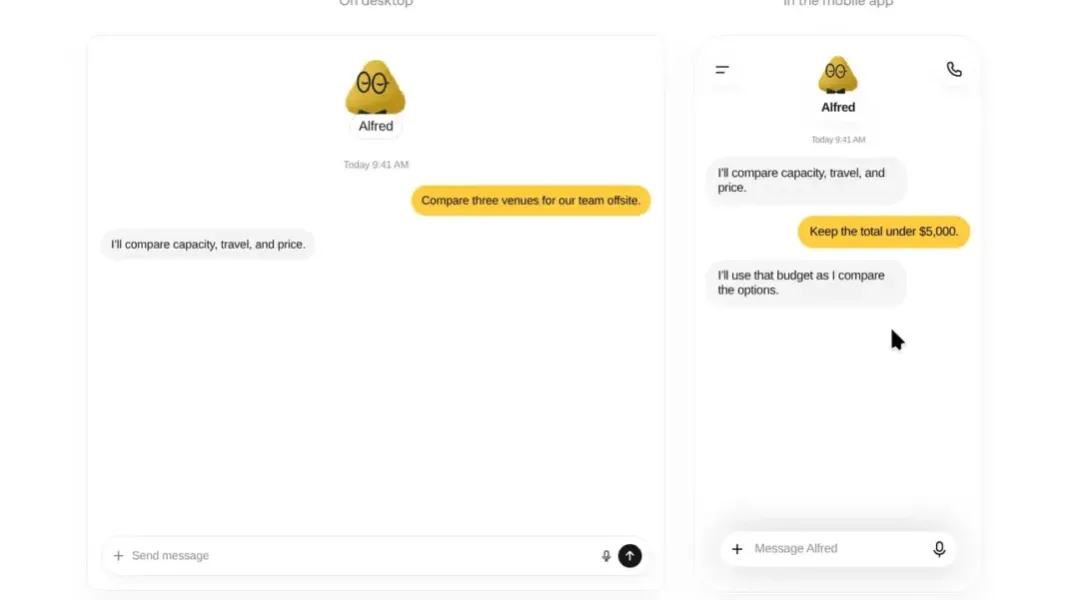
- Task Texts: ChatGPT’s Dot agent is rolling out texting to US Pro users, letting them assign work and receive updates.
- Shared Context: Texts, photos and voice messages reach the same agent, with relevant memory and connected apps.
- App Approvals: Requests needing approval link back to ChatGPT for review.
- Provider Access: Messaging provider Linq processes Dot texts before OpenAI receives them; Techstrong reports that the exchanges lack end-to-end encryption.
OpenAI has begun letting US ChatGPT Pro subscribers send task requests to Dot, its AI agent for ongoing work, through their phone’s messaging app. The beta brings instructions and progress updates into iMessage on iPhone and RCS messaging on Android.
The rollout began on October 28. Texting reaches the same Dot that users can contact in ChatGPT, Slack and Microsoft Teams, carrying relevant preferences and work context between conversations. Users can send a photo or voice note as well as a typed request, and choose which updates deserve a text.
By popular request, you can now text your dot.
Give it a task to take off your plate or something to keep an eye on, using text, photos, or even voice notes. It will text you proactively with relevant updates.
Safe, secure texting via iMessage or RCS. You’re the only one who… pic.twitter.com/iuNd3aTCYc
— ChatGPT (@ChatGPT) October 28, 2026
The Same Agent Keeps the Work Moving
Dot runs on its own cloud computer and browser, so research, document preparation and software work can continue after the user’s laptop is switched off. Work involving files or apps on a connected personal computer requires that machine to remain online with ChatGPT open.
In OpenAI’s offsite-planning example, a user supplies the event plan and venue emails. Dot updates the headcount as people confirm attendance, then asks before sending a request for revised pricing. The organizer can add information to that ongoing job rather than restart it with each conversation.
Dot draws on relevant ChatGPT memory and Dot’s own saved notes about preferences, decisions and ongoing responsibilities. The notes carry forward across contact methods, while the visible conversations stay in their separate channels. Access to email, documents and other services depends on the apps the user has connected and their existing permissions.
Dot can decide when to pause and resume work between conversations. A job that must repeat at a fixed time needs a saved schedule, while event-triggered monitoring depends on support from the connected service. Users can specify which changes need their attention and where to receive updates.
OpenAI’s ChatGPT Agent launch in July 2025 already combined browser navigation, research and other tools for multistep computer tasks. Dot keeps track of an ongoing responsibility as circumstances change. It can delegate individual assignments to ChatGPT Work, for tasks such as research and file creation, or Codex, OpenAI’s software-development agent.
Approvals Still Return to ChatGPT
Eligible users connect a verified phone number through Texting in their Dot profile, then save the contact card they receive. The texting beta supports one-to-one exchanges through iMessage or RCS; group chats, phone calls and FaceTime are outside that texting feature.
If an action needs approval, Dot sends a link to review it in ChatGPT. Before an action affects an account or shares information, an automatic review checks the user’s instructions, permissions and safety requirements. It determines whether the action can proceed, needs approval or includes a step the user must complete personally.
How Dot Compares With Claude Duet
Anthropic’s Claude Duet also works on its own cloud computer after users close the app. It carries over Claude memory and connected apps, prepares morning briefings from email and calendars, and returns work such as documents, slide decks and dashboards for review.
Duet runs in its own iOS and Android app or on the web, while Dot’s new beta lets users request work and receive updates in their existing phone messaging app. Duet is a research preview for US Claude Pro and Max subscribers admitted through a waitlist; Dot texting is rolling out to US ChatGPT Pro subscribers.
Duet checks connected accounts every few hours, limiting how quickly it can notice something that arrives between checks. Anthropic ties that interval to usage: continuous checking would consume the subscriber’s allowance faster.
Conversations with Dot do not count toward ChatGPT usage limits, but tasks it starts or manages in Work or Codex count toward those products’ limits. Duet’s background checks and morning briefings share the five-hour session and weekly limits used by other Claude chats, so background activity can leave less capacity for other work.
What Happens to Messages Sent to Dot
OpenAI says only the account holder can text their Dot, and the agent can text only that person. Enabling the connection does not give Dot or OpenAI access to the user’s other text conversations.
To set it up, tap on your dot’s profile and select ‘Texting’. Your dot has the same context and plugins, wherever you reach it. This doesn’t give your dot or OpenAI access to your other text conversations.
AI is most useful when it works with tools you already use and shows up…
— ChatGPT (@ChatGPT) October 28, 2026
Messages sent to Dot pass through Linq, the messaging provider OpenAI partnered with for the feature. OpenAI says it tested the feature for security weaknesses. Techstrong reports that the exchanges lack end-to-end encryption: Linq processes the messages before they reach OpenAI, rather than their contents remaining readable only at the conversation’s endpoints.