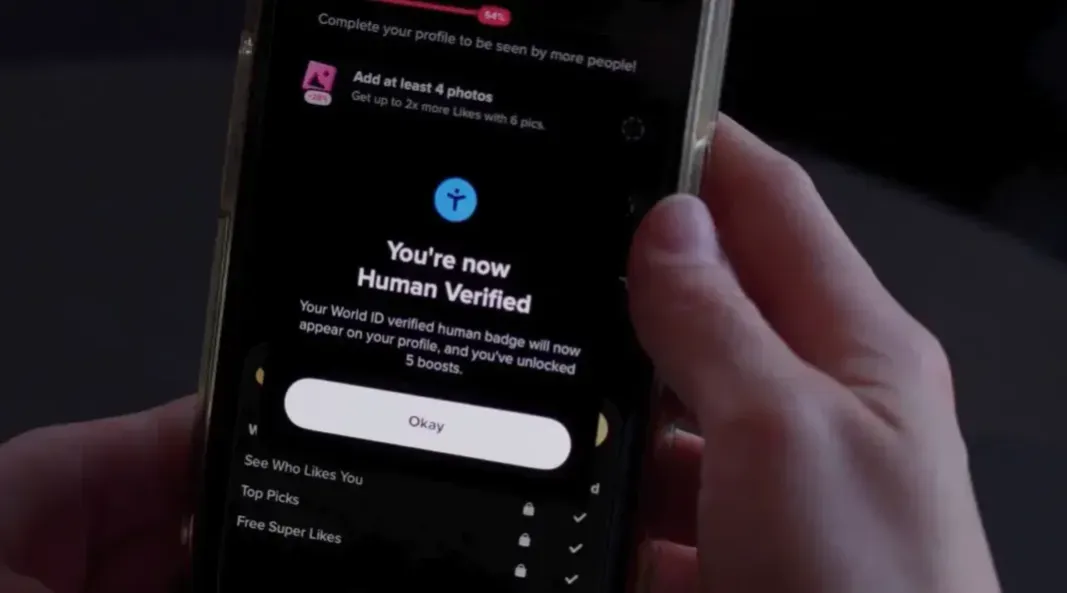
- Finance Suite: World ID has launched World ID tools for financial firms to verify people in calls and behind AI-agent requests.
- Zoom Access: Enterprise customers can use its Zoom integration globally; participants need an iris scan.
- Agent Delegation: AgentKit remains in beta, letting people give AI agents human-verification credentials; approving a particular action remains a separate check.
- Design Partners: Bain Capital and VanEck are among the named partners; the announcement identifies no bank customer.
World ID, the identity-network project, has launched a finance suite designed to help banks and other firms check the humans in video meetings and behind AI-agent requests. Its Zoom tool compares the caller with prior biometric enrollment and a live phone selfie, giving meeting participants a check on who is present before sensitive financial discussions.
World ID cofounder Alex Blania introduced World ID for banking and finance at Money20/20 in Las Vegas on October 18. The offering combines a standalone identity wallet, World ID for Zoom and AgentKit, a developer toolkit that remains in beta. The shared purpose is to let a service request a specific fact about a person, whether that person is speaking directly or using software to act for them.
World ID proposes using those proofs when opening accounts, approving large transfers or recovering access to an account. For a transfer, its proposed human-bound approval would connect the approval to a person; for recovery, a human requirement is intended to make account takeover harder.
The risk extends beyond a realistic-looking face. In a recent alert, the US Treasury’s Financial Crimes Enforcement Network, or FinCEN, described reports of suspected AI-generated identities used to open accounts that then received or laundered money. It also described impersonated executives inducing victims to transfer funds. Employees making approval decisions, their institutions and customers can all be exposed.
Matching the Caller to an Enrolled Human
World ID for Zoom is available globally to enterprise Zoom customers through the Zoom Marketplace. That widens access beyond the beta announced by Zoom and technology developer Tools for Humanity on April 17. Investment manager VanEck Funds participated in the earlier limited test.
The verification process starts with enrollment at an Orb, World ID’s iris-scanning device. A participant keeps the resulting proof in the mobile World ID app and links it to their Zoom account. During a meeting, a phone selfie supplies a live-person image. World ID says that image, the face image signed during Orb enrollment and a frame of the video shown to other participants must match before a Human Badge appears on the caller’s tile.
That gives the other participants an enrolled-person match to consult, rather than only a judgment about whether the video looks synthetic. Conventional deepfake detection searches media for signs of manipulation; World ID compares the displayed person with enrollment and live-phone images. Zoom described the approaches as complementary in its April announcement.
Organizations can choose how long a badge remains valid and hosts can request verification during a meeting. The integration analyzes video only, excluding audio and transcripts. Enforcing verification in the waiting room is still forthcoming in the October release.
World ID’s design partners include Bain Capital and VanEck Funds. A company spokesperson told Fortune that financial firms including Bain and VanEck would keep Orbs in their offices to enroll employees. The launch does not identify a bank customer.
Different Proofs Answer Different Questions
World ID’s human-verification purpose predates this finance offering, including its May 2025 US rollout. The standalone World ID app gives people a place to obtain, manage and present several kinds of proof. It is offered through Apple and Google app stores in more than 150 countries, and proofs from the earlier World ID App carry over.
Proof of Human establishes a real, unique person through Orb enrollment. Proof of Presence is a phone liveness check, establishing that someone is present. Proof of Attributes establishes selected information from a government credential, such as age or nationality. World ID says that last option can reveal the requested fact without revealing the person’s identity.
A service checking an age condition can therefore request a different fact from one checking whether a caller matches an enrolled person. People can use Presence and Attributes without completing Orb enrollment, while the Zoom integration requires it. The identity wallet is also separate from World ID Money, the project’s app for financial services.
World ID reports more than 18 million people holding Proof of Human and more than 475 million presentations of that proof globally.
Letting Human-Backed Agents Through
AgentKit extends the same idea to software acting for a person. A user delegates selected proofs to an AI agent, which can present them to a receiving service. The service can then recognize the human backing the request and apply its access rules.
World ID chief product officer Tiago Sada argues that blanket bot blocking can also shut out agents doing useful work for real customers. In an interview with Fortune, he described credentials assigned to a single trusted agent that a merchant could treat as the customer’s stand-in. His commercial argument is that distinguishing those requests could admit business that an indiscriminate block would reject.
AI-search provider Exa offers verified agents 100 free API requests per month before standard payments apply, according to World ID. A human-backed credential gives the service a basis for allocating access to an agent.
World ID also describes a separate human-in-the-loop function for asking a person to approve a specific action. PYMNTS identifies the related authorization problem: payment systems also need to determine whether a machine was allowed to make the decision that produced a transaction.
Biometric Trust and the Remaining Bank Controls
World ID, formerly known as World IDcoin, drew privacy scrutiny in 2024 over its biometric-data practices. World ID’s Zoom product FAQ says biometric matching happens on the user’s phone and biometric data is not shared with Zoom. It also says the application receives the username and verification status.
Sada’s response to privacy concerns combines familiarity and auditability. He told Fortune that consumers had initially distrusted Apple’s fingerprint and face unlocking, too, and pointed to the protocol’s inspectable code: “Everything is open source and auditable”.
For banks, identifying a person at one interaction sits alongside a broader set of controls. FinCEN’s 2024 alert describes customer identification, understanding the purpose and risk of a relationship, and monitoring suspicious transactions.
In Deloitte’s 2024 analysis of generative-AI fraud, the authors describe defenses combining technology, trained employees and customer awareness. They also note that banks and customers can dispute who bears a fraud loss.