- AI Architecture: Apple has announced new Foundation Models, its AI model family for Apple Intelligence, built with Google’s Gemini technology.
- Cloud Controls: Private Cloud Compute routes harder requests through Apple-controlled systems, including Google Cloud servers with NVIDIA graphics processors.
- Product Lanes: Siri AI, Apple’s developer framework, and Gemini in Xcode turn the architecture into user and developer features.
- Rollout Checkpoints: Fall 2026 availability, device eligibility, daily limits, and public inspection remain the practical tests.
Apple announced a new Apple Intelligence architecture that uses Google model technology without turning Gemini into a standalone app inside iOS. Requests processed by the system are staying inside on-device processing or Private Cloud Compute rather than direct Google processing.
Broader user availability is planned for fall 2026 after developer testing. Apple is trying to expand AI capability while keeping its privacy pitch credible for users and developers.
How Apple Routes Gemini-Derived AI Through Its Own Cloud
Apple Foundation Models, the AI model family behind Apple’s AI feature suite across iPhone, iPad, Mac, Watch, AirPods, and Vision Pro, carry the upgrade. Apple collaborates with Google on the next generation of models, but inference still moves through a hybrid of local processing and Private Cloud Compute, Apple’s server-side AI system for requests too complex to run only on device.
Google Cloud systems with NVIDIA graphics processors now run some server-side Apple Intelligence workloads under Apple’s approved software controls. Apple extends the compute path beyond its own data centers while keeping the software trusted by Apple devices under its control.
Private Cloud Compute on Google Cloud uses NVIDIA Confidential Computing, Intel TDX, Google’s Titan security chip, and Apple-approved software. A larger cloud role puts more weight on Apple’s promise that personal data is used only for the immediate request and is not stored or exposed to Apple or third parties.
Apple says it will publish binaries for public inspection and provide research tooling through its Security Bounty Program. Craig Federighi, Apple’s senior vice president of Software Engineering, framed the upgrade around user needs, product integration, personal context, and privacy rather than raw model access.
What Changes for Siri, Apps, and Developers
Siri AI is the user-facing part of the architecture that has to prove whether the model work improves daily use. A new version of Siri – Siri AI – coordinates Apple Intelligence features across apps and tailors responses to the active task.
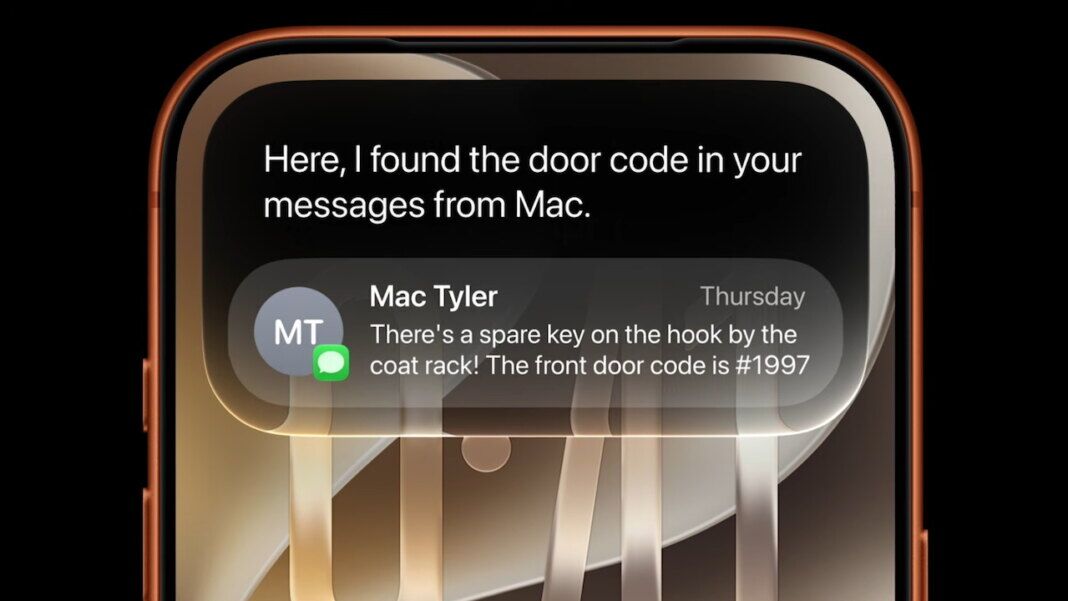
Siri AI can use personal context, read onscreen content, search messages and photos, retrieve web information, and take actions across apps. It can also process queries either on device or through Private Cloud Compute.
Some server-backed features, including image generation for the updated Image Playground, will carry daily usage limits because they rely on larger models. Apple is also putting the model upgrade into ordinary apps rather than a separate chatbot lane.
New Apple Intelligence capabilities include advanced photo editing, Safari tab organization, automatic password upgrades, message and mail suggestions, Calendar event creation, Shortcuts generation, Home app video descriptions, more realistic Image Playground output, and visual question answering.
Developers get a parallel route into the same model shift. Apple developers can call cloud-hosted Gemini models through Apple’s Foundation Models framework, the developer interface for local and supported cloud model inference.
Google’s Firebase toolkit and Apple’s public LanguageModel protocol give model providers a route into Apple inference starting with iOS 27, macOS 27, iPadOS 27, visionOS 27, and watchOS 27. Gemini in Xcode supports multi-step coding tasks, code review, bug fixes, and feature building inside Apple’s software-development app.
The Competitive Test for Apple’s AI Strategy
Apple’s Gemini deal from January paved the way for the model overhaul. Cross-device Siri AI integration gives the model shift a user-facing deployment. Earlier distillation work for Gemini-based Apple Foundation Models supplies the mechanism for on-device Siri models.
Apple’s initial Private Cloud Compute infrastructure already handled server-side requests before the new Google Cloud expansion now extends that cloud path.
Apple will be eager to show it can deliver better AI applications, agentic workflows, and on-device and cloud hybrid experiences than Google itself while using the same Gemini models.
Ming-Chi Kuo, Apple analyst, treats Apple’s AI lag as potentially temporary if product execution improves further, stating “If Apple is doing this well without AI, just imagine once it has AI.”
Concrete rollout tests now define will the launch. Siri AI is planned as a beta later in 2026 for supported English-language devices, with initial limits for iOS and iPadOS users in the EU and users in China.
Apple has not disclosed so far which devices qualify for a higher-power model with speech generation, improved dictation accuracy, and stronger natural language understanding. Fall availability will put eligible-device disclosure, broader user access, and outside inspection of Apple’s privacy boundary into the same launch window.