- Order Status: Samsung has not received an Nvidia HBM4 volume-production order yet.
- Evaluation Stage: Its Nvidia-related revenue remains limited to paid test units rather than recurring commercial supply.
- Company Response: Samsung and Nvidia have not provided claim-specific confirmation of the customer status.
- Memory Role: HBM4 stacks fast memory near AI processors, making production-scale supplier capacity commercially important.
- Market Boundary: Samsung’s broader HBM4 shipments and forecasts do not verify a customer-specific Nvidia order.
Samsung Electronics has still not received an expected Nvidia HBM4 volume-production order, while its Nvidia revenue remained limited to paid evaluation samples, unnamed sources cited by Korean outlet Dealsite said. Neither Samsung nor Nvidia had provided a claim-specific public response by July 15.
Fourth-generation high-bandwidth memory (HBM4) stacks memory near AI processors so it can feed them large amounts of data quickly. Paid evaluation samples are test units purchased before a larger production commitment. Samsung was already competing for HBM4 allocation, but customer qualification before production volume does not establish a recurring shipment schedule or quantity.
Samsung continues manufacturing and selling HBM4 to other customers, so the unresolved Nvidia order does not establish a company-wide production problem, failed qualification, or weaker market demand so far.
From Paid Samples to a Volume Order
Evaluation purchases and volume procurement serve different purposes. Nvidia can buy samples, test performance and integration, and pay Samsung without committing to recurring shipments. Samsung may have earned some HBM revenue from Nvidia, but the orders standing behind that so far do not demonstrate commercial-scale supply. Evaluation purchases cover small testing lots, so real supplier revenue can exist before a buyer reserves production capacity.
Such qualification reduces technical risk without guaranteeing an order. A buyer tests electrical behavior, heat, reliability, and system integration before accepting memory for a production platform. Nvidia’s qualification process may determine whether Samsung can still secure an HBM4 volume order, as the paid evaluation purchases do not show that Samsung failed qualification.
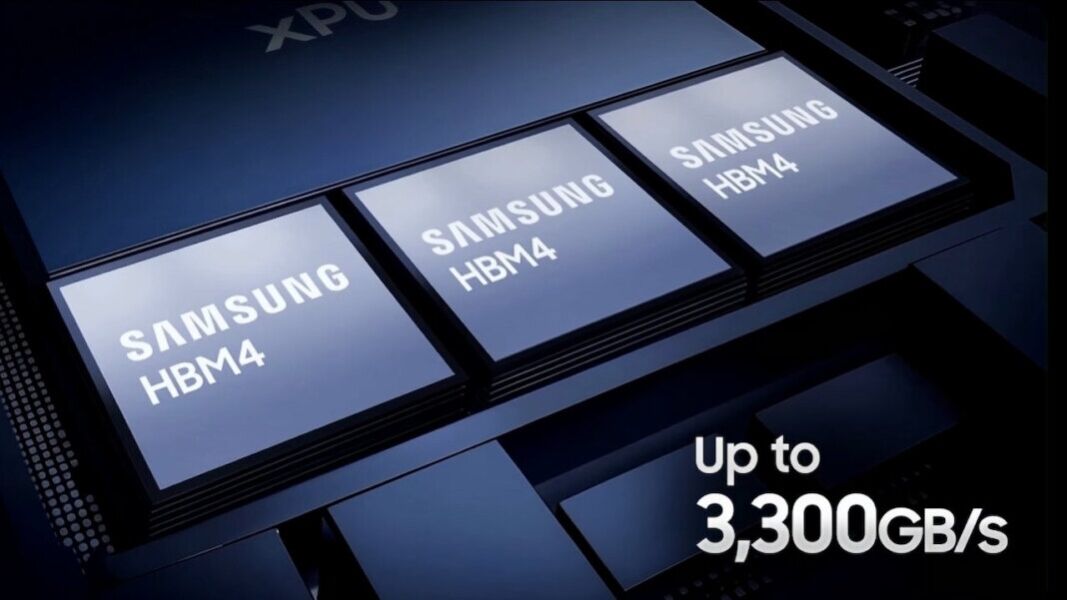
As Nvidia compares capacity, pricing, and system readiness, HBM4’s architecture makes each supplier slot valuable. Samsung rates its HBM4 at up to 3.3 terabytes per second per stack, 2.7 times HBM3E bandwidth. A separate dedicated HBM4 production line for OpenAI shows how commercial commitments reserve factory capacity beyond a test batch.
A volume order would tie memory availability to a production platform and give Samsung recurring demand for its factory plans. Paid samples leave quantity and shipment timing undisclosed, limiting revenue visibility for the Nvidia relationship. Production orders also help a supplier schedule wafers, advanced packaging, and assembly against expected deliveries. Without that commitment, evaluation revenue reveals testing activity but not Samsung’s eventual share of a future production platform.
Samsung’s Broader HBM4 Market Position
Samsung’s customer-specific gap sits alongside an HBM4 business already in commercial production. In February, Samsung began mass-producing HBM4 and shipped products to customers, although it did not identify Nvidia among them. Those shipments show that Samsung’s HBM4 moved beyond laboratory samples elsewhere, but they do not verify Nvidia’s procurement status. Commercial manufacturing and a named customer’s capacity allocation remain separate facts.
Broader market estimates reinforce that boundary. Memory-market research firm TrendForce put Samsung on track for more than $1.2 billion in HBM4 revenue through June and raised its full-year shipment forecast from 3.5 billion gigabits (Gb) to 4 billion Gb, but gigabits measure forecast capacity rather than chip count or customer-specific revenue. Neither figure identifies a particular buyer’s orders or allocated capacity.
Supplier schedules also differ. SK hynix’s meaningful recent HBM4 volume ramp was expected in the third quarter, while its full-year forecast fell from 4.5 billion Gb to 4 billion Gb. Nvidia has also deepened its memory partnership with SK hynix, increasing competition for supplier allocations.
Micron focused production capacity on HBM3E, with only a minor downward revision to its HBM4 forecast. Different ramp schedules across Samsung, SK hynix, and Micron point to a market in transition rather than a uniform decline. Samsung’s broader revenue and production milestones can coexist with a customer-specific order gap at Nvidia.
Nvidia placing a volume-production order would be the decisive commercial event. It would convert Samsung’s paid evaluation activity into recurring supply without requiring broader market estimates to stand in for a customer commitment.