- Internal Briefing: Microsoft executives have outlined a sales plan for employees to challenge OpenAI, Anthropic, and Google.
- Managed AI Stack: The pitch combines model deployment, monitoring, security, governance, and cost control in one Microsoft-managed environment.
- Evidence Gap: No public benchmark or internal briefing materials verify the negative Claude comparisons, and Microsoft and Anthropic had not commented.
- Partner Tension: Microsoft still offers Anthropic and OpenAI models while routing some Office tasks to its lower-cost systems.
Microsoft executives has outlined a competitive sales plan in an internal meeting, reports Bloomberg. The private briefing encouraged salespeople to challenge OpenAI, Anthropic, and Google while presenting Microsoft as an integrated enterprise AI platform, according to people familiar with the meeting.
Enterprise customers will hear a case built around lower costs, tighter security controls, governance, and easier model management rather than model capability alone. No internal briefing materials, independent confirmation, or public comparative benchmark are available for the negative comparisons with Claude. Microsoft and Anthropic had not responded to requests for comment.
Microsoft wants sellers to present one managed stack for choosing, fine-tuning, deploying, monitoring, securing, and paying for AI models. Corporate customers will have to weigh the cost and effort of governing AI across a company against assembling those functions across several vendors.
Microsoft’s Full-Platform Sales Case
Jay Parikh, a Microsoft executive vice president, said during the meeting as he promoted the integrated-system message for Microsoft’s fiscal year 2027:
“Everyone else is selling parts — we’re selling the full end-to-end system. That’s the story that we all need to get out there and tell in FY27.”
Jay Parikh, Microsoft Executive Vice President; remarks may be attributed (via Bloomberg)
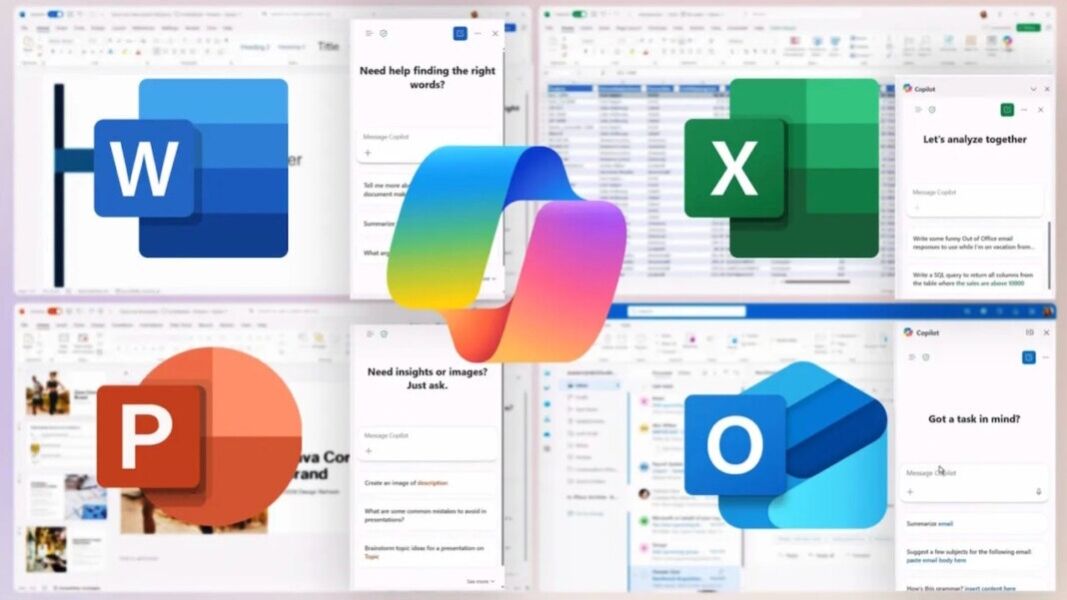
Microsoft 365 Copilot is Microsoft’s workplace AI assistant. Jacob Andreou, Microsoft’s Copilot executive vice president, compared it with Anthropic’s Claude model family at the same briefing. Andreou reportedly characterized Claude as slower and less accurate for office applications and as lacking Microsoft’s security integrations.
Microsoft’s Frontier Company AI engine supports models from OpenAI, Anthropic, Microsoft AI, open-source developers, and specialist vendors. Microsoft places model monitoring, governance, security, return-on-investment assessment, and financial operations for tracking AI and cloud spending in the same control layer.
Administrators can apply policies, observe model use, and compare spending across workloads from one managed environment. Enterprise customers will still need to compare how competing systems handle identity controls, data retention, audit records, billing, and model changes. Comparable tests will need to separate the value of Microsoft’s management layer from the quality of the model running beneath it.
Partners, Suppliers, and Rivals at Once
Anthropic remains inside the platform Microsoft is asking sellers to defend to its enterprise clients. Microsoft offers Anthropic models across several products, including its Researcher agent, Copilot Studio, Power Platform, and Copilot features in Office apps. Customers can select Claude without leaving Microsoft’s governed environment, where Anthropic processes covered data on Microsoft’s behalf under Microsoft product rules and enterprise protections.
The arrangement makes Anthropic a model supplier, a company processing customer data for Microsoft, and at the same time a sales rival in multiple roles. Enterprise customers can evaluate Claude for an individual task while retaining Microsoft’s policies and administrative controls.
Microsoft has started replacing some rival models in Word and Excel with lower-cost in-house alternatives by July 2026. A related model-routing effort moved Office AI tasks to Microsoft’s systems when a frontier model was unnecessary. The idea: assigning routine work to cheaper systems can reduce inference expense and gives Microsoft more control over Copilot’s operating cost.
But Microsoft and OpenAI also made Microsoft’s license non-exclusive through 2032 on April 27 which means OpenAI can operate across cloud platforms beyond Azure, while Microsoft remains its primary cloud partner and retains first access to ship OpenAI products on Azure, depending on their capability. Both companies also continue work on data centers, silicon, and cybersecurity, preserving technical cooperation as each gains more commercial freedom.