
- Spy Dispute: U.S. officials disagree over whether businesswoman Alice Huang knowingly spied on Nvidia’s former chief for China, CNN reports.
- Chip Diversion: A separate U.S. inquiry concerns suspected diversion of restricted Nvidia chips to China through Megaspeed, where Alice held a senior role.
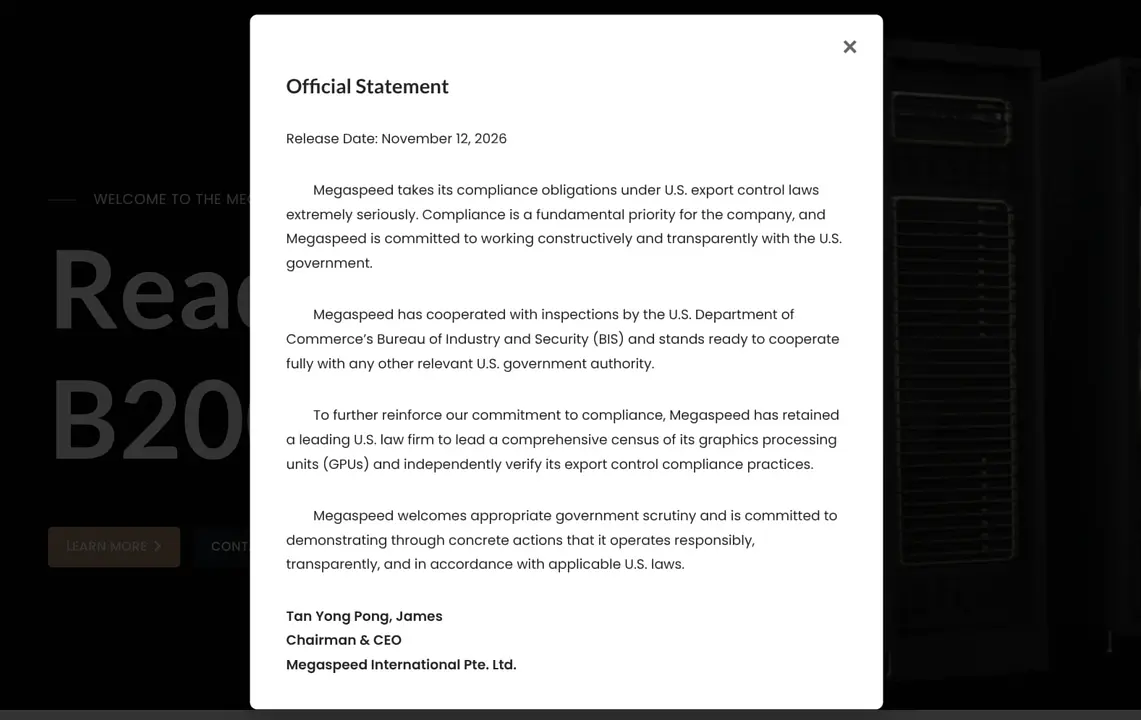
- Company Response: Megaspeed has promised cooperation and hired a U.S. law firm to lead a chip inventory and review its export-control practices.
- New Leadership: Nvidia appointed finance chief Colette Kress interim CEO after Jensen Huang resigned on November 12.
U.S. intelligence officials disagree over whether Chinese businesswoman Alice Huang knowingly spied for Beijing through her reported affair with Nvidia co-founder Jensen Huang, CNN reported on November 12. The FBI’s inquiry into the relationship remains open as the AI chipmaker moves to new leadership.
Alice Huang previously held a senior role at Megaspeed, a Singapore-based data-center company and major Nvidia customer. The two Huangs are not related.
Why Officials Disagree About Spying
According to CNN’s sources, some officials in the office of the U.S. intelligence director consider the description of Alice Huang as a Chinese spy overstated. CIA officials are also unconvinced that intercepted communications establish she knowingly passed information to Beijing. Other Trump administration officials regard her access to Jensen Huang, and through him to President Donald Trump, as a serious counterintelligence risk.
One person familiar with the investigation told CNN that communications appeared to show information reaching Chinese intelligence from someone with close access to Jensen Huang and Nvidia. CNN did not identify Alice Huang as the person supplying that information. The FBI’s concerns also included her reported rapid shift from Chinese state television journalism into business with unusually large purchasing power, alongside her relationship with the then-chief executive.
A person with knowledge of the matter told NBC News on November 8 that U.S. agencies had determined Alice Huang was a Chinese intelligence operative. NBC’s November 12 report also quoted a former national-security official who said her precise role remained unclear and suggested she might have been asked to cooperate because of her access, rather than serving as a career spy.
Attorney General Todd Blanche said on November 12 that neither he, the Justice Department nor FBI Director Patel had reached a conclusion about who Alice Huang was or was not.
China has rejected the spying allegation: Foreign Ministry spokesperson Guo Jiakun called it unsubstantiated at his November 9 briefing.
A former senior counterintelligence official said that Chinese identity itself can become grounds for suspicion. Joshua Hodges, a commissioner on the U.S.-China Economic and Security Review Commission, which examines the national-security effects of trade ties, argued that China can use people both knowingly and unknowingly.
The Questions About Information and Influence
Jim Himes, the top Democrat on the House Intelligence Committee, told NPR on November 10 that investigators should examine both information and influence. He asked whether useful information had been conveyed to China and posed a hypothetical example of influence: a relationship affecting a deal that sent chips to Singapore in a way that gave China access to them.
Himes connected that concern to Jensen Huang’s advocacy of China chip sales and the possibility that a romantic relationship could create a desire to accommodate a partner. In October 2025, Jensen Huang said he hoped to sell Blackwell AI chips in China, while acknowledging that Trump would decide whether to allow it.
Himes said Congress had received only a limited briefing on November 9. CNN reported that intelligence officials first learned of the relationship in 2025 and that Secretary of State Marco Rubio warned colleagues about the relationship in a memo in the spring of 2026.
A Separate Inquiry Into Chip Diversion
The Justice and Commerce departments began investigating Megaspeed in 2024, a person briefed on the matter told CNN. The inquiry formed part of a wider investigation of foreign shell companies suspected of diverting restricted Nvidia chips to China. Two law-enforcement sources also confirmed to CBS News that the Justice Department’s National Security Division was examining possible export-restriction violations involving Megaspeed.
A former Commerce official told CNN that suspected diversion through Megaspeed could serve China’s interest in obtaining chips and Nvidia’s interest in selling them.
Megaspeed promised cooperation in a November 12 statement signed by chairman and CEO Tan Yong Pong, also known as James Tan. The company said it had cooperated with inspections by the Commerce Department’s Bureau of Industry and Security. It also said it had retained a U.S. law firm to inventory its graphics processing units, or GPUs, and independently examine its export-control practices.
Singapore’s Ministry of Home Affairs said in a November 12 statement reported by NBC that authorities interviewed Alice Huang and held her passport in 2025. Investigators concluded in February 2026 that there was insufficient evidence to establish she had committed an offence. The ministry said she had received a warning for knowingly giving police inaccurate information that downplayed her company role, and had been barred from re-entering Singapore.
Singapore said it had not investigated Alice Huang for espionage. Its investigation into Megaspeed and six other people over server shipments through Singapore was continuing.
Corporate Security Reaches Beyond Hacking
Aernout Reijmer, former security chief at Dutch chipmaking-equipment supplier ASML, said corporate attention to AI-driven hacking and data protection can leave less time to consider an executive’s vulnerability to recruitment by a spy.
Kathy Lavinder, founder of specialist recruiter SI Placement, described a limit even for well-staffed security teams: they cannot dictate an executive’s private choices. “Security teams don’t have a veto,” she said.
Nvidia Has Moved to Interim Leadership
Nvidia’s board opened an independent investigation in response to news reports that Jensen Huang had been targeted by foreign intelligence. Independent directors, assisted by outside counsel, were assigned to oversee it. In that initial statement, the board said it had no reason to believe national security or Nvidia secrets had been compromised.
Jensen Huang resigned as president, CEO and a board member on November 12, effective immediately. Colette Kress became interim CEO while retaining her executive vice president and chief financial officer roles. The board is searching for a permanent successor.