- U.S. Clearance: ZTE may have joined roughly 10 Chinese companies allowed to buy Nvidia H200 artificial intelligence accelerators.
- Policy Limits: Each sale requires U.S. review, carries a 25% tariff, and excludes Nvidia’s newer Blackwell chips.
- Import Gate: China may not have permitted ZTE’s imports, so U.S. clearance does not establish delivery.
- Shipment Test: Very few licensed H200-class chips had reached China and Hong Kong, leaving usable capacity unresolved.
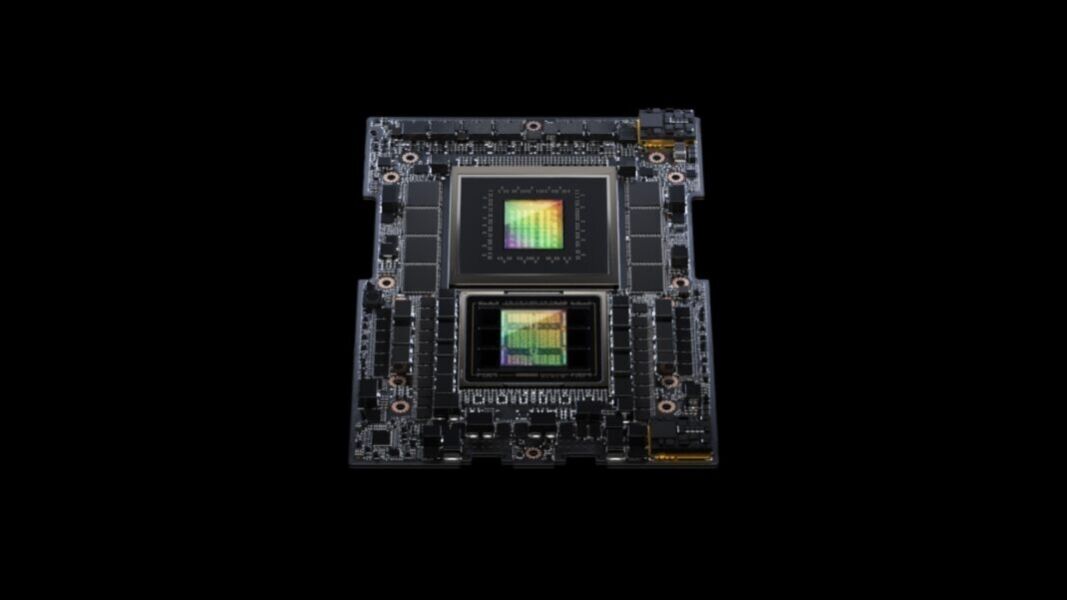
Chinese telecommunications equipment maker ZTE and server company Maginfra may have reportedly received U.S. clearance to buy Nvidia H200 chips. Nvidia’s H200 is a specialized processor for training and running AI models.
ZTE would join roughly 10 eligible Chinese companies, but the possible clearance does not establish that it placed an order or received hardware.
Chinese authorities may not have granted import permission for ZTE’s H200 shipments yet when the U.S. clearance emerged. So far, only a very small quantity had shipped to China and Hong Kong.
U.S. authorization removes one legal barrier without resolving Beijing’s separate import decision or showing that enough processors will reach ZTE for a material deployment. Neither ZTE nor Nvidia had commented on the described authorization.
What the H200 Clearance Allows
Under the case-by-case semiconductor export policy with a 25% tariff, each eligible sale requires an individual U.S. review. Permission for one company does not open the same products to every Chinese customer, and U.S. regulators’ general framework neither identifies ZTE’s company-specific license nor confirms a completed sale, purchase volume, delivery schedule, or customer deployment. ZTE is set to join roughly 10 eligible Chinese companies, including Alibaba, Tencent, ByteDance, and JD.com, but every transaction remains subject to its own licensing decision.
Eligible products extend through Nvidia’s older Hopper architecture, including the H200, while the Blackwell architecture still remains off-limits. The restrictions on advanced AI compute still withhold newer processors, and the H200 sits two product generations behind Nvidia’s latest architecture. H200 systems can train and run AI models, but ZTE’s engineers would have to design cloud and data-center workloads around the older generation instead of choosing from Nvidia’s full accelerator range, which affects performance planning and how long deployed systems remain competitive.
Beijing controls what happens after a U.S. license because Chinese authorities can admit, restrict, or reject an authorized shipment. Earlier H200 clearances still faced Chinese barriers, so U.S. permission cannot be treated as secured computing capacity. It means ZTE gains a legal route to a purchase only if China also accepts the import.
Tariffs create a separate commercial constraint if both governments permit a transaction. Higher unit costs would force ZTE to weigh H200 performance against the surcharge without gaining access to a newer chip generation, making the permitted architecture and total acquisition cost part of the same procurement decision. Nvidia might gain another eligible customer but no assurance about order size or timing, while ZTE would still need procurement terms, an available allocation, permission from Beijing, and physical shipment before any processors could enter service.
Demand Is High, but Deliveries Remain the Test
Roughly six months earlier, Chinese technology companies had more than two million H200s on order, and demand exceeded Nvidia’s available supply at the time.
Jeffery Kessler, Under Secretary of Commerce for Industry and Security at the U.S. Department of Commerce, said China had received very few H200 chip shipments so far. Limited volume can leave Nvidia’s sales and ZTE’s usable capacity almost unchanged until processors cross the border and reach deployable systems. Shipment data, rather than the number of eligible companies, will measure how much computing power the policy puts into operation in China.
Chinese companies must also balance near-term capacity against longer-term autonomy. Imported H200s can add training and inference resources sooner, but dependence on U.S. hardware and licensing exposes that capacity to future policy changes. Nvidia’s software ecosystem adds another dependency because workloads developed around imported hardware can become harder to move to domestic alternatives, while renewed imports could reduce demand for China’s own accelerator industry.