- Cross-App Rollout: Meta is introducing Muse Image through Meta AI, Instagram Stories, and WhatsApp, with more surfaces planned later in 2026.
- Why It Matters: The launch moves AI image generation from a standalone tool into the social, messaging, and advertising products people already use.
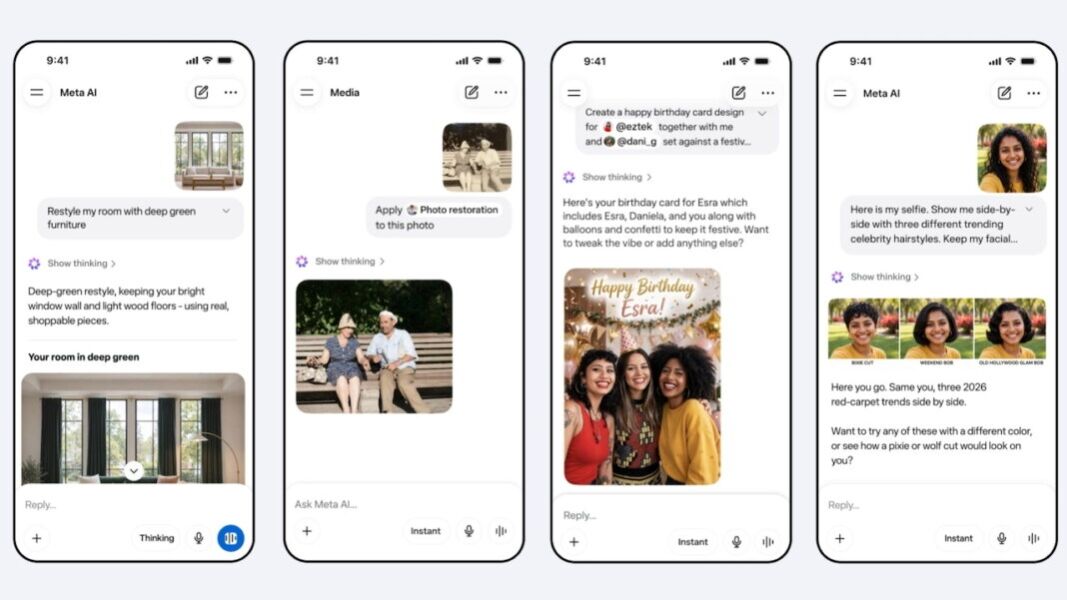
- Creative Workflow: Muse Image supports prompts, photo blending, presets, sketches, annotations, and iterative editing rather than only one-shot image generation.
- Instagram Controls: The model can use @mentioned public Instagram accounts in prompts, making user controls and misuse safeguards a key part of the rollout.
- Ad and Market Caveat: Advertiser access is expected through Advantage+ creative, while Meta’s benchmark comparisons should be treated as company-presented claims, not independent rankings.
Meta is putting a new AI image model directly into the apps where people already post, chat, and create ads. The company has announced Muse Image as an image-generation and editing model for Meta AI, with integrations across Instagram Stories and WhatsApp and a planned path into Advantage+ creative for advertisers.
The launch matters because Meta is not treating Muse Image as a standalone image generator. Instead, it is building the model into its existing consumer and business products. That gives casual users a way to make images inside Meta AI, gives Instagram and WhatsApp users creative tools inside familiar social surfaces, and gives advertisers a future route to generate campaign assets inside Meta’s ad stack.
What Meta Is Rolling Out Now
Meta is keeping basic image creation free inside the Meta AI app, while heavier use is tied to paid plans. Advertisers and agencies are expected to get Advantage+ creative access in the coming weeks, so that part of the rollout should be treated as planned access rather than a feature available to every marketer today.
The consumer rollout is split across apps. On Instagram, Muse Image powers more than 30 Stories effects. In WhatsApp, it brings image generation into direct chats, initially in limited countries before broader expansion. Meta is also planning additional Instagram and WhatsApp surfaces, along with Facebook and Messenger support later in 2026.
That staggered rollout is important. Muse Image is not arriving everywhere at once, and not every audience gets the same feature set on day one. Meta AI is the central creation surface, Instagram Stories makes the model part of everyday posting, WhatsApp turns it into a chat feature, and Advantage+ creative is the planned commercial route for advertisers.
How Muse Image Changes the Creation Workflow
Muse Image is designed around iteration, not just a single text-to-picture command. Users can start with a prompt, blend multiple photos, apply presets, and revise an image with sketches or annotations instead of starting over from a blank prompt.
That makes the model closer to a lightweight creative editor than a novelty generator. A user can generate a first image, mark up what should change, refine specific details, and keep adjusting the result inside the same workflow. For creators and marketers, that kind of revision loop is more useful than a tool that only produces one-off outputs.
Muse Image can also work with Muse Spark, Meta’s prompt-planning model, to reason through requests, search for context, and plan before generating an image. In practice, Meta is positioning the system as a more agentic image tool: one that can interpret a request, gather context, create a result, and support follow-up edits.

The Instagram @Mention Feature Raises the Biggest Questions
The most sensitive part of the rollout is on Instagram. Muse Image can use @mentioned Instagram accounts in prompts, allowing public photos from those accounts to influence generated images. That gives users a more social way to create AI images, but it also raises obvious questions about consent, impersonation, and misuse.
Meta says Instagram users can control content tagging for AI creation. That is an important safeguard, but it is narrower than requiring fresh approval every time someone mentions an account in a prompt. The practical test will be whether those controls are easy to find, easy to understand, and strong enough to prevent unwanted or misleading uses of public photos.
Why Advertisers Matter
Muse Image is also a business story. Advantage+ creative, Meta’s ad-creation toolset, is the planned entry point for advertisers and agencies. Inside that workflow, Muse Image could be used for style swaps, creative-element edits, and on-brand campaign variants with fewer manual revisions.
For Meta, the logic is clear. Free basic creation can help people sample the model inside Meta AI, while subscriptions and ad tools create a path for higher-volume use. If Muse Image becomes useful for campaign production, Meta can connect consumer AI creation to the advertising business that already drives much of its revenue.

Muse Image vs. Competitors
Meta is positioning Muse Image as competitive with leading image models, but the company’s evidence needs caution. Company-presented benchmark comparisons put Muse Image behind OpenAI’s GPT Image 2 and ahead of Google’s Nano Banana 2 on specified single-image and multi-image editing tasks. Those results are useful context, but they should not be treated as an independent verdict on the best image model.
The competitive field is broader than OpenAI and Google. Tools such as Ideogram, Leonardo AI, and Recraft already compete for creators, designers, and marketing teams. Meta’s advantage is distribution: it can place Muse Image inside Meta AI, Instagram, WhatsApp, and eventually the advertising tools brands already use. That does not prove Muse Image is technically superior, but it could make the model difficult for users and marketers to ignore.
The Bigger Meta AI Strategy
Muse Image also helps Meta present more of its creative AI stack as its own. The company has been linked to Midjourney and Black Forest Labs, and an in-house image model could reduce reliance on outside systems over time. Even if external models remain part of Meta’s broader AI ecosystem, Muse Image gives the company a stronger native product to build around.
The launch follows Meta’s April introduction of Muse Spark, giving Meta Superintelligence Labs another recent model in the Muse family. The more important point is not the internal organization chart, but the product direction: Meta is building a connected set of creative AI tools for images, prompts, ads, and eventually video.
What Comes Next
Later in 2026, Meta plans to bring Muse Image to Facebook and Messenger, expand it across more Instagram and WhatsApp surfaces, and continue work on Muse Video, a planned generative-video model.
The next test is not only whether Muse Image can match rival models on quality. Meta also has to show that it can handle consent, misuse, advertiser safety, and independent scrutiny as image generation moves deeper into its apps. Muse Image does not need to be the best standalone image model to matter. If Meta makes it the default creative tool inside social posting, messaging, and advertising, distribution alone could make it a major player.