- Cost Cut: OpenAI engineers put forward techniques that could more than halve model-serving costs, with rollout details unconfirmed.
- Workload Scope: Logged-out traffic is used as an example, not paid sessions or all application programming interface calls.
- Method Caveat: Key-value caching, lower-precision data, batching, and routing remain possible mechanisms.
- Pricing Test: OpenAI has not announced cheaper ChatGPT or API rates so far.
OpenAI’s engineers have put forward optimization techniques that could deliver a more than 50 percent inference-cost cut for ChatGPT and application programming interface responses, against increased OpenAI infrastructure cost pressure. Method details, rollout timing, and customer-facing price changes remain unconfirmed publicly, so the claim is still an internal efficiency target rather than a launched discount.
AI inference is the model-serving phase after training, when an AI system generates responses for users or developers. Every response consumes compute after the model is built, making repeated use different from one-time training expense. Recurring per-request work links the claim to OpenAI’s margins, developer API economics, and enterprise AI bills, while enterprise software teams are already adjusting to usage-based AI pricing.
Developers still cannot treat the internal cost-cut claim as evidence that paid ChatGPT sessions, API calls, or every OpenAI model are cheaper. The caveat is important because application programming interface customers often pay by tokens, cached input, output, and scheduling tier rather than by a single flat service fee. Open questions include software changes, infrastructure scheduling, model routing, hardware utilization, and smaller serving improvements.
What the Cost Cut Covers
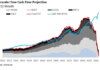
One reported workload example is logged-out ChatGPT traffic by visitors without a free or paid account. At one point, that workload needed only a couple hundred graphics processing units, the chips used to run AI workloads, without turning the claim into a paid-product or fleet-wide benchmark. Anonymous visitor traffic can be simpler to optimize than paid sessions because it may involve different personalization, retention, tool-use, and service-level expectations.
Paid ChatGPT sessions and enterprise deployments can carry different latency targets, safety checks, data controls, uptime requirements, and product features. Developers using OpenAI’s API may also send longer prompts or choose more expensive models. A changed API rate, paid ChatGPT terms, workload notes, or customer rollout would be the first practical sign that lower internal costs already changed OpenAI’s products.
Why Model-Serving Efficiency Matters
Candidate techniques include key-value caching, quantization, batching, and routing, but none is identified as OpenAI’s method. Key-value caching stores attention data so a model can reuse prior context instead of recomputing it, while quantization and cache-memory savings use lower-precision model data to reduce memory and compute needs. For long-context and large-batch inference, NVFP4 KV cache work shows how lower-precision cache data can reduce memory footprint and compute cost.
Cache reuse can reduce prefill recomputation, the early stage where a model processes prompt context before generating output. Lower memory pressure can also support larger batches or longer context windows when accuracy stays within acceptable limits. Batching can group requests so chips process them more efficiently, while routing can send simpler prompts to cheaper models when quality and safety requirements allow it.
OpenAI and Broadcom’s custom inference-chip strategy centers on Jalapeno, a hardware path adjacent to the software-optimization claim. The separate hardware effort matters because model-serving economics depend on both software efficiency and the chips available to run workloads.
Pricing Pressure Is the Real Test
OpenAI’s gpt-5.5 short-context tier has standard rates of $5.00 per million input tokens, $0.50 per million cached input tokens, and $30.00 per million output tokens, while batch and flex processing halve those rates for workloads that can accept different scheduling. DeepSeek-v4-flash is priced at $0.14 per million cache-miss input tokens, $0.0028 per million cache-hit input tokens, and $0.28 per million output tokens on DeepSeek’s API pricing page, and DeepSeek V4’s open weights and long context give developers just one concrete alternative benchmark. Published rates set the comparison point: OpenAI needs a pricing change or rollout note before the internal cost claim becomes a customer-facing result for ChatGPT, named API models, specific workloads, or enterprise customers.