- Deal Gate: Rocket Lab’s planned takeover of Iridium needs shareholder and regulatory approvals before mid-2027, with $54-per-share terms worth about $8.0 billion.
- Asset Mix: Iridium would add L-band satellite communications, subscribers, recurring services and revenue scale after closing.
- SpaceX Context: The plan targets resilient communications and vertical integration, not a direct Starlink home-broadband clone.
- Approval Risk: Shareholders and regulators still decide whether Rocket Lab can turn Iridium services into post-close applications.
Launch and spacecraft company Rocket Lab plans to acquire satellite communications operator Iridium. Iridium shareholders and regulators must clear the deal before ownership changes, and the companies expect a mid-2027 close.
Deal terms give Iridium holders $54 per share in cash and stock, implying about $8.0 billion in enterprise value. If the transaction closes, Rocket Lab would add Iridium’s low-Earth-orbit L-band communications network, active subscriber base and recurring services to its launch and spacecraft manufacturing business.
Iridium’s L-band airwaves are used for resilient satellite communications. Its network serves more than 2.55 million active subscribers across government, defense, aviation, maritime, Internet of Things, satellite links directly to phones or devices, backup navigation, precise-time and safety services.
Rocket Lab and Iridium expect the transaction to close in mid-2027 if Iridium stockholders and regulators approve it.
Rocket Lab also has a $3.6 billion bridge term loan commitment from Deutsche Bank and Wells Fargo for the cash portion.
Assets, Spectrum and Revenue Scale
Iridium’s value is not just the orbital fleet. Its L-band spectrum can keep connections working through clouds and harsh weather, creating a service model that differs from consumer broadband constellations such as SpaceX’s Starlink and Amazon’s LEO broadband network. Rocket Lab founder and CEO Peter Beck pointed to Iridium’s “highly valuable spectrum”, saying it “is very difficult to come by.”
Revenue scale would lift Rocket Lab’s revenue substantially. In 2025, Iridium delivered $871.7 million revenue and $495 million operational EBITDA, a company-defined operating earnings measure before interest, taxes, depreciation and amortization. Rocket Lab’s 2025 revenue was $602 million; on that comparison, the acquisition would more than double Rocket Lab’s revenue base after closing.
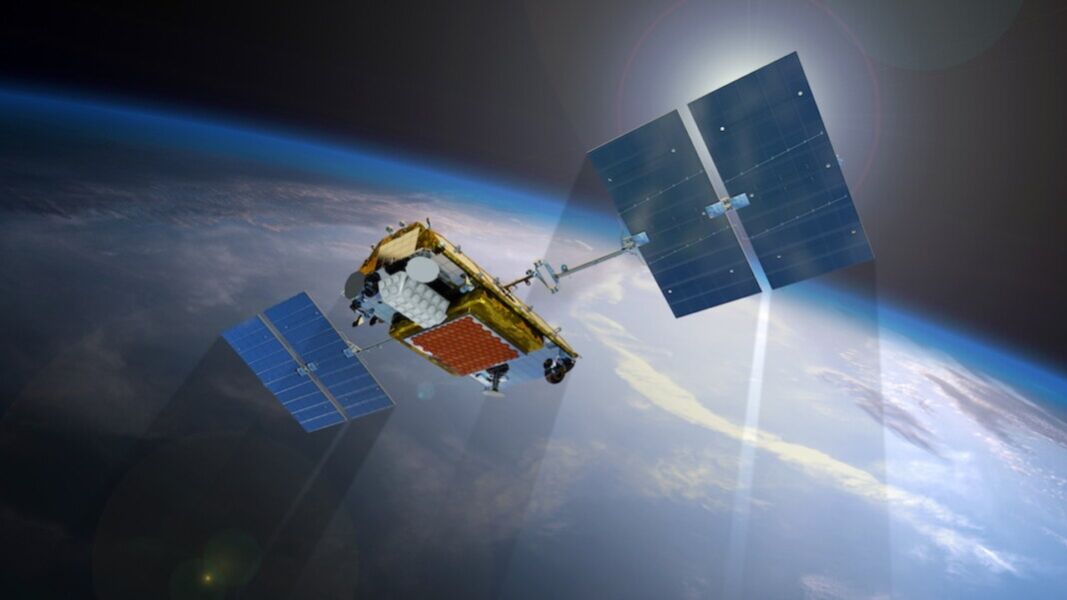
Iridium’s existing constellation also shapes the integration timetable. Iridium operates 66 satellites and 14 spares in low Earth orbit, and the constellation may last into the 2030s or perhaps 2040. Rocket Lab would have room to work on services and future satellites without treating immediate full replacement as the first post-close task.
Rocket Lab CEO Peter BeckBeck explained the rationale behind the planned takeover, saying “They have millions of customers, and, of course, they’re a trusted government provider.” Defense, commercial, maritime, aviation, Internet of Things and safety-of-life users would give Rocket Lab operating relationships rather than only spectrum rights or hardware. Enterprise, maritime and government customers already use many Iridium services where terrestrial networks are unavailable or unreliable.
Such government and safety-of-life work is tied to reliability, coverage and continuity, while maritime and aviation users need communications away from terrestrial networks. Under the proposed deal, Iridium would become a larger services-side step for Rocket Lab, and recurring service revenue could steady a launch business that otherwise depends on mission cadence and manufacturing milestones.
Why Starlink Remains a Hard Comparator
SpaceX’s Starlink remains the benchmark because it already combines satellites, network scale and customer reach. Iridium’s L-band spectrum gives Rocket Lab a different satcom entry point through the proposed Iridium deal. With that, Rocket Lab would be buying a secure, resilient foundation for reliable satellite communications rather than a home-internet replica.
Rocket Lab would also gain an immediate foothold in satellite Internet of Things and direct-to-device services. Similar phone-to-satellite ambitions have drawn telecom and platform backing elsewhere, including AST SpaceMobile’s spectrum partnerships.
Control of Iridium’s global L-band spectrum would keep Rocket Lab from having to pursue a fresh allocation before building services around the network. But regulatory approvals, committed financing and integration work will have to come before any new spacecraft buildout.
According to Rocket Lab CEP Beck, Iridium NEXT remains in good health, reducing any urgency to immediately replace it.