- GPU Route: Microsoft is considering Phi Silica support on supported Nvidia GPUs for local AI models.
- Developer Gate: Developers need Experimental Channel, Developer Mode, SDK 2.2.2-experimental9, and current drivers.
- Feature Limits: GPU execution still lacks NPU-only capabilities such as prompt compression and speculative decoding.
- Hardware Stake: RTX owners gain a route, but consumers still lack full Copilot+ PC parity.
Microsoft is considering extending Phi Silica GPU support to supported Nvidia GPUs for local AI models.
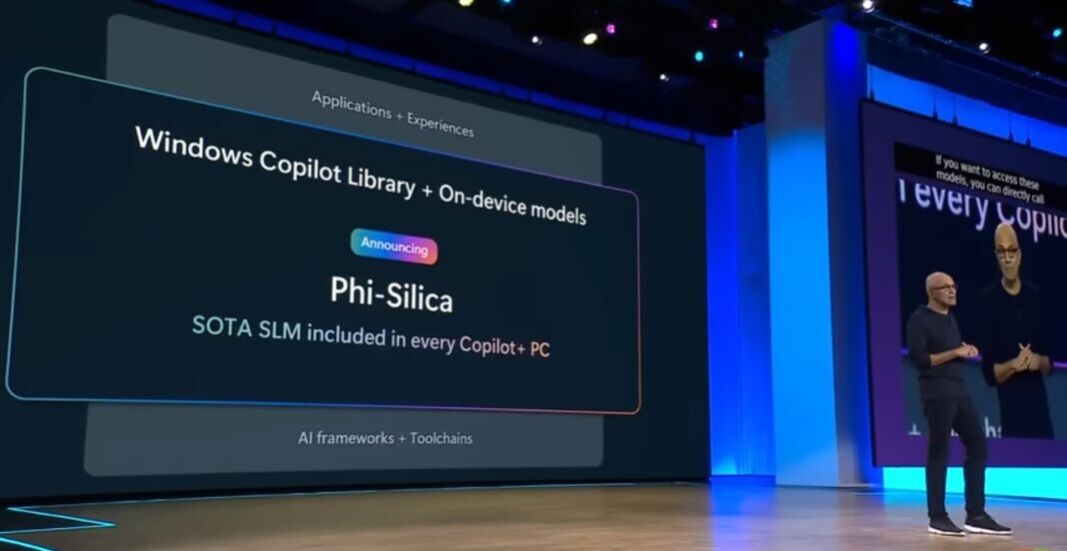
Microsoft’s Phi Silica line are Small Language Models (SLM) explicitly engineered to run locally on Neural Processing Units (NPUs) of Windows Copilot+ PCs. Derived from the Phi-3 architecture, thez delivers low-latency language processing entirely on-device.
Developer access would widen the local-AI hardware lane beyond Copilot+ PCs.
Supported Nvidia hardware and developer setup determine who can use the GPU route. The model requires RTX 30-series or newer GPUs with a minimum of 6GB of video memory (VRAM). AMD GPU support is marked for later.
Developers also need Microsoft’s experimental Windows Insider testing channel, Developer Mode, the new Windows App SDK 2.2.2-experimental9 or later, and current GPU drivers before the GPU path is available. The requirements keep the test closer to a developer preview than a consumer feature switch, because unsupported machines cannot simply download the model and receive the same local AI behavior.
What the GPU Path Supports
Windows AI APIs are Microsoft’s local model interfaces for Windows apps, and their device list now covers Copilot+ PCs with NPUs, supported GPUs, and systems that meet recommended CPU specifications. Phi Silica is the narrow GPU exception inside that matrix: Microsoft lists the local small language model as available on Copilot+ PC NPUs and on Windows 11 devices with a supported GPU. Windows ML, Microsoft’s unified AI inferencing framework, gives developers a wider adjacent option because its hardware acceleration can run custom or open-source models locally across GPUs, NPUs, and CPUs from AMD, Intel, Nvidia, and Qualcomm.
Broader Windows ML support does not change the Phi Silica requirements. Microsoft’s built-in Windows AI API models remain tightly specified, while developer-managed models can use a broader hardware stack.
App readiness controls keep Phi Silica in a development path. Devices in the GPU lane do not have the model preinstalled, and Phi Silica is downloaded on demand the first time an app requests readiness. Apps must check the GetReadyState flag before invoking a model and avoid calling EnsureReadyAsync on unsupported hardware.
Readiness checks give app makers a way to avoid presenting GPU support as available before the hardware, driver, SDK, and channel conditions are met. They also limit the change for users who might otherwise expect a simple Windows toggle.
The supported GPU execution falls short of full Copilot+ PC parity. Nvidia systems lack NPU-only Phi Silica capabilities such as prompt compression and speculative decoding, which can affect context handling and generation speed. NPUs are built for lower-power AI processing in battery-limited laptops, while discrete GPUs offer familiar compute capacity on many higher-end desktops and gaming PCs.
Windows AI Hardware Stakes
Microsoft introduced Copilot+ PCs in 2024 as an AI-focused Windows PC category built around local silicon requirements, and Phi Silica joined the Windows Copilot Library that same year. Nvidia GPU support leaves that NPU-centered category in place while giving Microsoft a way to reach developers who already have supported graphics hardware. Copilot+ branding, Windows AI API availability, and discrete GPU access now describe overlapping but not identical hardware groups for OEMs and app developers.
GPU acceleration was already part of the Windows AI stack before this Phi Silica test. In 2024, DirectML enabled machine-learning workloads on DirectX 12 compatible GPUs, helping GPUs carry more machine-learning work through Windows even as Copilot+ PC branding kept NPUs in the foreground. Microsoft’s new route turns that split into a concrete developer question: which local AI capabilities should require an NPU, and which can run acceptably on existing graphics hardware?
Nvidia RTX owners get the first GPU path, AMD support is only listed as coming later, and consumers do not get a simple toggle for the full Copilot+ feature set. Windows 11’s AI strategy remains fragmented by model, API, GPU vendor, and release channel, even as Microsoft tries to put more hybrid local and cloud AI orchestration inside the operating system.
AI data center demand has strained storage supply, while AI demand is also affecting broader PC component availabilitz. A recent entry-level PC forecast warned that cheaper Windows machines could be squeezed by 2028. Hardware cutoffs become more consequential when Windows AI features depend on specific silicon, memory, drivers, and release channels.
Microsoft has not provided a broad consumer-release schedule for this GPU path. An official release note would clarify whether Phi Silica GPU support moves beyond Experimental Channel, Developer Mode, and the experimental Windows App SDK build.