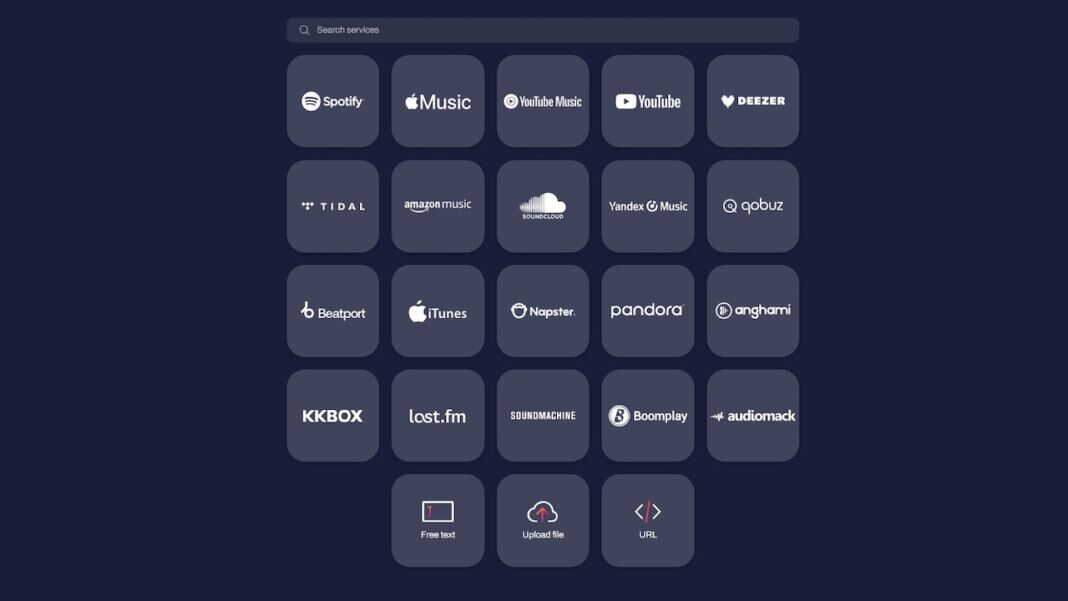
- Playlist Scanner: Deezer has launched a free AI-music scanner for playlists on rival streaming services.
- User Workflow: Listeners connect a service, scan up to 100 playlists, and receive Deezer’s AI-track results.
- Data Caveat: Deezer puts daily AI music at 75,000 tracks, but its accuracy and prevalence figures are company claims.
- Platform Stakes: Spotify and Qobuz show how streaming services are testing disclosure, detection, and rights controls.
French streaming service Deezer has launched a free online AI music detector for listeners who want to check playlists from rival services. Its scanner looks for tracks created wholly or substantially with generative AI systems, including music stored in Spotify, Apple Music, YouTube Music, SoundCloud, and other connected playlists.
Deezer’s current figures put daily AI-music intake at nearly 75,000 AI-generated tracks, more than 44 percent of daily music delivery.
Company data also puts AI-generated music in the playlists of 43 percent of people joining Deezer from other services. For listeners and rightsholders, the scanner turns those company measurements into a recommendation-trust and royalty-pool issue, not an independently audited market total.
How Deezer’s Playlist Scanner Works
Listeners choose a streaming service, connect an account, and then can use Deezer’s AI music detector to scan playlists for synthetic music. Deezer lists 27 supported languages.
The services currently supports roughly 20 streaming platforms. Users can analyze up to 100 playlists per scan.
Deezer CEO Alexis Lanternier framed the launch as a way to give listeners a separate check while other services remain outside the company’s own scanning workflow.
“No other company has followed our lead yet, so we decided to make it possible for everyone to check if their playlists include synthetic music, no matter which streaming platform they use,”
Alexis Lanternier, Deezer CEO (via Deezer Newsroom)
User-facing scans are not built-in Spotify, Apple Music, YouTube Music, or SoundCloud features. Deezer can classify tracks for a listener, but each outside platform still controls labeling, removal, and recommendation treatment inside its own service.
Inside Deezer, songs detected as AI-generated are removed from algorithmic recommendations, meaning automated playlist and recommendation placement, as well as editorial playlists. Outside Deezer, the scanner returns information for listeners who then decide whether to remove, keep, or investigate those songs.
Deezer puts scanner accuracy at 99.8 percent and places possible false positives below 1 in 10,000 authentic songs. For listeners, a wrong flag could still shape whether a human-made track stays in a personal playlist.
Deezer’s system can detect music from AI music generators Suno and Udio and add similar tools when training examples are available.
AI Music Controls Are Becoming a Platform Race
Deezer made its detection technology commercially available in January after using it inside its own service.
January figures put fully AI-generated deliveries at about 60,000 tracks at the time, or roughly 39 percent of all music delivered every day.
Creator economics add another pressure point. An earlier estimate from the International Confederation of Societies of Authors and Composers and research firm PMP Strategy put potential losses at 24 percent of music creators’ revenues, about 4 billion euros annually by 2028.
Training uses of creators’ works and substitution by AI-generated outputs both drive that estimate. Music services are answering the new trend with detection, disclosure, and rights-management controls.
Rival platforms are choosing different controls. Spotify’s model depends on labels, distributors, and partners submitting AI disclosure data through credits, so an absent AI credit does not prove AI was not used.
Hi-Fi music service Qobuz in February unveiled a proprietary system to tag 100 percent AI-generated content across new releases and its existing catalog. Qobuz’s detector had started scanning new uploads and catalog titles by March 2026.
What Comes Next for Streaming Platforms
Streaming services are moving from passive disclosure toward detection, labeling, attribution, and rights controls as AI-assisted streaming fraud makes synthetic tracks a royalty and trust problem. Deezer is also licensing its AI-detection technology to the wider music industry after testing it with France’s royalty agency Sacem.
Rival platforms now face the decision Deezer describes as unresolved: whether to license or integrate detection after a launch tied to 75,000 daily AI-generated tracks. Without that integration, Deezer’s June detector remains a separate listener tool rather than a service-level control across competing platforms.