- IPO Launch: Nuclear energy startup Deep Fission filed a roughly $157 million Nasdaq offering at $24-$26 per share, targeting a $1.66 billion valuation under ticker FISN.
- Going-Concern Caution: Auditors warn the startup may run out of cash within 12 months as the accumulated deficit grew to $88.1 million by March 2026.
- Missing Timeline: The new S-1 drops the July 2026 criticality date Deep Fission previously gave investors and offers no replacement.
- Unbuilt Reactor: Investors must back an underground small modular reactor not yet built or licensed, with IPO proceeds the clearest near-term runway.
Nuclear energy startup Deep Fission this week launched a roughly $157 million public offering of common stock on the Nasdaq Global Market under the ticker FISN. Berkeley-based Deep Fission is pursuing a roughly $1.66 billion valuation through the raise, even as auditors warn the startup could run out of cash within a year and Deep Fission has not set a new date for switching its first underground reactor on.
Deep Fission is part of a new wave of nuclear startups trying to revive reactor construction with small modular reactors, or SMRs, which are designed to be built in standardized units rather than as one-off megaprojects. Its approach is more unusual: instead of housing the reactor in a conventional above-ground containment building, the company wants to place it deep underground and use geology, water pressure and depth as part of the safety system. The concept remains at an early stage, however, with no operating reactor, no final license and key engineering assumptions still to be proven in the field.
Underwriters are marketing 6,000,000 shares priced at $24 to $26 each, with a 30-day option for up to 900,000 additional shares. Incoming investors are being asked to back an underground small modular reactor, a smaller, factory-built design, that has not yet been built or licensed.
The September 2025 back-door listing with Surfside Acquisition, a Delaware shell company, placed Deep Fission in SEC-reporting status without producing a publicly traded stock. This week’s Nasdaq filing is the second public-listing attempt.
Going-Concern Warning and a Disappearing Timeline
Deep Fission’s new S-1, filed on May 20, 2026, shows a sharper financial picture than a draft the company circulated five months earlier. Auditors have carried forward the same “going concern” caution, an indication that Deep Fission may run out of money within 12 months if the IPO does not close.
Cash pressure has tightened in the interim. By March 2026, the accumulated deficit grew to $88.1 million, up from $56.2 million previously.
Burn rate has accelerated alongside that deficit. In the six weeks before the May registration, the new filing reports cash declines of about $6.4 million, or roughly 7% of liquid reserves. IPO proceeds now stand as Deep Fission’s clearest near-term runway.
Conspicuously absent from the new registration is any criticality date. Back in December 2025, Deep Fission had told investors it expected to reach criticality, the point at which a nuclear chain reaction becomes self-sustaining, by July 2026, and no replacement date appears in its place. An SEC quiet period before the offering prevents further public disclosure on the slipped milestone or broader financial picture.
Drilling Progress and the Underground Reactor Concept
What investors are being asked to fund is a reactor that lives a mile down. Deep Fission’s Gravity Reactor is engineered to use hydrostatic pressure from a tall water column and the surrounding rock to provide containment, cooling, and radiation shielding, removing equipment that conventional plants build above ground.
Deep Fission founder Richard A. Muller, a University of California, Berkeley physicist, started the company in 2023 with his daughter, chief executive Elizabeth Muller, and has described the design as “the simplest reactor that could be conceived.”
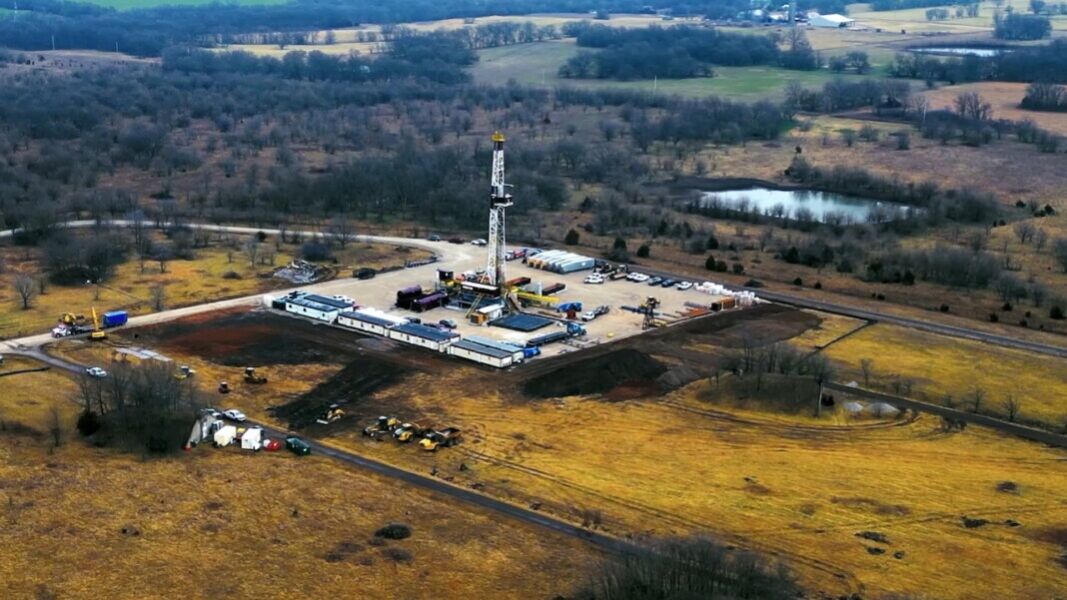
Field work is far less advanced than that pitch. Drilling began on March 10, 2026 at the Parsons, Kansas site selected for the U.S. Department of Energy’s Reactor Pilot Program, to a planned depth of about 6,000 feet and a diameter of roughly eight inches.
Because the Gravity Reactor is meant to sit a mile underground, the current bore will reach only about a fifth of its full operating depth, leaving the load-bearing geology of the design unproven at scale.
A Second Attempt After a Stalled First Listing
A year before this filing, the company’s $15 million fundraising round had stalled. Hyperscaler demand for carbon-free baseload power changed those fortunes later in 2025.
In February 2026, Deep Fission’s $80 million equity round drew $20 million from data center developer Blue Owl, which also signed a non-binding agreement for future power plants.
Following that financing, the company’s first attempt at public markets came through the September 2025 Surfside reverse merger, which left Deep Fission an SEC-reporting company with no public trading activity to show for it. In the new S-1, the company denies any public trading of its stock, even though the back-door listing put it in reporting status more than seven months earlier.
A peer has cleared a higher bar. X-energy completed an upsized IPO in April 2026, is already generating revenue, and is materially further along in Nuclear Regulatory Commission licensing than Deep Fission. Deep Fission’s 6,000,000-share offering must price within the 30-day underwriter window that opened with this week’s filing. Exercise of the 900,000-share overallotment will decide whether the proceeds may clear the 12-month runway the auditor’s going-concern caution sets out.