- Pentagon Deals: The Department of War signed agreements May 1 letting eight frontier AI firms run models on classified IL6 and IL7 networks.
- Approved Vendors: SpaceX, OpenAI, Google, Nvidia, Reflection, Microsoft, Oracle and Amazon Web Services are cleared for secret and highly sensitive defense systems.
- Budget Stakes: Defense leaders are seeking $961.6 billion in 2026, with $33.7 billion earmarked for science, technology and autonomous systems.
- Anthropic Absence: Anthropic did not join after talks stalled over surveillance and weapons guardrails, and Palantir pulled its Claude models from DoD platforms.
- Open Disclosures: Officials did not specify deployment timing, contract values, or which models will run on classified networks first.
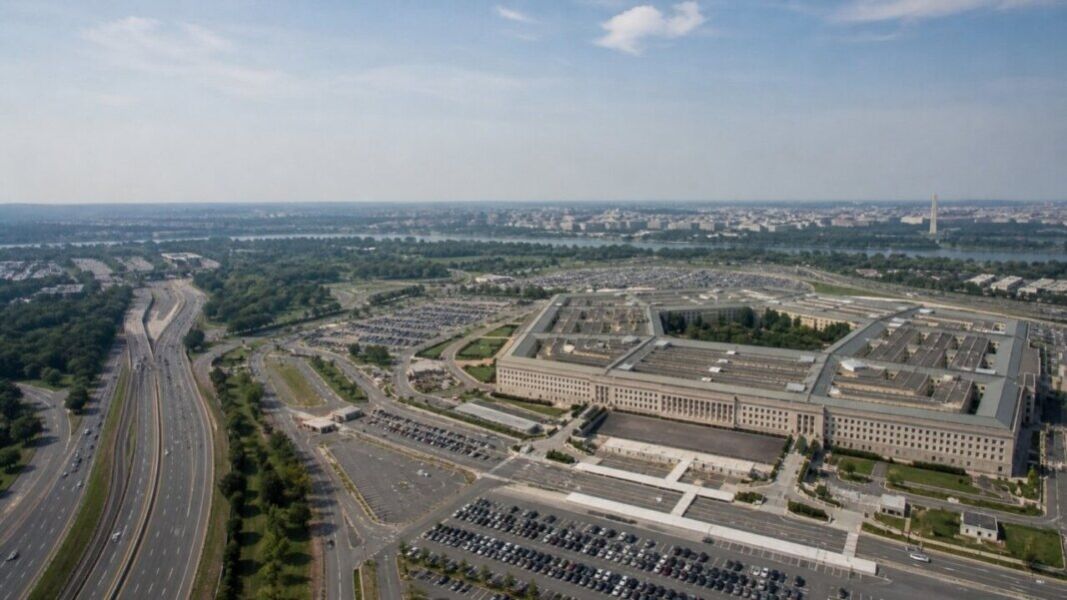
The U.S. Department of War has signed agreements with eight frontier AI companies to deploy advanced AI on its classified military networks, opening the Pentagon’s sensitive computing environments to commercial models for the first time at this scale.
SpaceX, OpenAI, Google, Nvidia, Reflection, Microsoft, Oracle and Amazon Web Services are certified for IL6 and IL7 networks, the Department’s tiers for secret and highly sensitive national-security systems. Defense officials cast the move as supplying secure frontier AI for data synthesis, situational awareness and warfighter decision-making.
Defense leaders are seeking $961.6 billion in the 2026 budget request, with $33.7 billion earmarked for science, technology and autonomous systems. More than 1.3 million personnel have reportedly already used the unclassified GenAI.mil platform, generating tens of millions of prompts and hundreds of thousands of agents in five months under an AI Acceleration Strategy.
“These agreements accelerate the transformation toward establishing the United States military as an AI-first fighting force and will strengthen our warfighters’ ability to maintain decision superiority across all domains of warfare.”
U.S. Department of Defense, official statement
What the Agreements Cover
IL6 covers secret-level information; IL7 handles more sensitive systems running highly restricted national-security data. Across IL6 and IL7 environments, the eight providers will spread data synthesis, situational understanding and warfighter decision-making across a diverse AI stack rather than relying on any single vendor.
Building on the unclassified GenAI.mil platform that stood up in December 2025, the classified rollout extends earlier work. Designed for non-classified tasks like research, drafting and data analysis, GenAI.mil has cut task times from months to days, Pentagon officials said.
Vendor Response and Anthropic’s Absence
OpenAI repeated an earlier line that defenders of the United States deserve the strongest tools available, while AWS spokesperson Tim Barrett pointed to Amazon’s decade of military work. SpaceX, Nvidia, Microsoft and Google did not immediately respond to requests for comment.
Anthropic, which insisted on surveillance and weapons guardrails as Pentagon negotiators pushed for unrestricted-purpose language, is absent after the Pentagon deal talks stalled. Earlier, the administration had branded the company a supply-chain risk; a March 2026 injunction reversed that designation without restoring its certified-vendor status. Palantir pulled its Claude models from DoD platforms, though Claude had run on classified networks through the firm’s Maven toolkit before the ban.
“The DoD announcement that it has agreed to deploy AI on classified networks raises more questions than it answers. How will DoD use the AI that it deploys, and how will it ensure that such use does not result in errant decisions with lethal impact? Will it use AI to further supercharge surveillance, including surveillance of Americans? This announcement only underlines the need for more transparency about the DoD’s use and oversight of AI.”
Greg Nojeim, Director, Center for Democracy and Technology Security and Surveillance Project (via Decrypt)
Prior Pentagon AI Procurement Pattern
May 1’s list culminates a 2025 pattern: the Pentagon contracted Scale AI in March 2025 for the Thunderforge planning system, signed deals for OpenAI’s ChatGPT and xAI’s Grok in July 2025, and reached a Google arrangement last month for classified AI work. Under chief digital and AI officer Cameron Stanley, the department tapped Google’s Gemini for classified tasks. Reflection is a newer startup backed by NVIDIA, and the NSA has begun deploying Anthropic’s Claude Mythos AI model on classified networks despite the broader dispute.
Pentagon officials did not specify when AI models would be available on classified networks or how much the eight vendors are being paid. Contract values are absent from the Department’s classified networks release. A concrete next gate will be the first IL6 or IL7 deployment confirmation that names a vendor, model, and go-live date.