- Image Input: Zhipu released GLM-5.4 to GLM Coding Plan subscribers, giving its flagship coding model the ability to read images.
- Code Context: The coding tools Cline and Claude Code offer a one-million-token setting, letting GLM-5.4 consider large amounts of code at once.
- Usage Credits: GLM-5.4 uses fewer credits per token than GLM-5.3, stretching the same weekly credit balance.
- Wider Access: Zhipu says it will open the general-purpose API for connecting other software after a safety assessment.
Zhipu released its flagship AI coding model, GLM-5.4, on November 23 for every tier of its developer subscription. In the Cline coding assistant, developers can show the model a screenshot of a broken interface alongside the code they want it to inspect.
GLM-5.4 is now available to all GLM Coding Plan users.
New vision capabilities and stronger all-round coding performance.
For users with weekly quotas, GLM-5.4 now comes with 50% more quota compared to GLM-5.3.
— Zixuan Li (@ZixuanLi_) November 23, 2026
Images Alongside Large Codebases
Developers can use a one-million-token context window in Cline or enable one in Anthropic’s Claude Code. The window sets how much material the model can consider at once. Tokens are the chunks of text or code the model processes, and a million-token window gives developers room to include many files in one request.
Use GLM-5.4 with your Coding Plan:
– In Claude Code: set the model to glm-5.4[1m]
– In other tools: set the model to glm-5.4— Zixuan Li (@ZixuanLi_) November 23, 2026
Zhipu had already tested its previous flagship, GLM-5.3, at a million tokens. That model accepted text only. GLM-5.3-Flash could already read images, as could Zhipu’s separate GLM-5V-Turbo coding model from April.
Coding Results and Run Time
Software reviewer AICodeKing tested GLM-5.4 before release and ranked it seventh of 19 in his KingBench 4 coding benchmark. He graded what each model built with its coding tool across six projects, including a game emulator and a 3D room designer. GLM-5.4 earned 55.3% of the available points.
GLM-5.4 took 431 minutes to run the suite. Google’s Gemini 4 Neon took 109 in comparison. GLM-5.4 ran at its highest reasoning setting and took about 4.6 times as many steps as Neon. However, GLM-5.4 was slightly quicker per step on average.
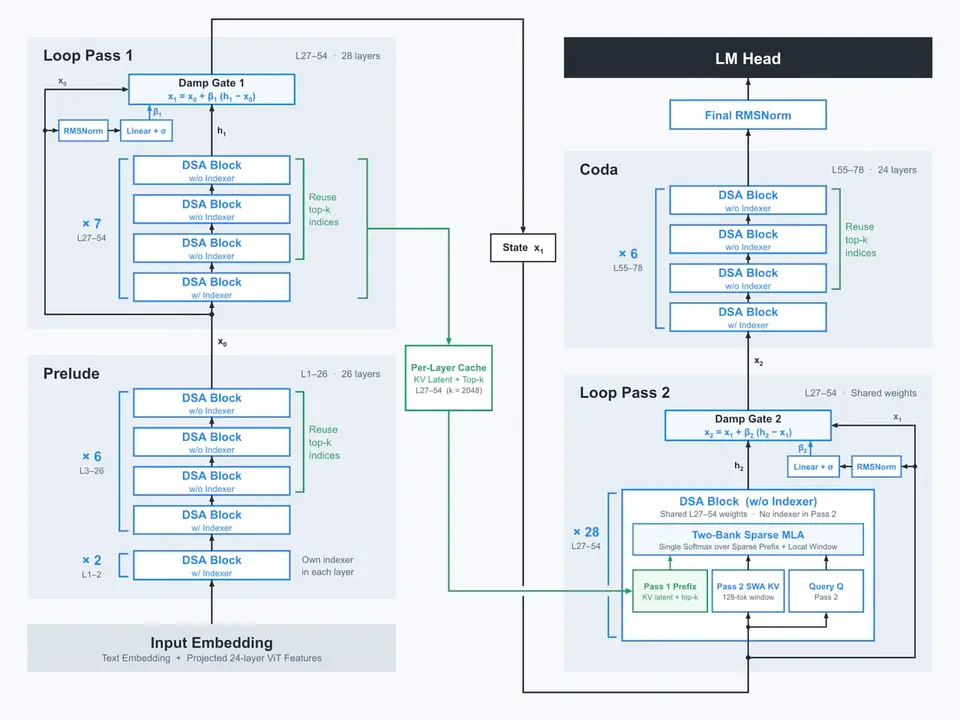
Zhipu says GLM-5.4 runs a block of 28 layers twice within a base model of about 750 billion parameters. Zhipu calls the design Loop Transformer. It lets the model do more computation with the same 28 layers.
Access Beyond the Coding Plan
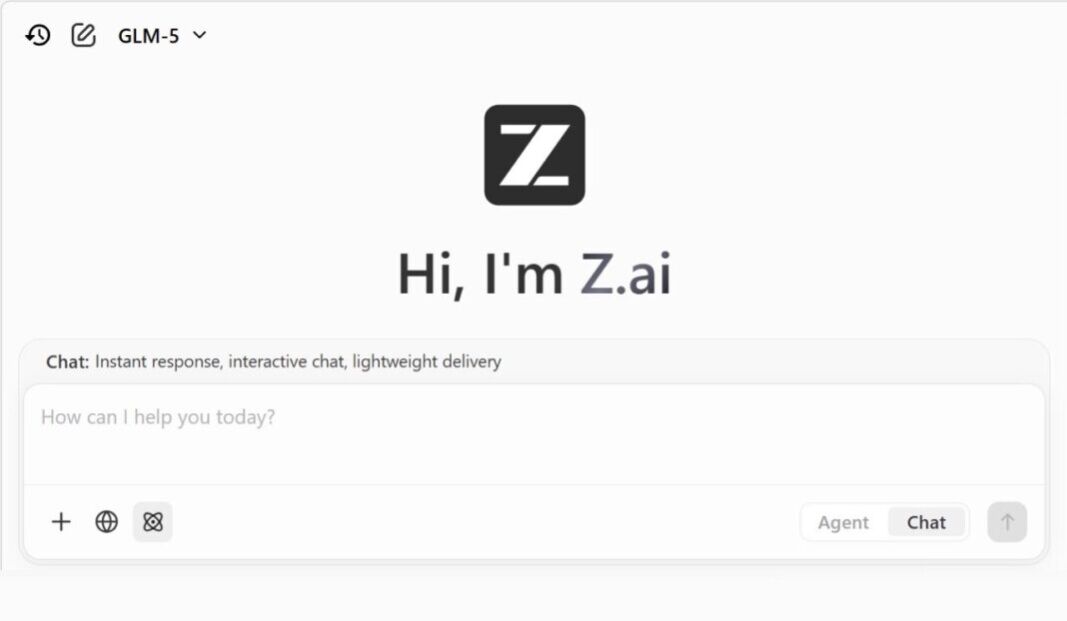
GLM-5.4 is also available in Zhipu’s ZCode coding tool and on its Z.ai site. The general API will open after a safety assessment, the company says. It also plans to release the model weights, the files teams would need to run GLM-5.4 on their own infrastructure.
Teams that need downloadable weights already have an option with similar input capabilities. Moonshot AI has released Kimi K3.1 Pro’s weights. Its model accepts text and images and has a context window of about a million tokens.
What the Same Credits Buy
Under the Coding Plan’s standard rates, 10,000 new input tokens use 4.6 credits with GLM-5.4, down from 6.9 with GLM-5.3. For the same number of output tokens, the deduction falls from 24 credits to 16. A fixed balance therefore covers 50% more of either kind of token with GLM-5.4.
Each tier has a weekly credit budget and a separate allowance that refreshes five hours after use. The plan deducts fewer credits when it can reuse input it has already processed. Zhipu’s allowance estimates use half the standard rate for off-peak usage.