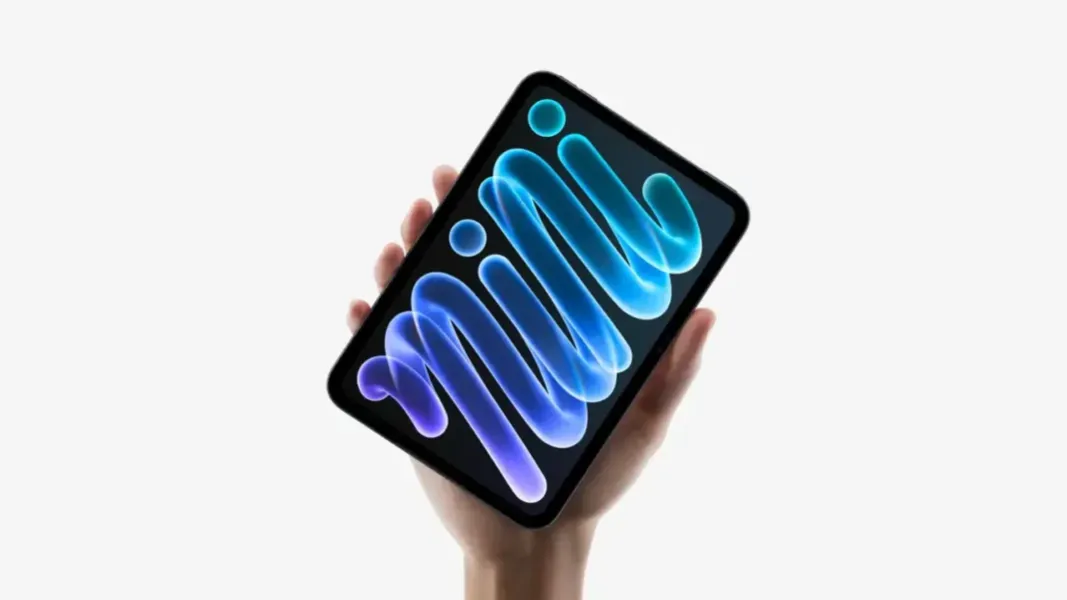
- OLED Screen: Apple announced an 8.5-inch OLED iPad iPad mini, adding individually lit pixels for deeper blacks and brighter HDR video highlights.
- Display Limit: The iPad mini lacks ProMotion, which adjusts how often the larger iPad Pro’s screen updates for smoother scrolling.
- Starting Price: U.S. Wi-Fi models start at $699 for 128GB, $100 above the previous iPad mini’s starting price.
- November Arrival: Preorders open October 28, with customer deliveries and store availability scheduled for November 6.
Apple has announced an iPad iPad mini with an OLED screen, bringing individually lit pixels for deeper blacks and brighter highlights in high-dynamic-range (HDR) video to its smallest tablet. The October 26 update combines that display change with a thinner, lighter body for handheld reading and viewing.
The new model succeeds the A17 Pro iPad iPad mini introduced in 2024. Its screen grows from 8.3 to 8.5 inches, while the Wi-Fi tablet’s weight falls from 293 to 255 grams. Thickness drops from 6.3 to 5.4 millimeters.
OLED Reaches the Compact iPad
The previous iPad mini used a backlit LCD. With OLED, individual pixels control their own light, allowing dark areas to remain black beside bright highlights. Apple’s display design brings that contrast capability to a tablet smaller than its OLED iPad Pro models.
The new screen is rated at 600 nits for ordinary content and full-screen HDR, compared with the older iPad mini’s 500-nit rating. A nit measures screen brightness. The new model’s 1,200-nit peak applies specifically to highlights in HDR content.
OLED also differs from refresh rate, which determines how often a display updates. The iPad mini has no ProMotion, Apple’s adaptive display refresh rate technology that scales the screen’s refresh rate dynamically. On the larger iPad Pro, that feature varies refresh between 10 and 120 times per second, supporting smoother scrolling and animation. The Pro is also rated brighter: 1,000 nits full screen and 1,600 nits for peak HDR highlights.
Apple first brought OLED to the iPad Pro in 2024. The 11-inch Pro combines its OLED screen with a 444-gram Wi-Fi body. The 11-inch iPad Air offers a larger LCD workspace and Magic Keyboard support, at 464 grams. The iPad mini trades that working area for a smaller, lighter tablet, retaining Apple Pencil Pro support for handwritten notes and drawing.
For bright environments, optional nano-texture glass scatters reflected ambient light to reduce glare. It is a $100 option on the 256GB and 512GB iPad mini, so it requires both a storage upgrade from the base model and the glass surcharge.
A20 Pro Changes With Storage
Apple’S A20 Pro processor also varies with capacity. The 128GB and 256GB configurations have five CPU cores and one 16-core Neural Engine, Apple’s dedicated AI-processing hardware. The 512GB model has six CPU cores and dual 16-core Neural Engines. All three have a seven-core graphics processor. Paying for the largest capacity therefore changes computing hardware as well as storage.
Critics might argue the the A17 Pro chip already handles most tasks people perform on a tablet this size. Its upgrade rationale centers on the display people look at throughout those tasks.
Sound Moves Beneath the Glass
Apple’s Acoustic Display places custom tweeters and woofers beneath the glass and enclosure to produce stereo sound. The tablet also gains an IP67 dust- and water-resistance rating, tested in controlled conditions at a maximum depth of one meter for up to 30 minutes. Resistance can diiPad minish with wear, and liquid damage is excluded from the warranty.
Charging is faster with the right adapter. Apple rates the iPad mini for up to 50% charge in around 30 minutes using a separately sold USB-C adapter supplying at least 35 watts. The included adapter supplies 20 watts. The advertised battery endurance remains up to ten hours of Wi-Fi web browsing or video, matching the previous iPad mini’s rating.
The 12-megapixel front camera moves to the long edge for landscape video calls.
Compact OLED Also Exists on Android
The REDMAGIC Astra 2 offers another compact OLED option for buyers willing to use Android rather than iPadOS apps. Its 9.06-inch display supports refresh rates up to 185Hz, and its 363-gram body is heavier than the new iPad mini. REDMAGIC says high-refresh gaming support depends on the game, region and software version.
Tom’s Guide’s two-month review praised the Astra’s deep blacks but found that its off-center USB-C port made fitting a Razer Kishi Ultra controller awkward. Most games do not allow play above 120 frames per second, below the screen’s 185Hz ceiling. A major con: REDMAGIC only promises two major Android upgrades.
Higher Prices and November Delivery
The 128GB Wi-Fi iPad iPad mini starts at $699 in the United States, $100 above the previous model with the same base capacity. Wi-Fi plus cellular models start at $849, with education pricing from $649.
Preorders open on October 28 in 36 countries and regions, including the United States. Customer deliveries and availability at Apple Stores and authorized resellers are scheduled to begin on November 6.