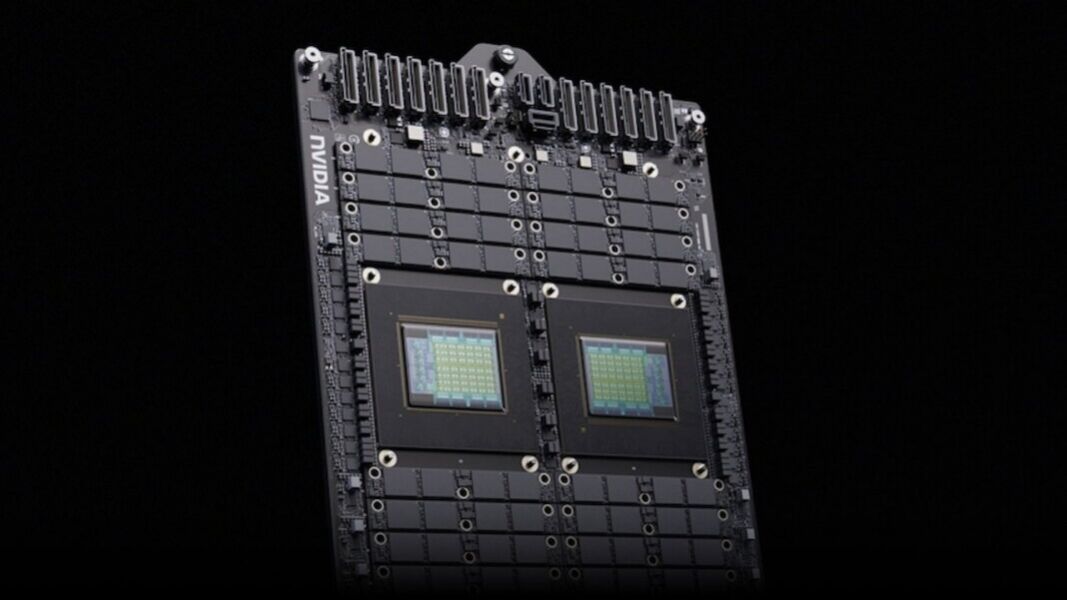
- OpenAI Plan: OpenAI plans a large Vera CPU deployment, after Nvidia delivered chips to OpenAI, Anthropic, and SpaceX in June.
- Partner List: At Nvidia’s disclosed checkpoint, Oracle was the only major cloud service provider on the Vera partner list.
- CPU Design: Vera combines 88 custom Olympus cores with 176 threads and up to 1.2 TB/s of memory bandwidth.
- Availability Test: Vera’s general availability target remains the second half of 2026, before planned deployments can become operational.
OpenAI plans a large deployment of Nvidia’s Vera server central processing unit (CPU), beginning in the quarter that started in July 2026. Oracle was the only major cloud service provider on Nvidia’s disclosed Vera partner list as of July 21, leaving a wide gap between an early volume plan and broad cloud adoption.
Nvidia’s Vera server CPU is the general-purpose processor that coordinates work around accelerators. Cloud operators will have to determine whether Vera can challenge Intel’s Xeon and AMD’s EPYC platforms by deploying it broadly enough to support repeatable services and sizable production fleets.
Nvidia delivered Vera chips to OpenAI, Anthropic, and SpaceX in June. Customers receiving those chips must still validate hardware, software, power, cooling, networking, and production capacity.
What Vera Is Built to Do
Nvidia designed Vera for AI agents that repeatedly run code, call tools, and retrieve data between model operations. GPUs handle much of the model computation, while CPUs coordinate the sequential jobs around it. Vera combines 88 custom Olympus cores with LPDDR5X memory and Nvidia’s second-generation Scalable Coherent Fabric.
Nvidia’s Spatial Multithreading method schedules two streams per core, giving Vera capacity for 176 hardware threads. Compared with Grace, Vera raises memory bandwidth from 512 GB/s to 1.2 TB/s. The faster access to working data reduces the time CPU-side coordination leaves accelerators waiting between model operations.
The dual-socket Vera systems expose 176 PCIe lanes and CXL 3.1. Its interface provides room for accelerators, networking, storage, and memory devices around the CPUs.
Vera is offered both as a standalone processor or in a dual-CPU server, and also as a liquid-cooled rack with 256 chips or the Vera Rubin CPU-and-GPU platform.
Each Vera chip supports up to 1.5 TB of memory across a configurable 250-to-450-watt power range. Capacity and power flexibility give operators options for different workloads, but each configuration demands also its own cooling, firmware, and performance-validation work before production deployment.
In Nvidia’s internally run dual-socket SPECrate 2026 integer test, Vera produced an overall base score of 925 versus 898 for AMD’s EPYC 9755.
Plans, Deployments, and the Incumbent Advantage
Oracle plans hundreds of thousands of Vera CPUs beginning in 2026 for agentic AI. OCI’s intended volume is the clearest disclosed cloud-scale target, although it is not running capacity.
Intel and AMD already supply processor families, software support, purchasing relationships, and installed server fleets, giving customers known operating procedures and compatibility baselines.
Nvidia can bundle Vera with its accelerators and networking, giving it more influence over how AI work moves among general-purpose processing, memory, networking, and GPU compute.
Vera is set to reach general availability in the second half of 2026.