- Pricing Position: ASML says market conditions leave room for higher prices on some lithography products.
- Capacity Plan: ASML is preparing to expand key lithography-machine output by roughly 30% in each of the next two years.
- Customer Resistance: Taiwan Semiconductor Manufacturing Company (TSMC) may be resisting higher prices but has not directly confirmed its position.
- Unsettled Terms: A roughly 10% figure remains unconfirmed, with no public product scope or implementation schedule.
ASML plans higher equipment prices, people familiar with the discussions told The Information, while Taiwan Semiconductor Manufacturing Company (TSMC) is resisting them. ASML’s negotiation with TSMC tests how far the sole supplier of advanced chip-patterning machines can press its largest customer.
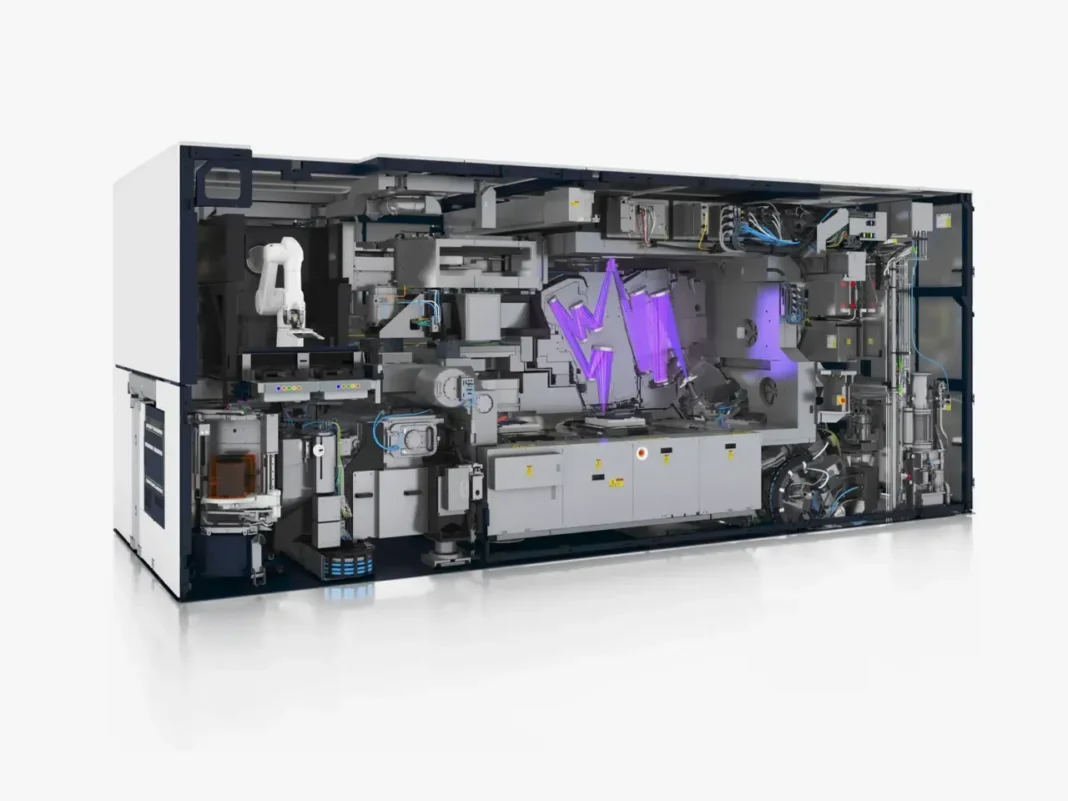
ASML supplies machines that print circuit patterns onto semiconductor wafers. It is the sole commercial supplier of extreme-ultraviolet (EUV) lithography, which prints the smallest circuit patterns needed for advanced chips. ASML’s EUV lithography systems underpin its leverage, while TSMC brings enormous purchasing scale.
Roger Dassen, ASML’s chief financial officer, said the company is discussing pricing with customers and characterized current conditions as “better pricing power.” Size, product scope and timing remain unsettled so far. ASML’s potential new pricing plan includes a 10% increase, sources say.
Scarcity Strengthens ASML’s Hand
ASML is preparing to expand key lithography-machine output by roughly 30% in each of the next two years without constructing new cleanrooms, relying instead on greater output from existing production space. Its customers reserve machines well before delivery, and mainstream EUV capacity may remain nearly fully booked through the end of 2027. Long reservation cycles preserve the near-term shortage, so the planned output growth would not immediately create spare supply for customers negotiating new orders.
No supplier offers TSMC a direct substitute for ASML’s EUV systems. Nikon and Canon compete mainly in older lithography segments, while China’s experimental EUV lithography prototype has not yet printed any working chip. Leading processors need the smaller circuit patterns that EUV equipment can manufacture, which narrows TSMC’s alternatives for advanced production and strengthens ASML’s hand in product-specific talks.
ASML’s supplier position and customer concentration pull in opposite directions. Chipmakers cannot readily replace its EUV machines, but ASML at the same time depends on a limited group of customers placing expensive, high-volume orders. ASML’s equipment relationship with TSMC links purchasing decisions to factory planning, service commitments and delivery allocations, and any delayed order can create difficult allocation choices.
A higher price for ASML machine would raise TSMC’s capital cost of expanding advanced-chip production. ASML machinery already installed at TSMC also requires long-term maintenance, software support and service access. TSMC can negotiate those services and future production slots alongside machine prices. ASML on the other side can protect is revenue through delivery conditions and different effective prices across products.
Older lithography operates in a different competitive market. China’s SMIC tested a homegrown DUV machine, but deep-ultraviolet (DUV) lithography is an older category used across a wider range of chips and generally less advanced production stages. DUV uses longer-wavelength light and often requires more patterning steps for very small features, so progress there does not give TSMC an EUV alternative for leading processors.
The Negotiation Still Has Limits
Customer outcomes may vary by product and purchasing relationship. Some Chinese customers accepted an approximately 10% increase on older DUV tools, people familiar with the discussions said, while TSMC resisted higher equipment prices so far. DUV lithography systems serve a broader range of chips, so those outcomes do not establish a blanket increase for EUV equipment or ASML’s full catalog.
Currently high demand gives ASML room to pursue price improvements, but the ptoentially affected products, customers and contracts remain unspecified. In ASML’s prcing strategy, different customers could receive different combinations of machine prices, service packages, volume commitments and delivery priority. Volume commitments, service packages and delivery priority can produce different effective prices even when list prices move.
A negotiated service discount could offset part of a higher machine price, while access to scarce production slots could carry separate value. ASML still needs to name a product-specific price and effective date before customers can calculate the added cost of future systems.