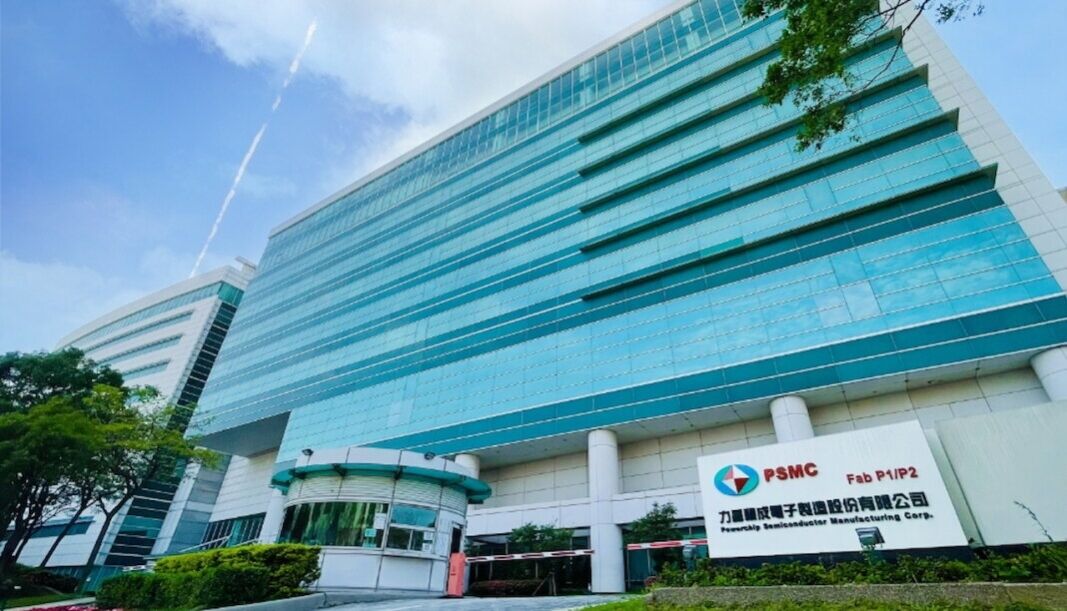
- Margin Recovery: Powerchip’s second-quarter 2026 gross margin may have reached 28%, 18 percentage points above the first quarter.
- Memory Bottleneck: Dynamic random-access memory and NAND flash suppliers are sold out into 2027 as AI systems strain working-memory and storage capacity.
- Evidence Limit: Powerchip’s official June sales confirm one month, not the reported quarterly gross margin, profit, or earnings per share.
- Capacity Relief: Meaningful new manufacturing capacity is not expected before late 2027 or 2028, leaving AI customers exposed to tight supply.
Taiwan-based contract chipmaker Powerchip may have reached a 28% second-quarter gross margin, 18 percentage points above the first quarter. Powerchip Semiconductor Manufacturing (PSMC) also recorded unaudited June net sales of NT$6.474 billion ($200.99 million). Gross margin is the share of sales left after direct production costs.
AI demand is tightening memory and foundry capacity, and the memory shortage could continue through 2027. Dynamic random-access memory (DRAM) provides the fast working memory used while processors run, while NAND flash stores data in solid-state drives. DRAM and NAND manufacturers are sold out into 2027, which raises component costs and delay AI infrastructure expansion.
Powerchip’s Recovery Runs Through Pricing
Powerchip has generated second-quarter revenue of NT$17.291 billion, about US$537.8 million. Sales have posted growth of 27% quarter over quarter and 53% year over year.
Its reported net profit after tax was NT$3.291 billion, while earnings per share reached NT$0.76.
Revenue growth, profit, and gross margin together point to a broader recovery. Without a matching company filing, Powerchip’s quarterly recovery remains unconfirmed by the company.
PSMC operates as a foundry, manufacturing semiconductors for other companies rather than selling a consumer products. AI-driven demand is tightening memory, power-management chip, and advanced-packaging supply alongside contract chip production. Limited manufacturing slots is giving foundries more leverage over pricing while customers face longer waits and higher component bills.
Powerchip’s delivery-linked price increases is expected to materially boost next-quarter gross margin when the associated chips reach customers. Negotiated increases affect recognized revenue or margin only after delivery, so the next quarter offers a measurable test. A weaker gross-margin result would leave product mix, factory utilization, or production costs as competing explanations.
Why New Memory Capacity Will Take Time
Digital storage technology analyst Thomas Coughlin gives the supply bottleneck a horizon well beyond Powerchip’s latest quarter:
“The DRAM and NAND manufacturers have been reporting that they are sold out at least into 2027.”
Thomas Coughlin, digital storage technology analyst and Forbes contributor (via Forbes)
Sold-out supply through 2027 does not guarantee equal shortage severity in every quarter, but it leaves less volume for new and expanding AI deployments. Memory shortages were already expected to persist until late 2027. Coughlin expects meaningful new manufacturing capacity no sooner than late 2027 or 2028, after construction, equipment installation, customer qualification, and production ramp-up.
Samsung and SK Hynix are funding a combined 800 trillion won investment, about US$518 billion, in four memory fabrication plants and a high-bandwidth memory (HBM) packaging hub in South Korea. HBM stacks memory close to AI accelerators so large amounts of data can move quickly.
New memory also has to meet customer performance and reliability requirements before large deployments can use it. Equipment installation, test runs, and qualification can delay usable supply after a factory is physically complete.
Micron is currently meeting about 50% to 67% of core customer demand, with large-scale new capacity unlikely before 2028. In 2025, SK Hynix surpassed Samsung in annual operating profit for the first time as both companies issued shortage warnings through 2027 tied to AI demand. Powerchip’s next-quarter gross margin will test its delivery-linked pricing, but AI customers cannot get meaningful relief until qualified new capacity begins production in late 2027 or 2028.