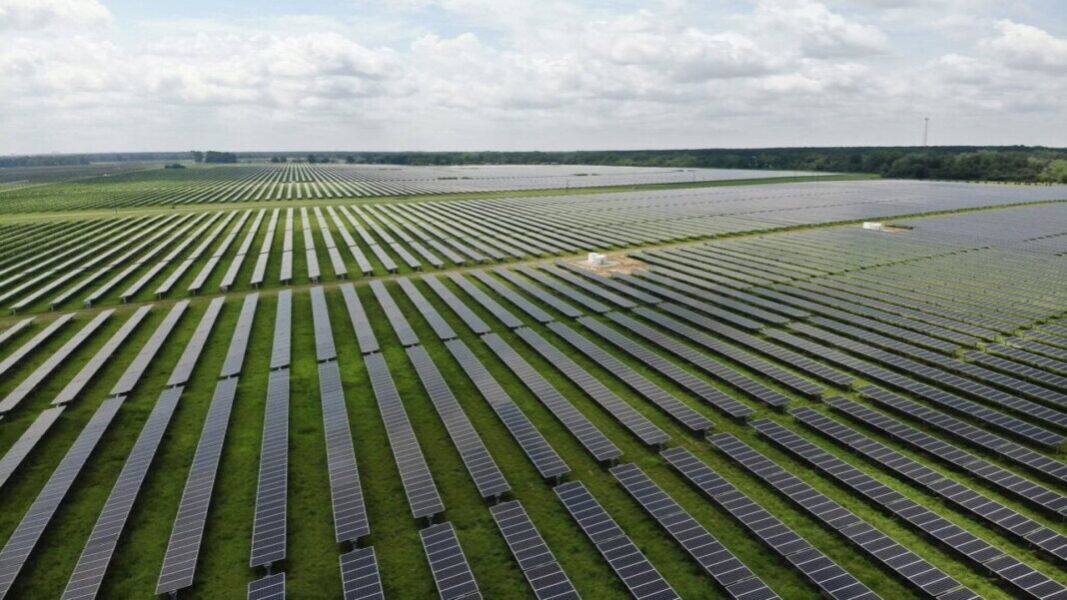
- Power Contract: Google will buy all initial electricity output from Steel River when the Arkansas solar power project comes online in 2029.
- Capacity Package: Google’s proposed share comprises 1.6 gigawatts of solar generation and 2 gigawatts of battery capacity.
- Grid Delivery: Steel River would feed electricity into the regional grid rather than directly powering Google’s data centers.
- Emissions Limit: The contract could add renewable generation but would not establish a completed reduction in Google’s emissions.
Google reportedly will buy all initial electricity output from Steel River, a massive solar energy project located in Arkansas, when the development comes online in 2029. Google would buy electricity without acquiring the Arkansas project or receiving power through a dedicated data-center cable. Google’s Kairos Power reactor plan raised a similar question about whether its facilities receive electricity directly or through the grid. Steel River is realized by power producer Cypress Creek.
Google’s proposed share will reportedly comprise 1.6 gigawatts of solar generation and 2 gigawatts of battery capacity, an amount equated to the electricity needs of 315,000 homes. Google’s electricity consumption and grid-based emissions each rose 37 percent in 2025 alone.
Steel River developer Cypress Creek Energy lists 2.46 gigawatts of solar capacity and 2.94 gigawatt-hours of battery storage for the Arkansas site without naming its corporate counterparty.
How a Grid-Connected Power Deal Works
Steel River’s first two phases have long-term sales through a virtual power purchase agreement with an investment-grade corporate buyer. Under this fixed-price financial contract, electricity is sold into the local grid while the developer receives predictable revenue without transferring the generating assets. A long-term payment commitment gives lenders revenue to assess, while the buyer avoids responsibility for building and operating the solar farm.
Steel River’s 1.6-gigawatt initial share would enter the Arkansas grid rather than travel through a private line to Google. Its data centers would continue drawing from the regional grid, where coal, natural gas, nuclear power, renewables and on-site generation contribute to the supply mix. Generators available at a particular hour determine the physical electricity reaching a facility, regardless of the buyer supporting a specific renewable project.
Google’s Steel River allocation could add renewable generation without making every unit it consumes carbon-free at the moment of use. Battery storage can shift some solar electricity beyond daylight hours, but it does not produce additional electricity.
A reported $3.5 billion financial close covers Steel River’s first two phases, designed for 1.63 gigawatts of solar generation and 1.9 gigawatt-hours of battery storage. All three phases are expected to reach 2.45 gigawatts of solar and 2.9 gigawatt-hours of storage by 2029. Google’s 1.6-gigawatt allocation applies only to initial output, not the eventual project total.
Solar capacity in gigawatts measures how quickly the project can generate power, while gigawatt-hours measure the energy its batteries can hold. Reported project sourcing uses structural steel from Mississippi County, Arkansas, and US-produced panels from First Solar. Steel, panels and battery systems must be installed before planned capacity becomes operating electricity, making construction progress a condition for the contract’s scheduled start.
How Rival Tech Giants Are Buying Clean Power
Meta’s reported agreement covers all electricity from RWE’s 200-megawatt Texas development through a long-term power purchase agreement with RWE’s Waterloo Solar project. Contracts of this kind can stabilize project revenue and reduce financing risk by giving developers a committed customer before generation begins. Meta’s contract and Google’s proposed Steel River arrangement both support future output while leaving the physical delivery on regional grids.
Amazon’s reported agreement to acquire hte Oregon Sunstone site followed a bankruptcy court’s approval of the $83 million winning bid in January. Sunstone is planned as a 1.2-gigawatt solar project with 1.2 gigawatts of storage. Amazon would pursue ownership through its Oregon Solar 1 vehicle, accepting development exposure that Google would avoid through an electricity contract.
Google also entered a hydropower agreement to meet artificial-intelligence energy demand. Steel River would extend that procurement approach through solar and storage, while the shared grid limits claims about which electricity reaches a particular Google facility. Contracting for generation can support construction and increase renewable supply without assigning each generated unit to a specific data center.
Cypress Creek is scheduled to send Steel River’s initial solar electricity into the Arkansas grid in 2029, when Google’s reported 1.6-gigawatt allocation is expected to materialize.