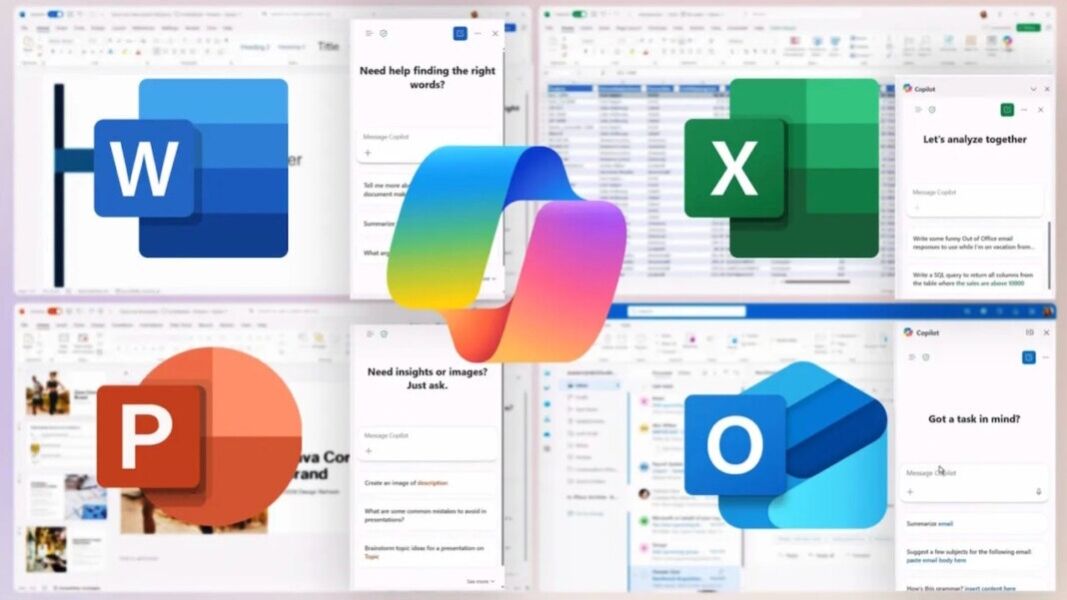
- Copilot Overhaul: Microsoft’s reported Copilot overhaul plan centers on app consolidation after executive vice president Jacob Andreou challenged the AI assistant to prove value.
- Feature Pruning: The plan would merge personal and workplace Copilot experiences, add an always-on Autopilot agent, and remove Copilot Podcasts and Labs.
- Market Pressure: Paid Copilot adoption trails ChatGPT and Microsoft 365’s broad base, while the reported memo details remain unresolved.
Jacob Andreou, a Microsoft executive vice president, reportedly told Microsoft staff in a reported memo that a Copilot overhaul should help Microsoft’s AI assistant “earn the right to exist” with users. The planned reset would consolidate Copilot apps under one single app.
Microsoft could cut unwanted features as part of that reset. For personal and workplace-facing Copilot users, the practical test would be whether one clearer assistant replaces overlapping surfaces, adding clarity and usability value.
What Could Change in Copilot
The planned consumer and business Copilot merger is reportedly slated for August.
A merged app would include an AI coding tool and a paid Autopilot agent. Autopilot means a persistent AI agent that can act for a user under organizational controls, so the addition would move Copilot beyond chat-style help and toward delegated work.
Microsoft already groups Researcher, Copilot Pages, Copilot Notebooks, and Create as connected Copilot app experiences. Its broader Microsoft 365 Copilot push also included Excel features across Web, Windows, and Mac, underscoring why app cleanup has to reduce rather than add surface area.
Microsoft is reportedly discontinuing Copilot Podcasts and also shutting down Copilot Labs while removing other features that have not delivered results. Microsoft earlier considered scaling back AI integrations in Windows 11 after user complaints, a useful precedent for cutting Copilot surfaces that users do not value.
Why Copilot Has to Prove Its Value
Microsoft’s paying Copilot users rose from 15 million in January to 20 million in April, while paid ChatGPT users exceeded 50 million. Only about 4.5 percent of Microsoft 365 users, from a 450 million-seat base, paid for Copilot features, keeping the value question tied to Microsoft’s workplace software suite. Microsoft’s undisclosed Copilot sales targets had already made paid-seat growth an investor question.
A March 2026 promotion put Andreou in charge of the unified Copilot experience and left him overseeing more than 11,000 people. Microsoft consolidated Copilot teams earlier in 2026, making the memo part of a broader effort to reduce overlap and focus the product.
OpenAI’s ChatGPT, Anthropic’s Claude, and Google’s Gemini already set high user expectations for assistants that feel useful quickly. Especially the competition from OpenAI and Anthropic appears to be pushing Microsoft to reset Copilot. Brent Thill, a Jefferies analyst, summed up Microsoft’s distribution advantage with the line: “They’re the best distribution in software and tech”. While distribution can put Copilot in front of customers, it does not guarantee that users understand why they should keep using it.
Thill’s sharper description of Copilot’s general perception is that “it stinks”, which gives the feature cuts a market job: remove friction that distribution alone cannot fix. Chad A. Morganlander, a senior portfolio manager at Microsoft investor Washington Crossing Advisors, has framed the reset as a push to reduce bureaucracy and focus on the end product and user.
Copilot Cowork and Scout Point to Delegated Work
Copilot Cowork and Microsoft Scout show how the company is steering Copilot toward delegated work without confirming the memo or the app merger. Copilot Cowork became generally available worldwide on June 16, and a recent delegated office work launch showed how Microsoft is moving Copilot beyond chat.
Copilot Cowork requires a Microsoft 365 Copilot user subscription and adds usage-based billing tied to model use, retrieval, tool calls, and runtime. Administrators control tenant enablement, user access, spending limits, and usage alerts, pairing agent expansion with controls for enterprise customers.
More than half of the Fortune 500 used Copilot Cowork during its three-month Frontier preview. The tool is off by default so administrators can control access and spending. Admin guardrails make the agent push relevant to the app overhaul because any unified Copilot has to simplify user access without removing enterprise controls.
Microsoft Scout clarifies what Autopilot would mean in the reported app plan because Microsoft defines Autopilots as persistent agents that work with their own identity under organizational controls. Microsoft’s Scout AI coworker can coordinate meetings, prepare material, track deliverables, and spot stalled decisions, but Scout remains an experimental Frontier release rather than proof that the reported app merger is happening.