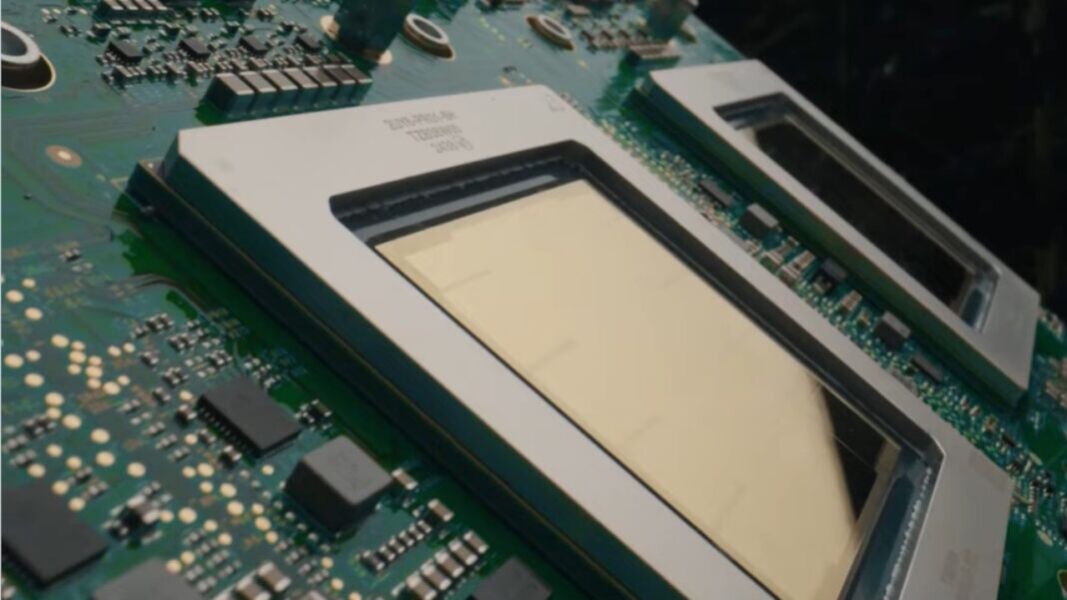
- New Venture: Blackstone and Google said they plan a new U.S.-based TPU cloud venture.
- Buildout Plan: Blackstone is backing the project with $5 billion, and the first 500 MW is expected in 2027.
- Market Goal: The venture would give customers another route to Google TPU capacity as competition with Nvidia and other AI chip providers grows.
Blackstone and Google have announced plans for a new U.S.-based TPU cloud venture that would give customers another route to dedicated AI compute capacity instead of buying that capacity only through Google Cloud. Google contributes chips and software, while Blackstone-backed infrastructure is meant to help package large-scale AI capacity into a more direct commercial offer.
AI builders are still chasing more training and inference capacity while trying to avoid underused hardware. With AI infrastructure spending projected to reach $401 billion in 2026, the venture targets buyers that want a more packaged way to secure power, facilities, and operations.
The New TPU Cloud Venture
Blackstone and Google said the new business would offer data center capacity and Google Cloud TPUs as a compute-as-a-service product. In practical terms, customers rent processing capacity and the surrounding infrastructure instead of building the hardware footprint themselves.
Google also framed the project as another path to cloud TPU access beyond buying the same capacity through Google Cloud alone. A second commercial lane for Google’s AI chips could widen TPU availability without forcing every buyer through Google’s standard cloud channel.
Funds managed by Blackstone are providing a $5 billion equity commitment to start the venture. Google and Blackstone tied the deal to rising global demand for advanced AI workloads, giving the project both a financing base and a clear demand case.
How the Buildout Would Work
Google would be supplying the venture’s TPUs along with software and services, while Blackstone helps fund and build the physical footprint needed to run those systems at scale. Google gets another sales channel for its in-house accelerators, and Blackstone takes on more of the land, power, and construction burden.
Blackstone expects the first 500 MW of capacity in 2027 to come online later, which keeps the buildout in a forward-looking stage rather than making it capacity customers can buy today. Buyers still need details on where the first clusters will be located, how quickly sites can be provisioned, and how much of that promised capacity becomes usable compute.
Reported commercial mechanics remain thinner than the official venture outline. The planned company would rent out Google’s tensor processing units to AI developers. Public details on pricing, minimum commitments, customer sequencing, and regional availability are still missing.
Where It Fits in the AI Compute Market
Google has been trying to compete more directly with Nvidia in AI compute, and the Blackstone venture gives that effort more financing depth and physical infrastructure. A separate TPU channel could help Google reach buyers that want dedicated capacity without a broader cloud bundle.
Google’s TPU push also sits beside custom-silicon alternatives competing for AI workloads such as AWS Trainium and Inferentia, Groq, and SambaNova. Specialized chips from those companies are all competing for AI demand that might otherwise flow to more general GPU-heavy deployments.
Cloud providers are seeing faster custom ASIC shipment growth than GPU growth in 2026, while enterprise GPU utilization is around 5% in some deployments. Low utilization changes the economics because buyers are increasingly judging infrastructure by how fully expensive accelerators can be used, not only by peak benchmark performance.
Google is also trying to turn AI infrastructure demand into a broader platform advantage across cloud and adjacent services. TPU-backed capacity from the venture will test whether Google can compete on delivery, infrastructure packaging, and deployment speed as well as chip performance.
Google’s Earlier TPU Expansion Play
Earlier in 2026, Google widened outside TPU access through an earlier TPU leasing deal with Meta. The prior move put Google chips in front of an external customer through a different commercial structure, making the Blackstone venture look like an expansion of an existing strategy rather than a sudden change.
Google’s broader pincer movement against Nvidia was already visible in late 2025. Blackstone adds financing and infrastructure depth to that earlier push, giving Google another way to move TPUs beyond its own cloud storefront.
Whether the strategy works will depend on signed customer demand, delivery schedules, and how much of the promised 2027 buildout becomes usable capacity for AI buyers. For now, Google and Blackstone are building a new commercial path for TPU-backed infrastructure while AI compute cost and availability remain central market constraints.