- Robotaxi Expansion: Nvidia partnered with Uber to deploy autonomous robotaxis across 28 cities on four continents by 2028, starting in Los Angeles and San Francisco.
- New Partners: BYD, Hyundai, Nissan, and Geely joined Nvidia’s DRIVE Hyperion platform, bringing total committed automakers to seven.
- Open AI Models: Nvidia released three open-source physical AI models at GTC 2026, covering autonomous driving, humanoid robotics, and synthetic world generation.
- Analyst Warning: An independent analyst cautioned that Nvidia’s physical AI ecosystem lock-in mirrors the dominance CUDA established in datacenter computing.
Nvidia announced a major expansion of its autonomous vehicle program at GTC 2026, adding four new automaker partners and unveiling a plan to deploy Uber robotaxis across 28 cities on four continents by 2028.
CEO Jensen Huang, declaring that “the ChatGPT moment of self-driving cars has arrived,” used the Nvidia physical AI keynote to present a sweeping portfolio spanning self-driving software, humanoid robot models, and space computing hardware.
Nvidia’s GTC 2026 lineup positions it as the full-stack platform provider for physical AI, with new open models for autonomous driving and robotics, an open-source training data framework, and partnerships stretching from ride-hailing networks to orbital computing. An independent analyst warned that the resulting ecosystem lock-in mirrors what CUDA created in the datacenter.
Uber Robotaxi Fleet
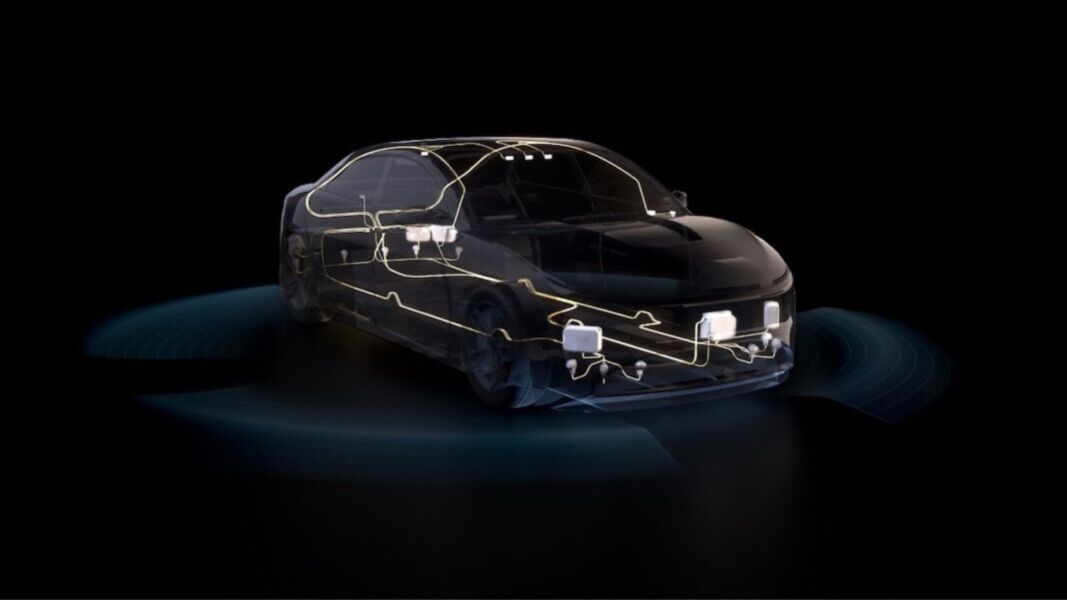
A deepened partnership with Uber represents the most concrete expression of that ambition. Nvidia is broadening the collaboration to launch a fleet of autonomous vehicles powered by its DRIVE Hyperion platform. Each robotaxi will run on Nvidia’s Alpamayo open models and Halos operating system, a unified safety architecture designed to provide a production-ready foundation for Level 4 autonomy, where vehicles operate without human intervention.
In practice, Halos integrates perception, planning, and control into a single safety framework, giving automakers a standardized starting point rather than requiring them to build safety systems from scratch. Rollout begins in Los Angeles and San Francisco in the first half of 2027 before expanding across 28 markets by 2028. Ride-hailing companies Bolt, Grab, Lyft, and TIER IV are also scaling robotaxi development on DRIVE Hyperion, broadening the platform’s reach beyond Uber into regional mobility markets across Europe and Southeast Asia.
For Uber, the partnership effectively positions the company as the ride-hailing network layer on top of Nvidia’s full-stack platform – a strategy that avoids the billions in R&D spending that sank GM’s Cruise program. Uber sold its self-driving unit to Aurora Innovation in 2020, and this arrangement marks a return to autonomous vehicle ambitions without building proprietary AV technology.
New Automaker Partners
Uber is not alone in betting on Nvidia’s stack. BYD, Hyundai, Nissan, and Geely have joined the DRIVE Hyperion robotaxi initiative, which already includes GM, Mercedes, and Toyota. GM’s inclusion is notable given that the company shut down its Cruise robotaxi program in late 2024, redirecting its autonomous efforts toward driver-assistance systems and partnerships like the one with Nvidia.
Moreover, adding BYD and Geely brings Chinese automakers into the fold, while Hyundai and Nissan extend coverage into Korean and Japanese vehicle lineups. Nvidia reports that more than 100,000 automotive developers worldwide have downloaded Alpamayo since its initial release earlier this year. Developer adoption at that scale suggests automakers are actively prototyping on Nvidia’s stack rather than treating it as an evaluation exercise.
Physical AI Models and Developer Tools
That prototyping activity is driven in part by what Nvidia is giving away for free. Alongside the autonomous vehicle expansion, Nvidia released three new AI models at GTC 2026. Cosmos 3 is a world foundation model – a large-scale AI system trained on broad data to serve as a base for specialized applications – that generates synthetic environments to help physical AI systems navigate complex scenarios, building on Nvidia’s earlier Cosmos platform introduced at CES 2025.
Isaac GR00T N1.7 is an open reasoning vision-language-action model built for humanoid robots and designed for real-world commercial deployment, enabling robots to perceive, reason, and act through a single unified model. Alpamayo 1.5, the upgraded autonomous driving model, takes driving video, ego-motion history, navigation guidance, and natural language prompts as inputs and converts them into driving trajectories.
By accepting natural language prompts, Alpamayo 1.5 allows operators to specify driving behavior preferences without retraining the model. Releasing all three models as open-source follows Nvidia’s broader strategy of lowering adoption barriers to drive hardware sales. By giving away the software stack, Nvidia makes its GPUs the default choice for automakers and robotics companies entering physical AI, reinforcing the platform lock-in that concerns analysts.
Building on this open-source approach, Nvidia also announced its Physical AI Data Factory Blueprint, an open reference architecture for generating, augmenting, and evaluating training data. Available on GitHub in April 2026, the Blueprint automates synthetic data generation, including edge cases that are difficult or expensive to capture in real-world driving.
Uber is already using it to develop autonomous vehicles, and Skild AI is applying it to general-purpose robotics. Nvidia’s robotics developer ecosystem now spans 2 million robotics developers connected with Hugging Face’s 13 million AI builders, while the four leading industrial robot manufacturers represent a combined installed base exceeding 2 million industrial robots.
Edge AI and Space Computing
Beyond the vehicle and robotics stack, Nvidia is pushing physical AI further out to the network edge and into orbit. Nvidia is partnering with T-Mobile and Nokia to turn 5G networks into distributed AI infrastructure through AI radio access network (AI-RAN) technology.
Huang described the collaboration as creating a scalable blueprint for edge AI, leveraging T-Mobile’s existing 5G infrastructure to reduce latency for physical AI applications such as autonomous vehicles and factory robots operating in real time. By processing data at cell tower locations rather than routing it to distant cloud servers, the AI-RAN approach cuts response times for time-sensitive systems that cannot tolerate network delays.
Meanwhile, Nvidia announced Vera Rubin Space-1, a computing module aimed at AI processing in orbital data centers for geospatial intelligence and autonomous space operations. Nvidia claims the module delivers up to 25x more AI compute for space-based inferencing compared to the H100 GPU.
Partners including Aetherflux, Axiom Space, and Planet Labs are exploring the platform for satellite constellation management and Earth observation. However, orbital data centers remain theoretical, and Nvidia has provided no specific availability date beyond “at a later date.”
Analyst Reaction
Despite the breadth of announcements, independent observers are watching the competitive implications as closely as the products themselves. Industry analyst Patrick Moorhead of Moor Insights & Strategy offered a measured assessment of GTC 2026. Moorhead noted that he had correctly predicted physical AI would not generate meaningful 2026 revenue, but wrote that “What I underestimated was the pace of ecosystem adoption.”
His deeper concern centered on competitive dynamics:
“The ecosystem lock-in forming in physical AI mirrors what CUDA created in the datacenter. Whether anyone can offer a credible alternative at this scale is the right question. Right now, the answer is no.”
Patrick Moorhead, Founder and CEO of Moor Insights & Strategy
Moorhead’s CUDA comparison carries weight. Nvidia’s proprietary computing platform has dominated GPU-accelerated computing for over a decade, creating switching costs that have kept competitors at bay. If DRIVE Hyperion achieves similar entrenchment in autonomous vehicles, it could give Nvidia lasting control over the physical AI software stack.
As a result, the network effects are already building with seven major automakers now committed to DRIVE Hyperion, plus ride-hailing platforms on four continents: more vehicles on the platform generate more driving data, which improves the models, which attracts more partners.
At last year’s GTC, Nvidia’s focus was on datacenter AI chips and reasoning models. GTC 2026 marks a pivot toward physical AI, extending Nvidia’s infrastructure ambitions from the cloud to the road, the factory floor, and potentially orbit.
None of Nvidia’s physical AI products generate meaningful revenue yet, but with the Data Factory Blueprint going open-source on GitHub next month and seven automakers committed to DRIVE Hyperion, the gap between Nvidia’s ambitious vision and current execution is narrowing faster than analysts expected.