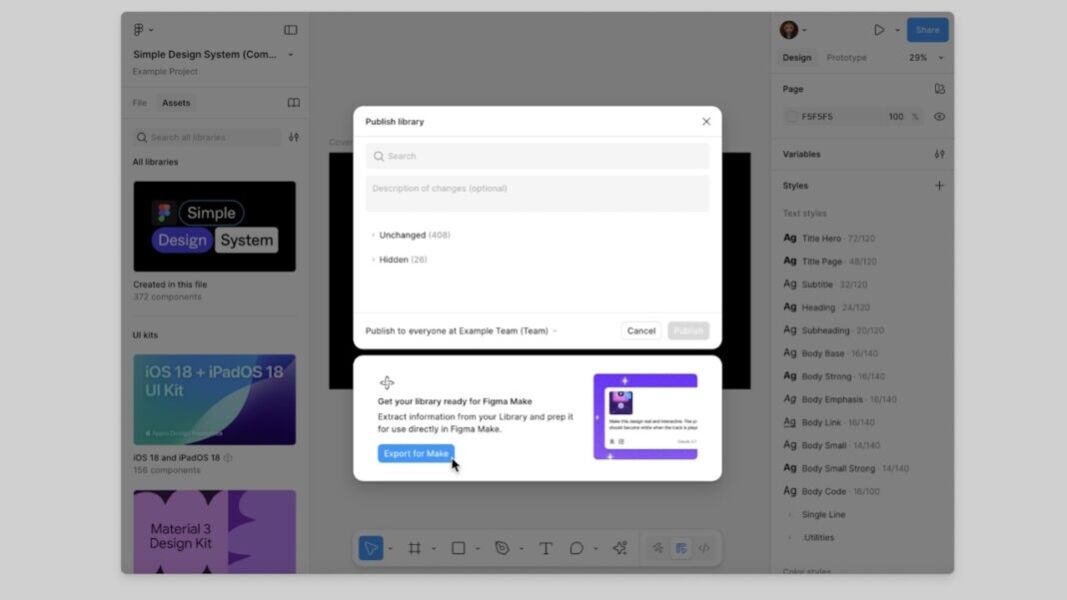
Figma has moved its AI-powered app creation tool, Figma Make, into general availability for all users, transforming how designers and non-coders can build functional prototypes. Announced on July 24, the tool allows anyone to generate applications from natural language prompts and visual references.
The public launch introduces a new AI credit system and tiered access, with paid “Full Seat” users gaining the ability to publish their creations. This strategic release positions Figma to compete directly with a growing field of AI design and coding tools from rivals like Google and Microsoft.
This move aims to democratize the path from initial idea to interactive product without requiring users to write a single line of code.
From Beta to Public: New Tiers and AI Credits
With the July 24 announcement, Figma Make is now accessible to all users, but its full capabilities are tied to subscription tiers. While anyone can now experiment with the prompt-to-app tool in their personal drafts, the ability to publish creations is restricted to paying “Full Seat” users.
This publishing feature itself remains in beta, signaling a cautious rollout. To manage the high computational cost of its AI features, Figma is introducing a credit system. Full Seat users on Professional, Organization, and Enterprise plans will receive monthly allotments of 3,000, 3,500, and 4,250 credits, respectively.
Figma has stated that it will not strictly enforce these limits for top-tier users initially, with plans to offer additional credit purchases later this year. Users on free and lower-tier plans will have smaller, enforced daily and monthly credit caps.
A Design-First Tool to Democratize Prototyping
At its core, Figma Make’s philosophy is one of design-first creation, a strategic choice that sets it apart from the market’s many code-centric assistants. Its primary goal is not just to generate code, but to translate visual ideas and user experiences into functional products. This design-centric DNA is evident in its ability to use visual references—from a simple image to an entire corporate design library—to guide the AI’s output. This ensures that prototypes maintain a consistent look and feel, adhering to established brand guidelines.
The tool’s capabilities extend beyond static mockups into the realm of dynamic, data-driven applications. Through integration with backend services like Supabase, users can build richer prototypes that interact with real data. This launch is part of a broader AI feature rollout for Figma, which also saw its generative “Make and Edit Image” and “Boost Resolution” tools exit beta on the same day.
The implications of this approach are significant, as it aims to democratize the power of prototyping for roles far beyond engineering. By allowing anyone to turn ideas into realistic, interactive artifacts using natural language, Figma is empowering product managers, researchers, and marketers to build their own functional mockups. This shift accelerates internal workflows and fosters a more experimental culture. As Figma’s Design Director, Gui Seiz, explained, “it’s a mindset shift that encourages you to play, take risks, and come up with more interesting solutions.”
This democratization is not merely theoretical; Figma highlights several internal case studies where Make has already transformed workflows. For instance, Figma Researcher Rie McGwier used the tool to build a complex survey traffic calculator, a task that would typically require static diagrams or engineering support. By creating a functional model, they could get immediate feedback and alignment from data scientists and engineers. Rie noted that “figma Make can supercharge your work, help get buy-in, and unlock new ways to collaborate.”
Similarly, Product Manager Tara Nadella leveraged Make to prototype a new design checker interface, a feature with complex UI relationships. The interactive prototype served as a tangible artifact that allowed the entire team to align on a direction before a formal spec was written. “With a prototype, we all get to be users of our own product, and that’s how we get conviction about what to build,” she stated. This process even revealed the need for an onboarding module early on, a detail often left until the polishing stage.
Navigating a Crowded AI-Powered Development Arena
Figma’s release places Make squarely in a fiercely competitive market. The tool enters as a direct rival to Google’s Stitch, an AI tool launched in May that also generates UI designs and front-end code from prompts. Both platforms target the space between pure design and functional code.
However, Figma’s strategy differs from that of tech giants focused on code-centric assistants. Microsoft continues to evolve GitHub Copilot into a more powerful agent, recently open-sourcing its chat extension to build community trust. Amazon, meanwhile, launched its Kiro agent to enforce structure on AI-generated code.
This fundamental difference in philosophy is key. While Microsoft and Amazon aim to make developers more efficient, Figma aims to make designers into builders. The goal is not just to write code faster, but to eliminate the traditional handoff process between design and engineering entirely.
These tools are aimed primarily at developers, seeking to augment or automate the coding process itself. In contrast, Figma Make is fundamentally a design tool. It prioritizes visual creation and user experience, with code generation as the output rather than the central focus.
This positions Figma to capture a different segment of the market: designers, product managers, and entrepreneurs who want to bring ideas to life without deep technical expertise. By empowering its existing user base of designers, Figma is betting on its community to drive adoption.
This focus on its core audience could be Figma’s greatest strength. By building a tool that speaks the language of designers and integrates into their existing workflows, the company creates a powerful moat. Developers have many AI coding options, but designers have few high-fidelity design-to-app platforms.
The company encourages users to explore and share projects in the Figma Community, fostering an ecosystem of remixable ideas. This strategy of leveraging its design-centric roots could be a key advantage in an industry increasingly dominated by agentic AI that can handle complex, multi-step tasks autonomously.