- Image Refinement: OpenAI’s ChatGPT Images 2.5 promises to preserve more details when users change an image’s setting, style or composition.
- Targeted Changes: ChatGPT’s editing controls let users attach instructions to particular areas, although changes can extend beyond a selection.
- Developer Choice: Developers can use ChatGPT Images 2.5 Flare for fast image generation or ChatGPT Images 2.5 Sunburst for work that prioritizes editing precision.
OpenAI has released ChatGPT Images 2.5, an upgrade aimed at people who want to revise a picture without losing the details they wanted to keep.
OpenAI introduced Images 2.5 on September 8. The company says users can change the setting, visual style or arrangement while retaining more of the original details. ChatGPT’s surrounding editing controls let users specify where those changes belong.
Changing One Part Without Starting Over
Conversational image refinement already existed in the earlier ChatGPT Images workspace. The practical difficulty is directing another revision when a broad written request has not produced the intended result.
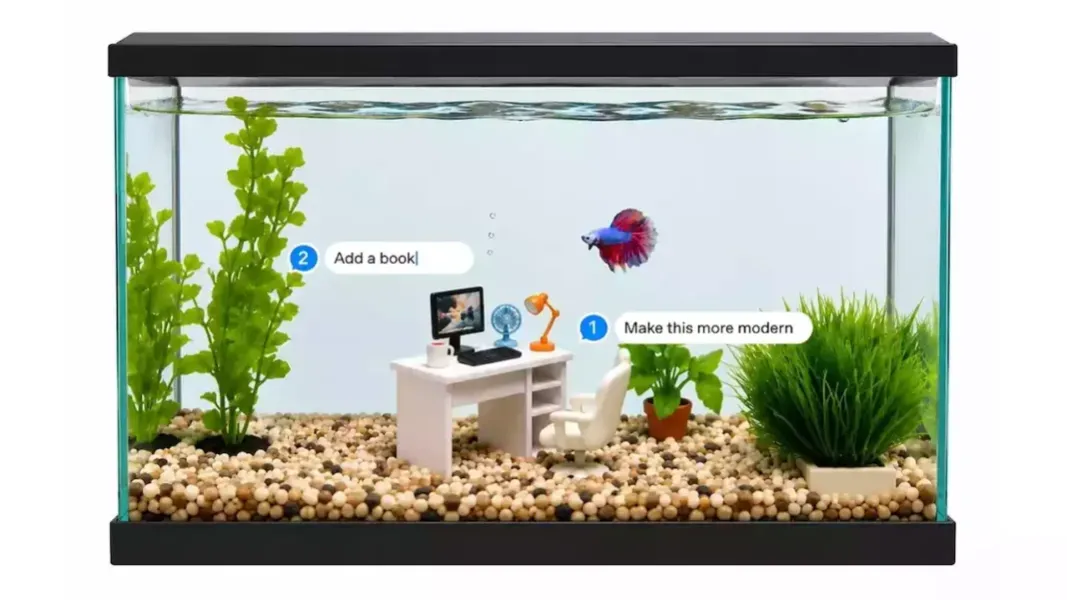
Users can attach a comment to an element and requesting its removal or a color change. The location identifies the object; the comment supplies the instruction. This is easier than repeated text-only retries that previously required to start again.
Each edit is being saved separately, with earlier versions accessible in the editor. That lets users return to previous work as they refine an image. The toolbar itself has already started rolling out in August.
Users can also upload an existing image or select a generated one and describe a change directly. OpenAI’s editing guidance warns that highlighted areas are approximate and edits can extend beyond them. Selecting an area communicates the intended location; the model still determines the resulting picture.
Access Depends on the Feature
ChatGPT Images is available on all subscription tiers through the web, iOS and Android. Image generation and editing are also available in Codex. The separate Images with thinking option adds reasoning and tools such as web search to image creation. As of September 12, it is available on Plus, Pro and Business, with Enterprise and Edu access still described as coming soon.
Templates provide a starting format, such as a poster or logo, before users customize it. Templates are not yet available in ChatGPT’s Work mode. On mobile, users can draw a sketch and combine it with written instructions; mobile image controls also include Resize and Remove.
Flare and Sunburst Serve Different Editing Workflows
Developers can integrate the new models into their own applications. OpenAI positions GPT-Image-2.5 Flare for fast everyday image generation and GPT-Image-2.5 Sunburst for work where editing precision matters most. Both accept text and images and produce images. Neither supports the free API tier; the documented paid tiers have separate rate limits.
For a single generation or edit, the Image API accepts the selected image model directly. For a conversational editor, the Responses API can carry earlier images and conversation context into another request. An application can therefore refine an existing picture across turns instead of treating each request as a fresh start.
Both variants charge the same rates: $8 per million image-input tokens, $2 for cached image inputs and $30 for image outputs; text inputs cost $5 per million tokens, or $1.25 when cached. Tokens are the units used to meter processing. Actual image costs depend on consumption, which can vary with the model and quality setting. Responses requests also incur the conversational model’s token charges.
Realism Raises the Stakes for Provenance
OpenAI’s safety assessment says heightened realism can make fabricated depictions of people and events more convincing. For GPT-Image-2.5 Sunburst, it describes checks on requests, input images and generated outputs, including analysis of potentially malicious edits.
The company also describes two complementary ways to identify origin: C2PA metadata carries provenance information in the file, while Google DeepMind’s SynthID adds an invisible watermark across ChatGPT, Codex and API images. These signals help identify how an image was made; they do not establish that the scene it depicts happened.