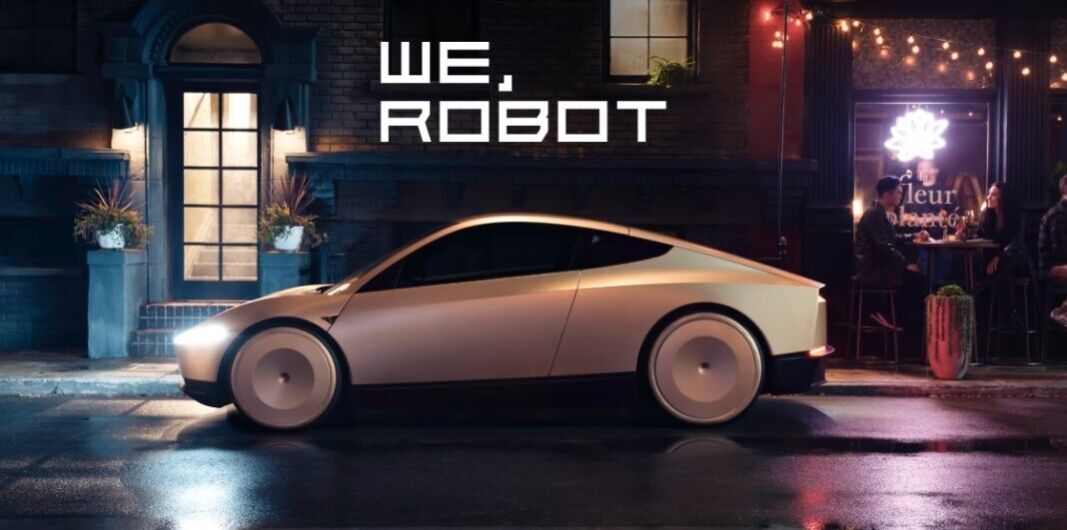
- Federal inquiry: NHTSA opened Audit Query AQ26002 on September 3, 2026, the day Tesla began commercial Cybercab deployment in Austin, Texas.
- Certification question: Tesla self-certified Cybercabs without permanently attached conventional driving controls or mirrors. NHTSA is reviewing the evidence and any decisions to treat particular standards as inapplicable.
- Current status: The opening documents order no recall or service halt. Existing safety standards remain in force while proposed changes for vehicles without human driving controls are pending.
The National Highway Traffic Safety Administration is investigating how Tesla certified its Cybercab robotaxis for federal safety compliance. The agency opened an Audit on September 3, 2026, when Tesla began commercial deployment in Austin. NHTSA publicly announced the inquiry the following day.
The audit notice describes Cybercabs lacking permanently attached conventional controls and mirrors, including a steering wheel, brake pedal and accelerator pedal. Tesla told NHTSA that the vehicles meet all applicable Federal Motor Vehicle Safety Standards (FMVSS) and that it intends to expand deployment gradually.
NHTSA’s September 4 announcement makes the central issue explicit: the agency will review Tesla’s technical data and certification process, including whether its reasoning depended on treating particular requirements as inapplicable. This is a compliance investigation, not a federal approval of the Cybercab or a final finding against it.
The 1,000-vehicle estimate is not an active fleet count
The opening notice lists an estimated investigation population of 1,000 Cybercabs but describes the initial Austin deployment only as a small number. Separately, Reuters reported 45 Cybercabs registered in Texas on the morning of September 4, citing state records. Neither number establishes how many vehicles were carrying passengers: investigation scope, registrations and active service are different measures. State registration also does not settle the separate federal certification question.
Why self-certification does not settle compliance
Self-certification is the normal U.S. federal process. Under 49 CFR 567.4’s certification-label requirements, manufacturers generally attach a permanent label declaring conformity with applicable standards in effect on the vehicle’s date of manufacture. The manufacturer makes that declaration; NHTSA retains oversight.
The distinction is between determining which requirements legally apply and obtaining permission not to meet an applicable requirement. A manufacturer’s applicability analysis is subject to scrutiny. Removing a component does not, by itself, make the corresponding requirement disappear.
Brakes: FMVSS No. 135, the light-vehicle braking standard, applies to passenger cars and specified other light vehicles. Section S5.3.1 requires a foot control to activate the service brakes. The standard also sets braking-performance requirements; it is not merely an equipment checklist.
Mirrors: FMVSS No. 111’s passenger-car provisions include requirements for an inside rearview mirror and a driver-side outside mirror. Vehicle classification and the wording of individual provisions therefore matter.
The audit notice does not disclose Tesla’s vehicle classification, provision-by-provision analysis or supporting test results. Without that material and NHTSA’s assessment, the public record does not resolve the certification question.
What the latest federal rule changes mean
Federal rules already account for driverless designs in some areas. NHTSA’s March 2022 occupant-protection update adapted crash-protection requirements for vehicles without conventional driving controls. That was not a blanket removal of every requirement written around a human driver.
On June 25, 2026, NHTSA announced a proposal to revise manual brake-control requirements for vehicles designed exclusively for automated driving. The proposal would preserve stopping-distance requirements and retain existing requirements for vehicles that still have manual controls. It is a proposed change, not an exemption already granted to Tesla.
In its September 4 statement on the Cybercab audit, NHTSA said it was working on eight rulemakings, including requirements involving brake pedals, windshield wipers, lighting and mirrors. Its immediate message was that existing standards remain in force. Future amendments must be distinguished from the requirements governing certification today.
A separate change has already taken effect: the July 31, 2026 interim final rule on temporary exemptions codifies NHTSA’s discretion to cover vehicles manufactured before an exemption’s effective date. It does not automatically exempt an existing fleet, and the agency says its policy against excusing prior violations remains unchanged.
On August 31, NHTSA extended comments on that exemption rule through September 30. The extension did not suspend the rule or grant Tesla an exemption.
What the Zoox precedent actually shows
Zoox’s earlier certification dispute offers a comparison. In its November 7, 2022 response to NHTSA (PDF), Zoox described classifying its robotaxi as a passenger car, reviewing standards individually, and supporting certification with testing, modified procedures, simulations and engineering analysis. NHTSA then opened Audit Query AQ23001 on March 3, 2023 to examine the company’s methods and applicability decisions.
The audit-closing record describes multiple apparent standards violations identified in a December 2024 inspection report. NHTSA granted Zoox a demonstration exemption and closed the audit on August 4, 2025. One condition required Zoox to remove or cover existing statements that its purpose-built vehicles complied with all applicable federal standards. The closure was not an endorsement of the original compliance claim.
On July 30, 2026, NHTSA announced a separate exemption allowing Zoox commercial deployment of up to 2,500 vehicles annually for two years, subject to additional oversight. The demonstration exemption, commercial exemption and original self-certification had different legal effects; none was a blanket approval of every aspect of the vehicle or its operation.
Reuters says NHTSA had previously stated that Tesla had not petitioned for an exemption. That reported statement concerns Tesla’s application history; it is not a determination that an exemption is legally required.
A Part 555 temporary exemption requires an application and agency decision concerning specified standards. It is not created by self-certification, and Zoox’s exemption does not extend to Tesla. Nor should Zoox’s 2,500-vehicle annual limit be described as an existing cap on Cybercab deployment.
What the audit could change—and what remains undecided
Compliance scrutiny can have substantive consequences even without a separately identified driving-system defect. NHTSA explains that recalls can result from failure to meet safety standards as well as an unreasonable safety risk. The absence of a recall at the opening stage therefore does not establish compliance.
AQ26002 is also not a comprehensive verdict on Tesla’s automated-driving performance. Its stated focus is vehicle certification. As NHTSA’s braking-rule announcement explains, equipment and braking-performance requirements are distinct from evaluating automated driving in real-world situations, and the agency retains authority to investigate unsafe automated-driving behavior.
The next substantive developments to watch are Tesla’s certification evidence, NHTSA’s assessment of disputed provisions, and any exemption or enforcement decision. Those decisions will clarify the implications for a possible expansion. The unresolved issue is whether Tesla can substantiate the federal compliance claim underlying its Cybercab deployment.