- Reported Kyber Delay: Nvidia’s Kyber NVL144 rack for Rubin Ultra has slipped by more than 12 months, pushing the 144-GPU scale-up design toward 2028.
- Core Bottleneck: The reported issue is the PCB midplane, a dense board that must carry power and high-speed NVLink signals across the rack without relying on thousands of cables.
- Rubin Still Separate: Nvidia has not confirmed the Kyber delay and says its roadmap is intact; its first Rubin-based systems are still positioned for partner availability in the second half of 2026.
- Competitive Opening: A slip would not erase Nvidia’s near-term lead, but it could give AMD, Google and other AI infrastructure suppliers more room to compete on rack availability and deployment risk.
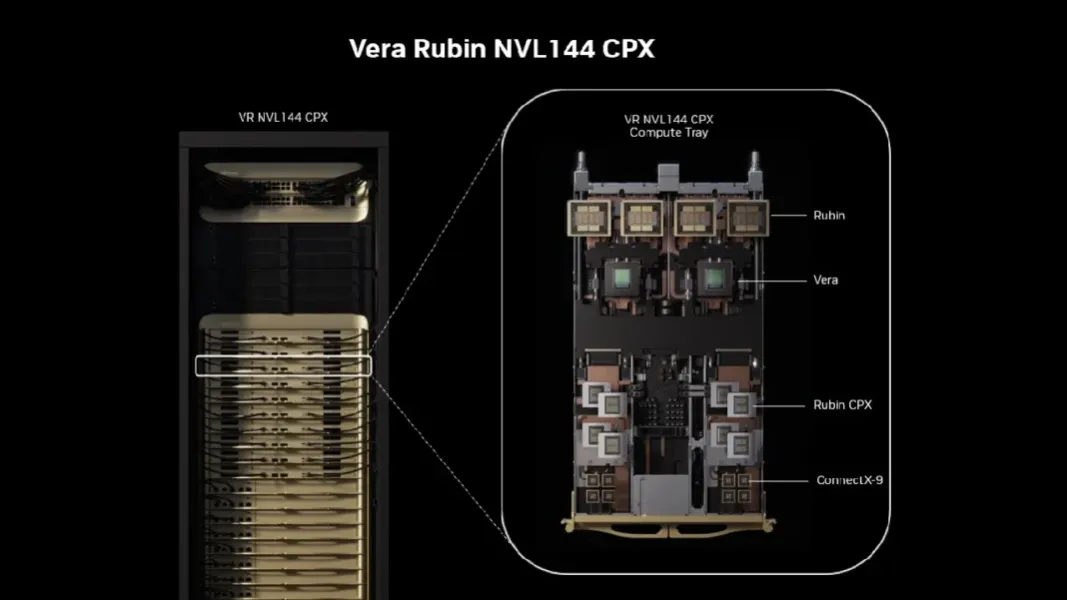
Nvidia is facing fresh uncertainty around the next step in its AI rack roadmap. Research firm SemiAnalysis says Kyber NVL144 has been delayed by more than 12 months, pushing the 144-GPU rack-scale system for Rubin Ultra toward 2028. The reported cause is not the GPU itself, but a printed circuit board midplane bottleneck inside the rack.
Nvidia has not confirmed the reported delay. The company has told reporters that its roadmap remains intact, but it has not publicly detailed whether that statement refers to the original schedule for Kyber NVL144, a revised internal schedule, or the broader Rubin platform. That distinction matters because Kyber is tied to a later Rubin Ultra scale-up phase, while Nvidia’s current Rubin systems still give the company a nearer-term deployment path.
The reported setback follows Nvidia’s earlier rack production challenges around Blackwell-era systems, but it is a different kind of problem. Blackwell issues centered on bringing a new rack platform into volume production. Kyber NVL144’s challenge is the next leap in scale-up design: connecting 144 Rubin Ultra GPUs so that one cabinet behaves like a single, tightly synchronized AI computing unit.
What Kyber Is Supposed to Add
Kyber NVL144 is designed to extend Nvidia’s rack-scale approach beyond today’s smaller scale-up domains. Instead of treating GPUs as separate servers connected mainly through external networking, Kyber NVL144 is meant to bind a much larger number of accelerators together inside one cabinet through Nvidia’s high-speed interconnect fabric.
That is why the reported delay matters. For frontier AI training and large-scale inference, performance is not determined only by the speed of each GPU. Dense systems also need fast, predictable communication between accelerators. If the rack cannot move data, synchronize work and deliver power reliably, the extra chips do not translate cleanly into usable performance.
Nvidia’s current Rubin platform remains a separate near-term product lane. Nvidia has said Rubin-based products will be available from partners in the second half of 2026, with early cloud providers including Amazon Web Services, Microsoft Azure, Google Cloud, Oracle Cloud, CoreWeave, Lambda, Nebius and Nscale. Those systems give Nvidia a deployment path even if the later Kyber NVL144 design takes longer to qualify.
The Midplane Problem
The reported bottleneck is Kyber NVL144’s PCB midplane. In a dense AI rack, the midplane is not just a passive piece of hardware. It has to route power and extremely high-speed signals across the cabinet while preserving signal integrity, thermal behavior and manufacturability at production volume.
In earlier rack designs, some of that connectivity can be handled through cable harnesses. Kyber NVL144’s design attempts to move more of the interconnect into a rigid board so that 144 GPUs can be packed into a denser, lower-latency rack. That shift reduces cabling complexity in principle, but it also makes the board itself much harder to build, test and qualify.
The core technical risk: if the midplane cannot be manufactured reliably at the required density, the full Kyber NVL144 rack cannot move into normal production. The issue is therefore less about whether Nvidia can design fast GPUs and more about whether the entire cabinet can be made repeatably at hyperscale volumes.
What Is Not Affected
The reported delay should however not be read as a blanket delay to all Rubin systems. Nvidia’s Vera Rubin platform includes multiple rack and system configurations, including systems aimed at AI factories and scientific computing. Nvidia says Vera Rubin supercomputing systems can support up to 144 GPUs per rack and deliver more than 7 exaflops of AI performance for scientific workloads.
The reported issue concerns a specific high-density Rubin Ultra scale-up architecture and its midplane. Readers should separate that reported future-rack risk from Nvidia’s broader Rubin platform rollout.
That separation also changes the business interpretation. Nvidia’s AI infrastructure orders and financing remain strong, and a delay would not by itself show collapsing demand. It would instead point to a roadmap execution risk: customers may still buy current Rubin systems, but may need to adjust plans for the larger 144-GPU Kyber rack if the 2028 timing holds.
Fallback Designs and Customer Pushback
SemiAnalysis also tied the Kyber NVL144 setback to Nvidia’s reported fallback plans. One option, described as an NVL72x2 back-to-back rack architecture, would have linked two current-generation racks to approximate a larger scale-up domain. According to the report, large cloud customers pushed back against that design because it added operational complexity rather than delivering a clean single-rack answer.
A larger NVL576 configuration may also be affected. That system would depend on linking multiple racks through advanced optical connectivity, making it sensitive to the readiness of co-packaged optics and related networking components. If Kyber remains delayed, customers may instead look for interim GPU rack solutions while they wait for Nvidia’s next scale-up architecture to mature.
How Suppliers and Investors React
The first market reaction appeared in the supply chain. Shares of several Asian printed circuit board and component suppliers fell after the report appeared, including KB LAMINATES, Kingboard Holdings, Ibiden and Samsung Electro-Mechanics. That response suggests investors see the report as relevant not only to Nvidia, but also to suppliers exposed to advanced AI rack designs.
The supplier move should still be interpreted carefully. A share-price reaction does not prove the delay, quantify supplier exposure or show how much revenue is at risk. It does show that investors are watching the physical infrastructure behind AI systems more closely: boards, substrates, power delivery, cooling and optical links now shape product timing as much as GPU roadmaps do.
The Competitive Window
If Kyber NVL144 moves toward 2028, rivals may get more attention from cloud operators planning 2026 and 2027 AI infrastructure. AMD is pushing its MI400-family and Helios rack-scale strategy, while its MI430X and broader MI400 accelerator series give customers another path to evaluate for large AI deployments.
Google is also relevant because its TPU roadmap is already deeply integrated into its own cloud and AI services. Large Google TPU capacity commitments show that some major AI customers are willing to use alternatives to Nvidia GPUs when the economics, availability and software stack make sense.
Other programs, including Amazon Web Services’ Trainium, Intel’s Gaudi line and newer AI accelerator efforts from Qualcomm, sit further from the specific Kyber risk but still matter in cloud procurement. Hyperscalers do not choose infrastructure only by peak chip specifications. They compare availability, software maturity, power density, networking, deployment complexity and total operating risk.
What to Watch Next
The key question is whether Nvidia can qualify Kyber NVL144’s midplane at production volume without changing the rack design in ways that reduce its scale-up advantage. A clean qualification path would make the reported delay less damaging. A redesign, low-volume launch or prolonged qualification cycle would make the 2028 risk more material.
Investors and customers should also watch how Nvidia describes the boundary between Rubin and Rubin Ultra. If current Rubin systems ship broadly while Kyber slips, the company keeps its near-term revenue path but faces a future scale-up gap. If the problems spill into other rack designs, the issue would become more serious.
Shawn Oh, head of Korea cash equities at NH Investment & Securities Co., thinks the reported delay raises uncertainty around Nvidia’s next-generation roadmap and creates a wider opening for alternative AI platforms. Kyber does not determine whether Nvidia remains the dominant AI infrastructure supplier, but it may determine how quickly Nvidia can move from today’s Rubin systems to its next, larger scale-up rack.