- Premium Access: Meta One Premium unlocks expanded Conversation Focus access and premium support for AI glasses.
- Monthly Caps: Free users get three hours monthly, paid users get 15 hours, and unused hours do not roll over.
- On-Device Limit: Conversation Focus runs locally, making the cap a post-purchase access issue rather than a server-cost quota.
- Rival Glasses: Google and smaller smart-glasses vendors give users comparison points as Meta tests its paid tier.
Meta One Premium now ties expanded Conversation Focus access and Premium Device Support for AI glasses to a paid tier. Meta says it will start testing optional subscription plans across AI glasses and apps, making its hardware ownership model part of a larger paid-services push.
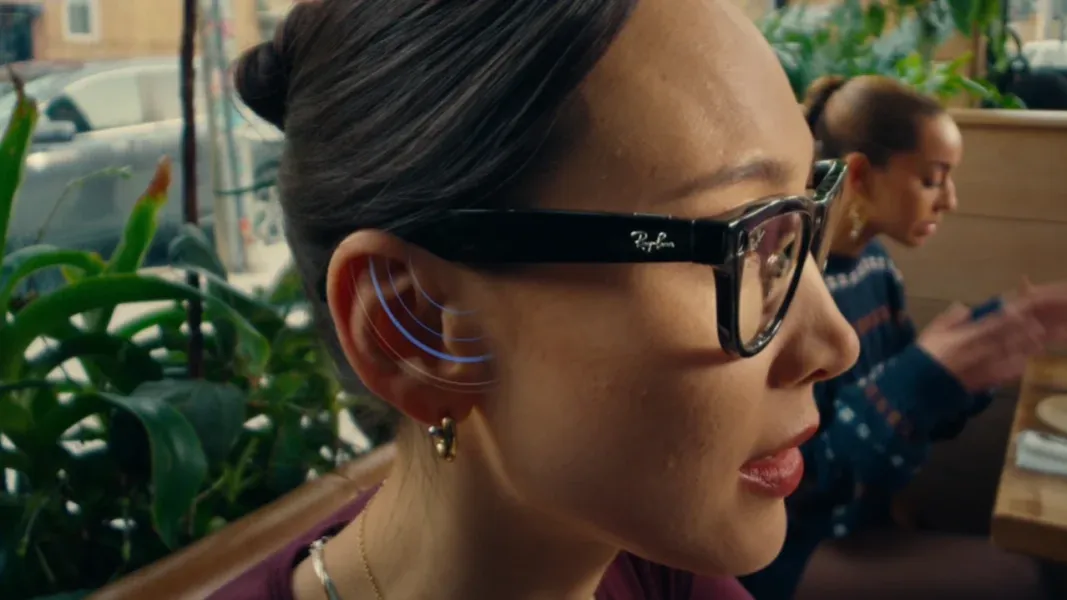
Owners can still use voice assistant, live translation, and look-and-ask as core AI glasses features out of the box. Conversation Focus, a 2025 hearing-assistance aid that boosts nearby speech in noisy places, is where the cap bites: free users get only three hours per month, while paid users get 15.
Ray-Ban, Oakley, and Meta-branded smart glasses are in the eligible pool. Early access learnings set the current rates, with Meta leaving room to listen to feedback and adjust if needed. A company spokesperson said Conversation Focus is “not an AI rate limit” because it runs on-device rather than on Meta servers.
What the Conversation Focus Cap Changes
Conversation Focus is meant to help users hear the voices of people they are speaking with in crowded, noisy environments. As a local audio aid, it works on-device rather than on remote servers, yet Meta is still limiting how long owners can use it each month.
Conversation Focus remained usable without phone connectivity during a hands-on test, reinforcing the on-device claim. Several real-world situations, including several meetings, dinners, or travel days, can consume the three-hour monthly limit. Paid users are still limited to 15 hours, and unused hours can’t be rolled over to the next billing cycle.
Customers who bought Meta smart glasses for noisy-room listening may face the sharpest trade-off. Some may have purchased the glasses specifically because they saw Conversation Focus as an accessibility feature. For those users, the practical issue is not whether the feature exists, but how often they can use it after buying the hardware.
Chris Harrison, director of Carnegie Mellon University’s Future Interfaces Group, argued the plan is about monetizing customers rather than recovering AI costs. His critique targets more than remote processing capacity. Meta is also asking owners to pay for heavier use of a feature that can run locally on hardware they already purchased.
Why the Market Test Matters
Meta’s hardware economics make recurring software revenue part of the test. Harrison’s critique starts with the claim that Meta’s glasses are typically sold at cost. Tthe company’s recent lineup includes $299 Meta-branded glasses outside Ray-Ban branding. A larger installed base can make premium software and support more important than device margin, especially if lower entry prices expand the category.
Meta One Premium also bundles faster human help, mixing feature access with support rather than selling only extra minutes. Continued Conversation Focus development, power-user access, and faster help for AI-glasses problems all sit inside the same package.
Rival smart-glasses roadmaps give owners comparison points. Google’s Android XR intelligent eyewear roadmap includes audio glasses in fall 2026 and display glasses afterward, with Samsung, Qualcomm, Gentle Monster, and Warby Parker involved in Gemini-powered functions. Those glasses are meant to handle voice, camera, navigation, messaging, and translation tasks, setting up a feature-by-feature comparison with Meta’s capped audio aid.
XREAL AURA has been positioned as a reservations-stage device, Even Realities G1 sits in a 2025-2026 shipping cycle, and Rokid AI Glasses were previewed at CES 2026. Harrison put the user choice bluntly: “All of these will have to deliver value, or people will pick the free version,” a subscription value test that applies directly to Meta’s glasses plan.
What Meta Has to Prove Next
Meta can defend Meta One Premium as a package for continued Conversation Focus development, power-user access, and faster human help. Owners may judge the same package differently if they see the cap as a charge on a useful feature already built into their glasses. Meta says the majority of people will not hit the monthly limit.
Frequent users are the group likeliest to test that assumption. For owners who use Conversation Focus daily, a support-page update raising the free allowance above three hours would show whether Meta treats the cap as a fixed product rule or an early access number that can move.