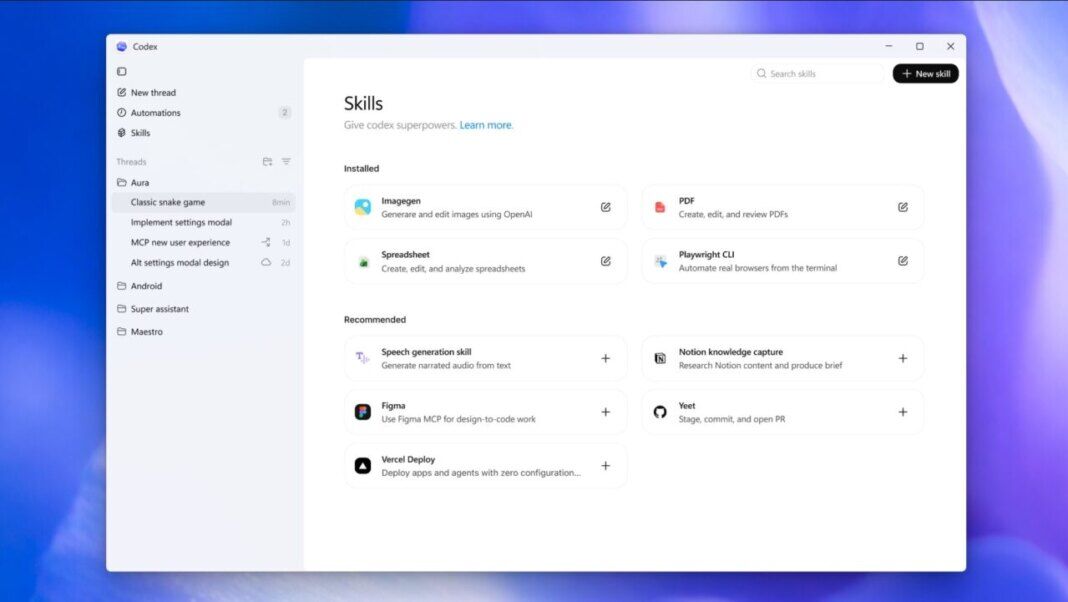
- ChatGPT Overhaul: OpenAI plans a current ChatGPT agent hub in the coming weeks, according to people familiar with the matter.
- Paid Tools: The plan would connect free ChatGPT use to agents and Codex, OpenAI’s ChatGPT-powered coding agent.
- Launch Caveat: OpenAI has not publicly confirmed the rollout, so timing and final feature scope remain unconfirmed.
- Platform Fight: Meta, Google, Microsoft, Cursor, and Anthropic are pushing agent hubs across business, search, and coding workflows.
OpenAI reportedly plans a chatbot revamp that builds on an earlier app-hub plan and combine AI agents with paid-tool paths, people familiar with the matter told the Financial Times. The chatbot is said to move toward a single app hub for many tasks rather than remain primarily a chat window.
Under the plan, free prompts could become routes toward paid products when a request becomes software work, research, or an agent task. OpenAI is also trying to improve its business-customer position and move closer to profitability before a possible initial public offering.
Slow enterprise adoption vs. Anthropic’s Claude explains why the a new business-customer push matters. While OpenAI has not publicly confirmed the planned overhaul, a senior OpenAI employee quoted by the Financial Times said about the impact of the upcoming superapp, “Chat is dead.”
What ChatGPT Would Become
For users, a ChatGPT super app would put conversation, coding tools, and task-running agents inside one product surface instead of scattering those workflows across separate tools. Thibault Sottiaux, OpenAI’s core product and platform lead, has framed the goal as a personal agent that can help across work and personal tasks.
Codex currently gives software teams the plan’s clearest paid-product lane. As a coding agent similar to Claude Code the product supports cloud environments, background tasks, code review, editor workflows, terminal use, Windows and macOS access, and shared ChatGPT accounts. Inside a broader ChatGPT hub, those features could turn an ordinary chat request into complex ongoing work that users then can monitor, revise, and complete.
OpenAI has already been moving in that direction. Earlier shared details about the app-hub plan put ChatGPT, Codex, and the Atlas browser inside one productivity surface. Management reportedly centers its strategy around one agent platform spanning ChatGPT and Codex. Recent Codex updates moved into ChatGPT-linked app surfaces, including mobile supervision and Windows computer use.
Commercially, ChatGPT could become the place where casual use turns into paid plans, team accounts, or enterprise deployments, a shift OpenAI needs to finally start earning money. Instead of sending users to a separate developer product, OpenAI could keep Codex, agents, and browser-like functions inside the same interface where the request starts. A shared account layer would give OpenAI more chances to package agent work as a natural escalation from everyday ChatGPT.
Agent Platforms Are Becoming a Wider Market Fight
OpenAI’s ChatGPT hub could answer enterprise pressure through product consolidation and paid-tool conversion rather than a standalone chatbot upgrade.
Meta, Google, and Microsoft are pursuing agent surfaces from different starting points. Meta is currently expanding its Business Agent across WhatsApp, Messenger, Instagram, and Meta Business Suite, with more than one million businesses already using agents on WhatsApp and Messenger. Google is adding agentic Search features, including information agents, booking tasks, shopping actions, and custom mini-app experiences into its ecosystem.
Microsoft has introduced Microsoft Scout as a persistent personal agent, while its broader Copilot work points to business agents, agent governance, connected apps, and multi-agent workflows. Developer tools add another pressure point: coding-agent competition now not only includes OpenAI, Anthropic, Microsoft/GitHub, Google, Cursor, but many other providers.
All AI vendors are currently moving from standalone chatbots toward agent hubs that combine coding, business workflows, search, and app actions. For OpenAI, ChatGPT is the main distribution surface that can turn that shift into paid usage if the new hub makes agent work feel like a natural extension of the existing chatbot.
OpenAI still has to ship the revamped ChatGPT, show which agent and coding features are included, and make clear whether paid-tool prompts are part of the user experience.
Google’s information agents give OpenAI a concrete comparison point because they are slated first for Google AI Pro and Ultra subscribers.