- Board Exit: LinkedIn co-founder and Manas co-founder Reid Hoffman has told Microsoft he will not seek re-election.
- Handoff Timing: Hoffman will remain a director until the 2026 annual shareholder meeting, keeping the change inside the normal investor vote.
- Manas Focus: Hoffman is shifting founder-level attention toward Manas, his AI-native biopharmaceutical startup focused on drug discovery.
- Governance Context: Microsoft says the board transition is not tied to a disagreement over management, operations, policies, or practices.
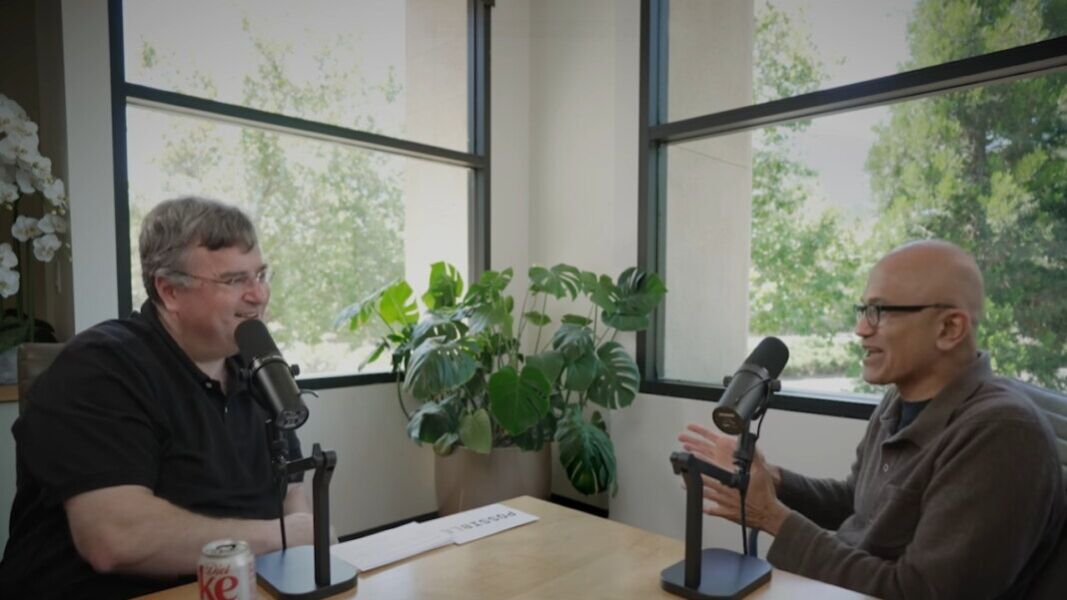
LinkedIn co-founder Reid Hoffman has told Microsoft he will not seek re-election to its board at the 2026 annual shareholder meeting. He will remain a director until that vote, while shifting more attention to Manas, the AI drug-discovery startup he co-founded in 2025. In a June 5 episode of the Possible podcast, Microsoft CEO Satya Nadella discussed Hoffman’s Manas work with him as part of a broader conversation about AI, business, and society.
Microsoft’s filing also narrows what the board change is not. The company said Hoffman’s decision was not tied to any disagreement with management, the board, operations, policies, or practices, keeping the public explanation focused on his shift in time and attention rather than an internal dispute.
That shift has a specific destination: Manas, an AI-native biopharmaceutical company focused on drug discovery. Hoffman had already returned to founder work there before the board notice, and the June 5 conversation with Nadella showed why that work is now taking priority.
What Changes on Microsoft’s Board
Hoffman has served as an independent Microsoft director since 2017, shortly after Microsoft completed its LinkedIn deal. His planned exit from Microsoft’s board removes a founder associated with one of Microsoft’s largest enterprise acquisitions after nearly a decade on the board.
Nadella’s farewell framed Hoffman as someone Microsoft would miss on Microsoft’s board, while the departure comes after almost a decade rather than through an immediate resignation.
Annual shareholder meetings are the formal venue for director elections, so Hoffman remains in place until the next one. Microsoft can use the intervening period to present any replacement, adjust the broader slate, or leave the board refresh to the ordinary governance calendar.
His seat also carried AI significance because Hoffman has been a visible AI investor and founder. Hoffman’s roles have overlapped with Microsoft’s push to organize more product strategy around generative AI, cloud software, and enterprise automation.
In 2024, Microsoft reshaped its AI leadership by creating a new Microsoft AI division under Mustafa Suleyman. That dedicated unit concentrated consumer AI products, Bing, Edge, and Copilot work, making board-level AI relationships more sensitive than they were when Hoffman first joined.
For Microsoft, the immediate effect is continuity rather than a vacancy. Public end-date language keeps a director with LinkedIn and AI ties in place through the next board-election cycle, while the no-disagreement statement narrows the change to a planned governance handoff.
Why Manas Is Pulling Hoffman Back
Manas is an AI-native biopharmaceutical company focused on accelerating drug discovery. Its workflow runs from target identification through clinical trials, which makes the startup a practical example of AI moving from software productivity into regulated scientific development.
Founder attention can matter early in that kind of company. Hiring scientists and engineers, choosing platform partners, raising capital, and satisfying scientific review all affect how quickly a research system can move from model output to clinical evidence.
Manas also presents a different operating rhythm from Microsoft board oversight. Drug-discovery work has to pair model-driven screening with laboratory validation, partner integration, and clinical-readiness decisions before it can claim progress beyond software experimentation.
Hoffman’s shift changes more than one board seat. He is moving time from oversight at a mature software company toward Manas as the startup tries to make AI useful in one of the slower and more regulated parts of the life-sciences market.
Microsoft’s board role does not end until shareholders vote, but the current change explains where Hoffman wants to spend founder-level attention. Manas now sits at the center of that priority shift as it tries to turn AI-assisted discovery into drug-development progress.
The LinkedIn and AI Governance History
Microsoft’s $26.2 billion LinkedIn acquisition in 2016 created the path for Hoffman’s later board role. Hoffman joined Microsoft’s board in 2017, giving the company a direct governance link to the professional network’s co-founder as LinkedIn became part of Microsoft’s enterprise portfolio.
Hoffman’s AI history remains secondary to the current handoff. He previously left OpenAI’s board amid potential conflicts tied to AI investments at Greylock, his role as an Inflection AI founder, and his later Manas work, a history that made his Microsoft board role unusually close to several AI businesses.
Hoffman’s background adds strategic weight without changing Microsoft’s official transition posture. His LinkedIn history, AI investment work, and Manas role all sit near businesses where Microsoft has placed large strategic bets, even though the move is not tied to a disagreement.
Microsoft shareholders will decide the refreshed board slate at the 2026 annual shareholder meeting. Hoffman, meanwhile, is redirecting founder-level attention toward Manas and its AI drug-discovery work.