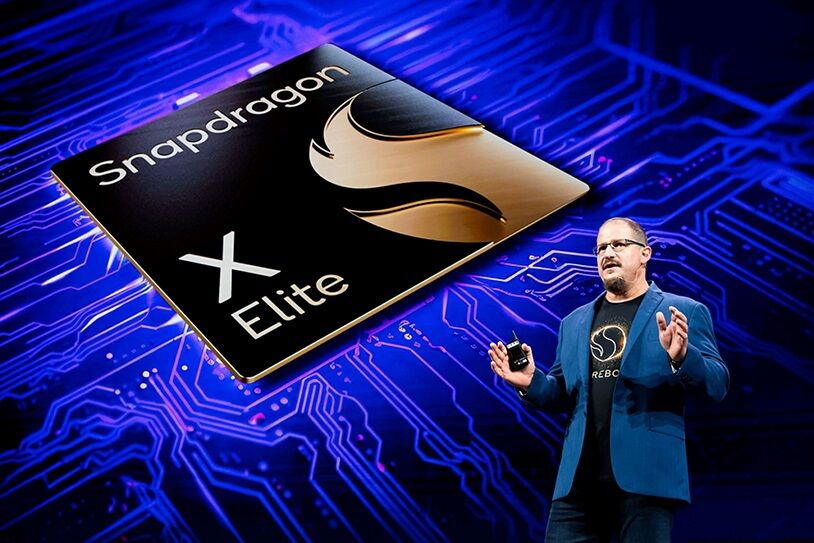
Addressing persistent criticism over the rigidity of its graphics ecosystem, Qualcomm has fundamentally restructured how it manages gaming on Windows on Arm.
By decoupling GPU updates from Microsoft’s OS release cycle, the chipmaker now allows Snapdragon X Elite owners to download graphics drivers directly, finally mirroring the standard set by Nvidia and AMD.
This strategic pivot arrives alongside the general availability of the Snapdragon Control Panel and critical AVX2 emulation support, aiming to stabilize the platform’s gaming performance following a turbulent launch year.
Early adopters have struggled with inconsistent software support since the platform’s debut. Qualcomm’s latest move directly targets these pain points, signaling a shift from a tightly controlled mobile-first philosophy to a more open, PC-centric approach.
Decoupling Drivers: A Shift to the x86 Standard
For months, early adopters have been forced to wait for full Windows Update cycles to receive critical game patches, a process that often left them weeks behind x86 counterparts.
Qualcomm officially ends this reliance today, moving to a direct “Upgradable Graphics Drivers” (UGD) model. Owners of Snapdragon X Elite devices can now fetch driver updates immediately via Qualcomm’s portal, bypassing OEM validation delays entirely.
Central to this overhaul is the rebranding of the beta “Adreno Control Panel” to the “Snapdragon Control Panel.” Now generally available, the software serves as a dedicated utility for managing game profiles, resolution scaling, and driver versions.
Qualcomm describes the tool as a “central hub for customizing and enhancing Snapdragon-powered experiences,” emphasizing its role in managing broader hardware features beyond simple graphics settings.
Game-specific profiling is now standard within the app. Automatically detecting installed titles, the software applies optimized settings for resolution and frame rates, a feature long standard on competing platforms but notably absent from the Windows on Arm ecosystem until now.
Fixing the Unplayable: AVX2 and Anti-Cheat
Beyond driver delivery, the platform’s most significant hurdle has been compatibility with games requiring Advanced Vector Extensions (AVX).
Support for AVX and AVX2 instruction sets is now live through a combination of Microsoft’s Prism emulation layer and Qualcomm’s latest driver stack. Specifically, this update targets high-profile titles like God of War and Control, which previously crashed on launch due to missing vector extensions.
While the upcoming Snapdragon X2 hardware will support these instructions natively, Qualcomm confirms that current X Series devices will receive the software patch in “coming weeks.”
Multiplayer gaming also receives a critical fix with the confirmation of kernel-level anti-cheat support. Major providers including BattlEye, Denuvo, and Tencent ACE are now compatible with the platform.
Such support removes a major blocker for titles like Fortnite, which previously kicked players on Arm-based systems due to security incompatibilities, as detailed in Epic Online Services support.
The X2 Elite Roadmap: Promises of ‘Day 0’ Parity
Looking further ahead, the company has confirmed the Snapdragon X2 Elite will launch in the first half of 2026. Qualcomm is marketing “Day 0” driver support as a headline feature for the new silicon, implicitly acknowledging the software lag that plagued the X1 launch.
The company promises “Day 0 support and availability of upgradable graphics drivers (UGD) for Snapdragon X2 Elite, available first half of 2026,” ensuring that early buyers of the next generation won’t face the same driver drought.
Performance claims for the unreleased chip remain aggressive. Qualcomm asserts the new silicon will run 90% of top games and outperform Intel’s Lunar Lake architecture in gaming scenarios. Independent benchmarks for these claims are not yet available, but the shift to a standard driver model suggests the company is preparing the infrastructure to support such performance targets.