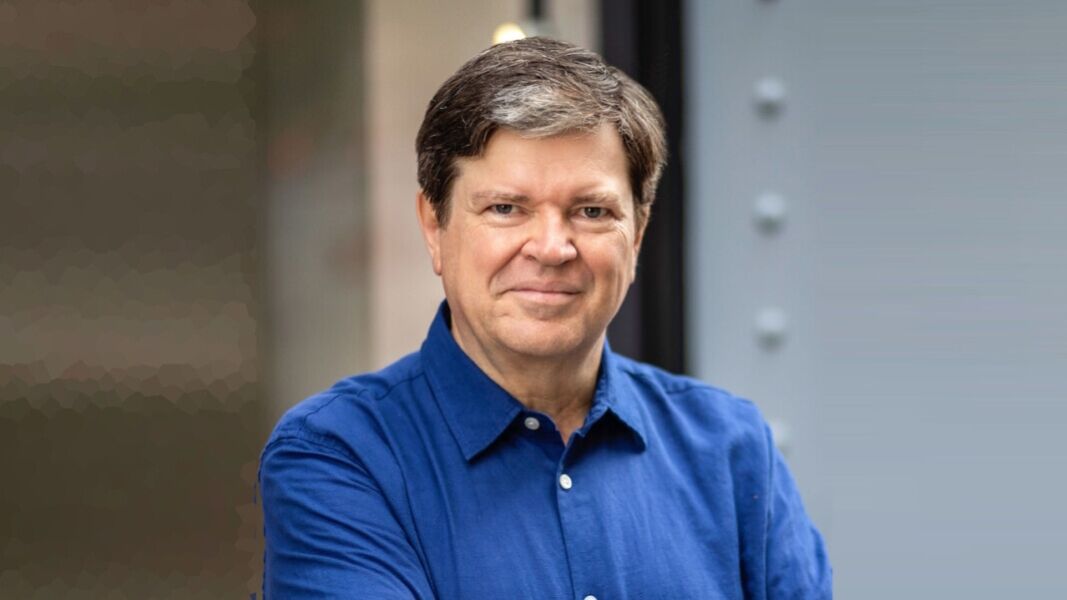
Yann LeCun, Meta’s chief AI scientist and a foundational figure in modern artificial intelligence, is planning to leave the company to launch his own startup, according to the Financial Times
His departure would mark a seismic blow to the Menlo Park tech giant, capping a year of relentless internal chaos and strategic uncertainty within its AI divisions. LeCun, a Turing Award laureate often called a “Godfather of AI,” is reportedly pursuing a new venture focused on world models, a paradigm he believes is necessary to achieve true machine intelligence.
The move appears to be the culmination of long-simmering frustrations. Just last month, LeCun reportedly considered resigning over new, restrictive publication rules imposed on the company’s celebrated Fundamental AI Research (FAIR) lab, a bastion of open inquiry he helped build.
His reported exit would signal a definitive break, fueled by what sources describe as a strategic “divergence” with CEO Mark Zuckerberg over the future of AI development.
From FAIR to Farewell: A ‘Godfather of AI’ Charts a New Course
LeCun’s long-held skepticism of the current generative AI boom provides the intellectual foundation for his new venture.
He has been a vocal critic of the hype surrounding large language models, arguing that they lack the reasoning, memory, and understanding of the physical world required for next-level intelligence.
In a February interview, he argued that “the current generative AI paradigm is not the ‘be all end all’ and a new one is needed in the next 3 to 5 years.” This belief that the industry is on an unsustainable path has been a consistent theme.
LeCun has publicly stated his view that “GenAI has a shelf life of three years.” His new startup will reportedly be dedicated to building “world models,” a complex architecture designed to allow AI systems to learn internal models of how the world works, enabling them to predict, reason, and plan effectively.
Google has already formed a dedicated team for world models, so LeCun is in good company with his alledged new focus.
It represents a fundamental departure from the generative paradigm that has dominated the last several years and a direct challenge to the prevailing industry consensus.
A Strategy Forged in Chaos
Following a year of tumultuous reorganization that saw its AI division reshuffled three times, LeCun’s departure feels almost inevitable. The instability began in May 2025 when the unit was split into “AI Products” and “AGI Foundations.”
That structure was quickly abandoned in July with the high-profile launch of the centralized Meta Superintelligence Labs (MSL), led by former Scale AI CEO Alexandr Wang. This move placed LeCun under Wang’s leadership, a significant change for the veteran scientist.
In a sudden reversal, the newly-formed MSL was itself dismantled just 50 days after its creation and splintered into four new groups. This constant churn was a direct response to cascading internal crises, including the postponement of its ambitious Llama 4 “Behemoth” model and the departure of most of the original Llama research team.
The whiplash-inducing pace revealed a leadership team struggling to find a stable and effective structure, creating a volatile environment for researchers accustomed to long-term, focused inquiry.
The High Cost of a Divergent Vision
For Meta, the loss of its most celebrated AI mind raises critical questions about its ability to navigate the next wave of AI innovation.
LeCun’s stature is immense; he is not just a top executive but one of the intellectual pillars of the entire field. His departure could make it harder to attract the elite research talent that thrives on academic freedom and a stable, long-term vision, qualities Meta has struggled to maintain.
With its internal roadmap faltering, Meta initiated an aggressive “buy or poach” strategy that has failed to bring stability. Several top researchers, including Avi Verma and Ethan Knight, resigned from the new lab after just weeks, returning to rival OpenAI.
This prompted a strategic pivot away from relying solely on in-house models, exemplified by a new partnership with AI image and video startup Midjourney.
As previously reported by Winbuzzer, Chief AI Officer Alexandr Wang explained the new philosophy, stating that “to ensure Meta is able to deliver the best possible products for people it will require taking an all-of-the-above approach.”
This “all-of-the-above approach” is a pragmatic admission that Meta’s internal efforts can no longer keep pace. The talent war in AI is relentless and costly. Meta’s aggressive poaching has rattled competitors, with OpenAI’s Chief Research Officer Mark Chen remarking he noted a “visceral feeling […] as if someone has broken into our home and stolen something.”
Yet even nine-figure pay packages and near-limitless compute, what Mark Zuckerberg calls the new currency in the AI talent war, have proven insufficient.
As the CEO noted, “here, people say, ‘I want the fewest number of people reporting to me and the most GPUs.’”
LeCun’s exit proves that even those assets cannot always compensate for a chaotic culture and a constrained research environment. Now, Meta finds itself on the other side of the talent equation, losing one of its most irreplaceable assets not to a rival, but to a divergent vision of the future.