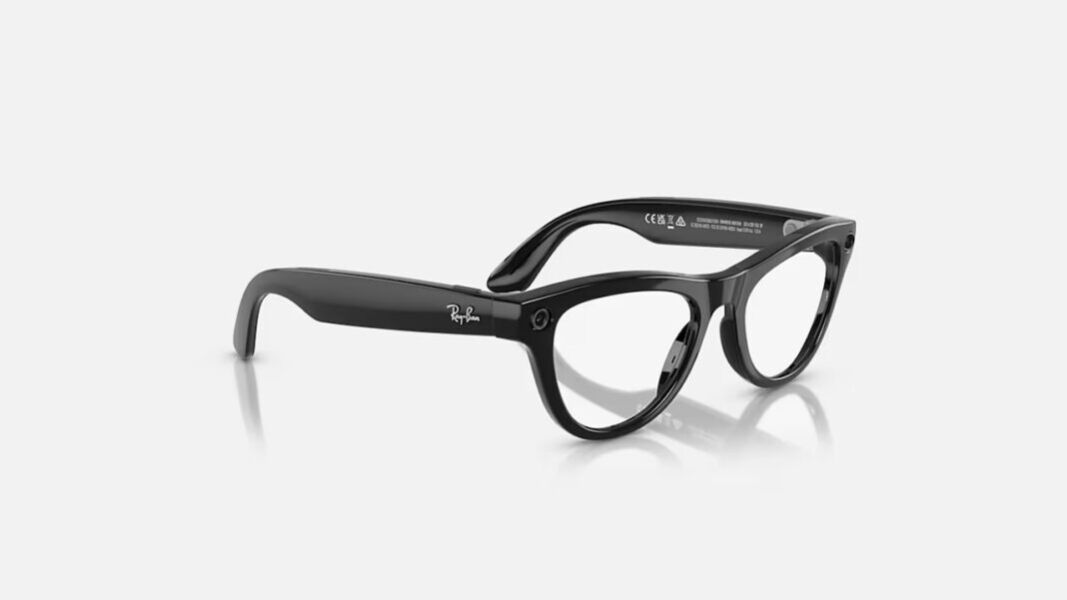
Meta is cementing its bet on an AI-powered future you can wear, investing approximately $3.5 billion for a minority stake in its smart glasses partner, EssilorLuxottica. The deal, reported by Bloomberg, gives the tech giant just under 3% ownership of the parent company behind Ray-Ban and Oakley.
This strategic move deepens the alliance responsible for the Ray-Ban Meta glasses, aiming to accelerate the development of AI eyewear for the mainstream market. The investment underscores Meta’s push to secure its hardware ambitions while it wages a costly talent war to poach top AI researchers.
A Strategic Bet on Wearable AI
The investment solidifies a partnership that has already proven fruitful. The first-generation Ray-Ban Meta glasses have sold millions of units since launch, according to EssilorLuxottica, indicating a healthy consumer appetite and giving Meta a solid foundation for more ambitious hardware.
The new Oakley Meta HSTN line, for example, targets athletes with a 3K camera and IPX4 water resistance, a clear pivot from fashion to performance. According to Meta’s Head of Wearables, Alex Himel, the Oakley launch is just the beginning. “This is our first step into the performance category. There’s more to come,” he said.
The wearable-first approach provides a more practical path to market than Meta’s long-delayed ‘Orion’ immersive AR headset. By focusing on glasses, Meta can build a user base and refine its AI in the real world, sidestepping the production hurdles of full AR.
Sources suggest Meta may increase its stake to around 5% in the future, cementing the partnership’s long-term strategic importance. This move is a key part of Meta’s broader strategy to establish wearable hardware as a primary platform for delivering its AI capabilities to consumers.
The High Cost of Talent: A War on Two Fronts
The investment comes as Meta escalated its aggressive “buy or poach” talent acquisition strategy. On the same day, reports confirmed Meta had hired Ruoming Pang, a top AI engineering manager from Apple who led the team behind Apple Intelligence’s core models.
Pang’s departure is a significant blow to Apple, which is grappling with its own AI strategy. The company has delayed a full rebuild of its Siri assistant until at least 2026 and is reportedly considering using third-party models from rivals.
This follows Meta’s successful poaching of at least eight key researchers from its main rival, OpenAI, in a single week in late June. The raid on OpenAI prompted a leaked internal memo from Chief Research Officer Mark Chen, who expressed a raw sense of violation.
“I feel a visceral feeling right now, as if someone has broken into our home and stolen something,” Chen wrote to his staff, revealing a company pushed onto the defensive. The memo confirmed OpenAI was scrambling to “recalibrate comp” to prevent a staff exodus. In response, OpenAI’s stock-based compensation has reportedly surged to over $4.4 billion.
The talent war ignited a public dispute over compensation. OpenAI CEO Sam Altman claimed Meta made “nine-figure” offers to his staff. However, one of the new hires, Lucas Beyer, publicly called the claim “fake news” on X. But a subsequent WIRED report corroborated that offers in the $100 million range were indeed being made.
From Crisis to Consolidation
Meta’s aggressive strategy appears fueled by its own internal setbacks. The company has struggled with talent retention and reportedly postponed its ambitious Llama 4 “Behemoth” model after it failed to meet performance benchmarks. This fostered what some engineers described as a “panic mode.”
This “buy or poach” playbook was forged after Meta was spurned in takeover bids for startups like generative video firm Runway and Safe Superintelligence (SSI). Unable to acquire companies, Meta pivoted to acquiring their talent.
The poached talent is now being consolidated into the newly formed Meta Superintelligence Labs (MSL), a centralized division created on July 1 to accelerate AI development. This move formalizes the roles of the high-profile hires poached from across the industry.
The battle has forced OpenAI’s leadership to reframe the conflict for its employees. In his memo, Chen attempted to rally his team by focusing on their mission. “This is the main quest, and it’s important to remember that skirmishes with Meta are the side quest,” he urged, framing the corporate skirmish as a distraction from their core purpose.
Meanwhile, other rivals are also feeling the pressure. After Meta failed to acquire the startup Safe Superintelligence (SSI), it poached its then-CEO. Co-founder Ilya Sutskever took the helm as a result, defiantly stating, “we have the compute, we have the team, and we know what to do. Together we will keep building safe superintelligence,” signaling the intense competition for top minds.
Yet, as Meta pushes its hardware into more aspects of daily life, it faces persistent privacy questions. The potential for misuse was starkly demonstrated by the ‘I-XRAY’ project, which used the glasses for facial recognition.
Meta has reportedly explored integrating facial recognition into future devices, a move that keeps privacy advocates on high alert. The company must now find a balance between agressive innovation and building a foundation of trust that is as durable as the wearable-frames themselves.